
Full notes
Full Total blade update
Read the full published notes in a cleaner layout. The original post stays linked below.
What changed
- Gameplay
- Balance
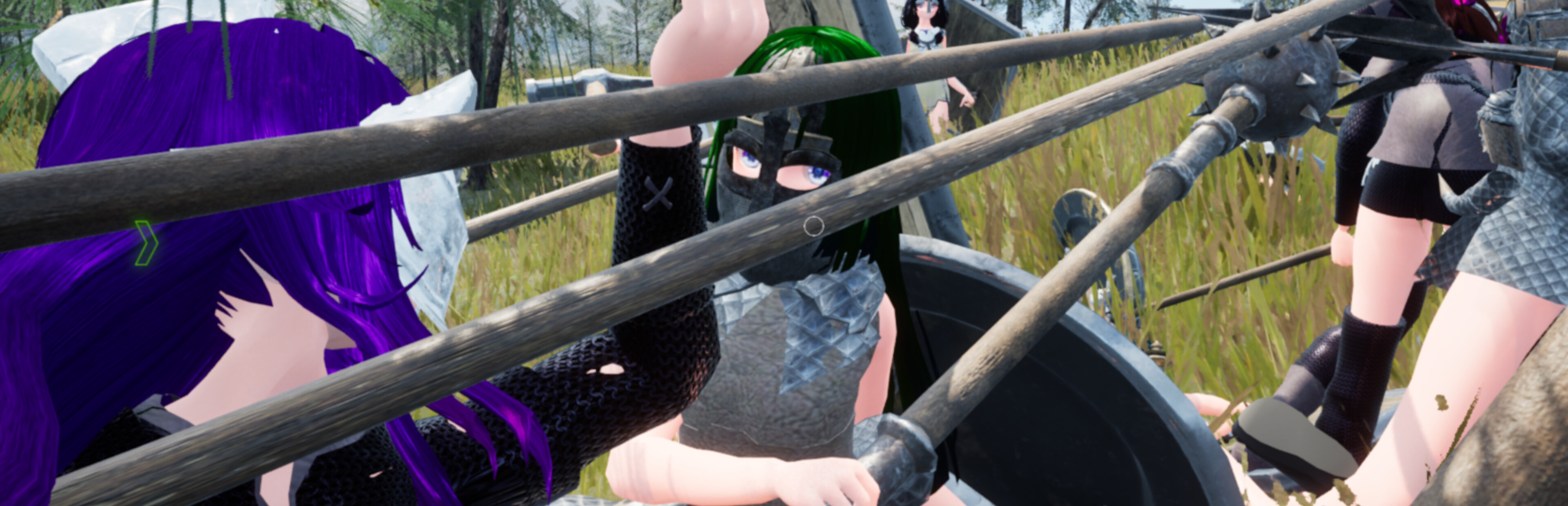
4K video. I previously announced a switch to turn-based gameplay, but I didn’t notice the users’ objections at the time. In fact, for about a month I’d already been considering how to handle the action version of Total Blade, since a complete set of solutions had suddenly come to me.
Originally, I planned to make the turn-based version the definitive edition of Total Blade, while reworking the original action game to serve as a replacement for the open-world mode of Girls’ Civilization 3.
However, after belatedly reviewing user feedback, I realized that no one actually wanted the game to become turn-based.
Therefore, I’ve decided to immediately apply the solutions I found to the action version instead.
It turned out to be a great decision—because the solutions I discovered a month ago felt almost like a revelation. They addressed every long-standing problem in the genre: the lack of short-term gameplay goals, the disjointed transition between world and towns, player percentipn of AI diplomacy, the lack of unit diversity, balancing tactical freedom against player burden, and even the late-game stagnation typical of grand strategy titles.
All of these issues were solved one by one in my head—not with some massive, overcomplicated system, but with simple, elegant changes. That’s why I can only describe it as a revelation. For years I’ve obsessed over this genre, constantly testing every idea I could, but I never expected the real solution would arrive all at once, out of nowhere.
For now, I’ll explain only the part about unit diversity. The rest I’ll reveal in detail when the update comes—it won’t take long to implement. (Even the demo footage I linked was produced in just three days.)
Previously, giant units were basically just regular small units with different AI and altered stats, still equipping the same items. But there was never any need for that. Medium-sized units (troll-sized) and large units (building-sized) should be able to fight by simply swinging around their own massive weapons and using their own body structures. They don’t need shared equipment—they can have their own weapons, their own motions, and even unique skeletons.
That means they don’t have to be humanoid anymore. A golem can body-slam, a scorpion can sting with its tail, a dragon can perform sweeping tail strikes. They could even carry turrets or mortars as part of their body—it’s easy now.
This also makes it simple to design unique factions. For example, a colossal quadrupedal mushroom can trample enemy units while unleashing area spore attacks from its back. That alone makes a faction far more interesting. It also allows for fun quests where the player fights a colossus one-on-one, learning its patterns through repeated attempts. These encounters can even unfold in real time during massive battles.
It only takes about an hour and a half to create one of these units. That means I can design an entire faction’s worth of troops—each with their own skeletons and animations—in a single day.
I’ve also expanded unit sizes into three categories:
Small units: Same as before (including the player). They have the best HP-to-population ratio and resist non-AoE ranged attacks the best.
Medium units (~3m tall): Their attacks ignore friendly collisions, making them very strong in mixed formations. Even when their attack momentum runs out, they can still stagger nearby small units. They don’t get knocked away by large-unit attacks, but if only mediums are grouped together, they’re easy to wipe out. They need small units to soak up hits.
Large units (~7m tall): Regardless
Source
Changelog.gg summarizes and formats this update. How we read updates.