
In this update7
Full notes
Full Orbi Universo II update
Read the full published notes in a cleaner layout. The original post stays linked below.
What changed
- Performance
- Server
- Gameplay
- Events
- Balance
- UI and audio
Orbi Universo II changes
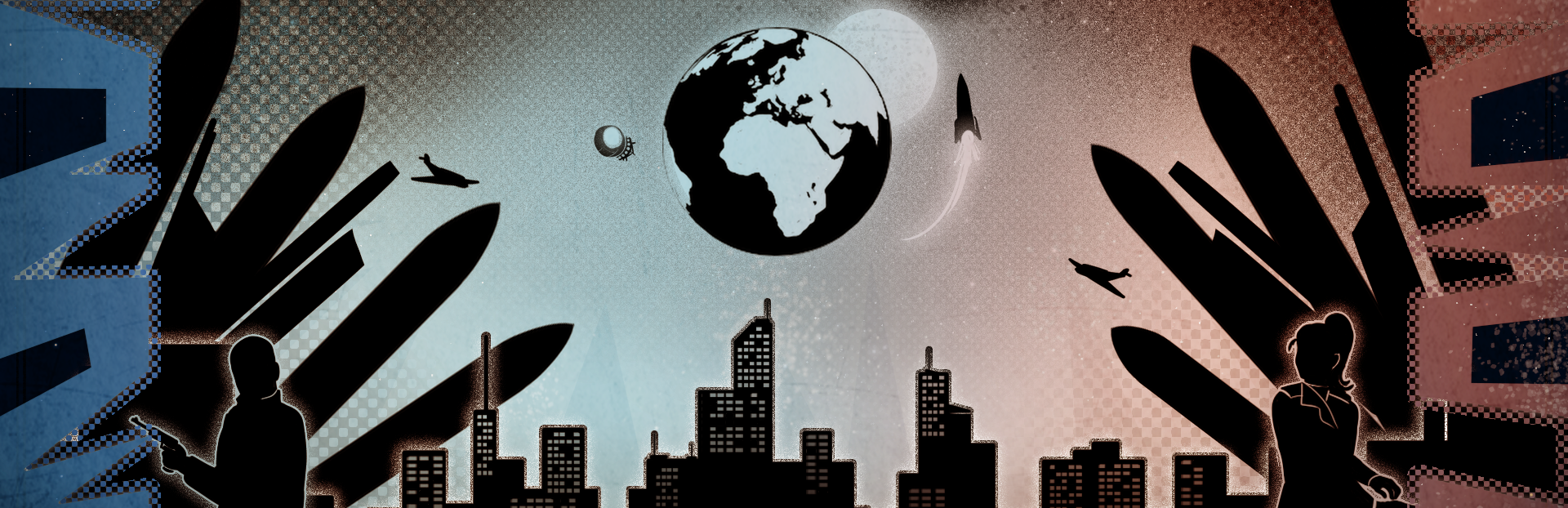
The Cold War update extends the game to 2000 CE. Espionage, nuclear deterrence, space programs, tourism, terrorism, and computing as your civilization pushes past the year 1950.
New AI System
The AI has been rebuilt from scratch. The old system ran 160+ individual rules competing for priority. The new SmartAI uses budget-based planning: civilizations split resources across categories (food, economy, military, knowledge, culture, religion, government) based on personality and situation, then invest within those budgets. Fewer nonsensical decisions, and better performance on average. Balance is still a work in progress, but early game is noticeably better. Late game still needs more tuning.
Espionage
Spy Network spawns with the Palace. Reduces technology leaks by up to 50% and boosts tech learning by up to 25%. A funded network also suppresses criminality.
Secret Service is the next step up from Spy Network. It feeds Spy Network growth, reduces corruption, and boosts Nuclear Deterrence. Two unlock paths: one through Telecommunications , another through Electricity and Bureaucracy.
During wars, Intelligence Operations pit spies against spies. The loser's network takes damage and their stability drops.
The Space Race
Space Program is an expensive policy that drives Space Presence growth and also boosts Mathematics, Natural Science, and Culture. Requires Computation, Natural Science, Mathematics, and Aviation all above 1050.
Space Presence tracks your civilization's progress in space. It grows only through an active Space Program, and progresses through 10 tiers: Sounding Rockets, Satellite Network, Manned Spaceflight, Space Station, Lunar Orbit, Lunar Landing, Deep Space Probes, Mars Expeditions, Mars Outpost, and finally Permanent Mars Colony. Reaching the top triggers a Space Victory, the first alternative win condition in the game. It decays very slowly, so you won't lose decades of progress overnight, but cutting your Space Program budget will stall you.
Modern Instability
World Tension tracks global military threat based on nuclear weapon counts and diplomatic state. High tension reduces Stability and Tourism.
Nuclear Deterrence scales with your nuclear arsenal and intelligence services. More nukes means more stability, because nobody wants to start anything.
Terrorist Attack events strike modern societies with low stability and satisfaction. Secret Service reduces the odds by up to 70%, Spy Network by up to 30%. Hits stability, satisfaction, population, and trade.
Rights Movement protests fire in urbanized, connected societies with poor civil rights. Telecom and globalization make them more likely; police and secret service reduce the odds. Totalitarian regimes can suppress them. Force-spawns Citizen Rights and Citizenship if absent.
The Information Age
Computation is a new technology that starts with mechanical calculators in the ~1920s and goes all the way to quantum computing. Boosts Telecommunications, Aviation, and Mathematics. Gates both Mechanization and Fusion.
Mechanization automates factories through computing. Boosts factory efficiency, consumes energy, and displaces factory workers over time, though never completely. Capped by Computation level.
Tourism generates wealth from modern transportation infrastructure (railways, aviation, telecommunications). Tourist Policy drives its growth but conflicts with Mercantilism and costs some National Unity.
Globalization self-spawns when telecommunications and trade are developed enough. Generates wealth and feeds the merchant class, but erodes national unity and increases corruption. Suppressed by mercantilism.
Fusion Power Plant is the most expensive structure in the game. Near-zero pollution, huge energy output, but needs existing energy infrastructure, raw materials, and top-tier research in Nuclear Power, Natural Science, and Computation.
New Traits
Sacred Infantry, Sacred Cavalry, and Sacred Navy link military training to faith. Military tech generates faith, and religious ceremonies boost military tech in return.
Infantry Taboo, Cavalry Taboo, and Missile Taboo are religious prohibitions that increase tech decay and raise recruitment and maintenance costs for the banned branch.
Master Miners and Poor Miners affect extraction output, productivity, and decay in opposite directions.
Military Discipline and Deserters: one boosts discipline and leadership, the other causes soldiers to desert during wars and convert back to civilian classes.
Amazing Architects and Poor Architects affect monument growth, build costs, and civil engineering productivity.
Oral Tradition Keepers slows culture decay.
Sacred Builders boosts religious monument construction and reduces their build cost.
Born Conspirators makes spy networks grow faster, but stability suffers.
General Improvements
Totalitarianism now feeds Secret Service and spawns it on construction.
Merchant Class evolves into Capitalist Class once the civilization builds a Stock Exchange or Factories.
New Low Energy alert when Global Energy drops below 10.
Technology nodes now support per-civilization leak and learn rate modifiers.
Technologies rebalanced: less decay, stronger investment returns. Mathematics has more impact on other techs. Literacy buffed.
Administration Collapse no longer fires from corruption and low stability alone. It needs a real administrative problem: political power deficit or not enough bureaucratic capacity for the state's size.
Printing Press unlock conditions eased: lower Crafting Tech requirement.
AI civilizations without high aggressivity won't attack early in the game.
Time slows down more after 1800 CE. The industrial and modern eras last longer.
One new music track for the modern age.
Note: Save files from previous versions may not transfer to the new version.
Source
Changelog.gg summarizes and formats this update. How we read updates.