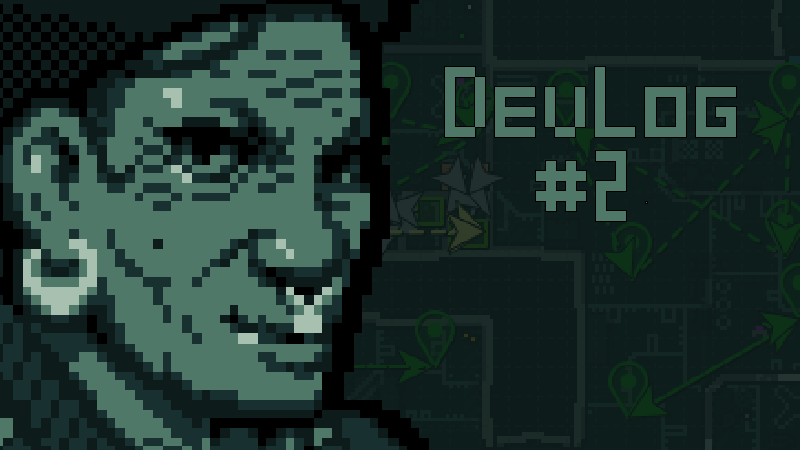
Jitter Monthly Devlog #2: Physics, Missions & Mama Kato
April was busy. Physics, optimization, new content, dialogues - all at the same time. Here's what happened. Objects can now be connected to each other We added a full physics constraint system for space objects.
In this update7
Full notes
Full Jitter update
Read the full published notes in a cleaner layout. The original post stays linked below.
What changed
1 fix6 additions0 changes0 removals
Performance
Gameplay
Balance
UI and audio
addedApril was busy. Physics, optimization, new content, dialogues - all at the same time. Here's what happened.
addedObjects can now be connected to each otherWe added a full physics constraint system for space objects. You can attach module to module, container to ship, structure to structure — with pivot joints, rigid welds, or distance links. Every connection has a breaking force. A hard enough hit or an explosion will snap the weld. That opens up a lot of gameplay options: towing, assembling structures in open space, traps, physics puzzles. Steam post image You can also lock the movement axis of an object now — so something only slides left-right, or only up-down. Useful for doors, rails, mechanical traps, anything that moves on a track. Steam post image
addedMission scripting got a lot more flexibleA big chunk of the month went into expanding the mission-building toolset. Short version — scenarios can now react to a much wider range of situations: - one event can automatically trigger the next in a chain - triggers can check game state on their own without waiting for an external signal - objects and items can be removed from the scene mid-game - scenes can react to who took damage and who killed whom — including faction filtering Steam post image We're investing a lot into this toolset right now, and it's a deliberate bet. The more powerful it gets, the more complex and dynamic missions we can build without writing code. We're hoping that one day it might be useful to more people than just us.
addedWe made the game fasterNot the most exciting devlog topic, but an important one. April was an optimization month. We changed how internal map data is stored — loading large locations and cave areas is noticeably faster now. Several systems update only when something actually changed, instead of every single frame. Physics bodies that are "sleeping" no longer waste resources. Result: fewer hitches when entering new zones, and more stable fps during active simulation.
addedNew contentWhile the systems work was going on, we were also adding content: - Pirate base habitation block - a new module with actual rooms where pirates live. Now there's somewhere to run into Kato's crew in a less hostile setting. - Grappling hook - a new space object type. Towing, grabbing, possibly more. - Interaction objects - key and pin as gameplay mechanics. Simple idea: one thing opens or activates another. - Cover object - for stealth scenarios. Something to hide behind. - New dock area and cave location fragments . Steam post image
addedMissions 2 & 3: dialogues and Mama KatoMost of the narrative content for Missions 2 and 3 is now written and integrated - dialogues, notifications, character reactions. New scenes appeared in the medbay and storage area. Steam post image One character worth talking about: Mama Kato . She leads the pirates, and she used to be a miner. She remembers very well what corporations do to people like her, and she drew her conclusions long ago. She's not "evil for the sake of evil" - she has a code, her own logic, and a certain respect for people who don't lie to her face. How your encounter with her plays out depends heavily on how you behaved getting there. We really want this moment to stick with players - and that's where a lot of our attention is right now. No spoilers. But progress here is serious.
Jitter changes
addedApril was busy. Physics, optimization, new content, dialogues - all at the same time. Here's what happened.
addedWe added a full physics constraint system for space objects. You can attach module to module, container to ship, structure to structure — with pivot joints, rigid welds, or distance links. Every connection has a breaking force. A hard enough hit or an explosion will snap the weld. That opens up a lot of gameplay options: towing, assembling structures in open space, traps, physics puzzles. Steam post image You can also lock the movement axis of an object now — so something only slides left-right, or only up-down. Useful for doors, rails, mechanical traps, anything that moves on a track. Steam post image
addedA big chunk of the month went into expanding the mission-building toolset. Short version — scenarios can now react to a much wider range of situations: - one event can automatically trigger the next in a chain - triggers can check game state on their own without waiting for an external signal - objects and items can be removed from the scene mid-game - scenes can react to who took damage and who killed whom — including faction filtering Steam post image We're investing a lot into this toolset right now, and it's a deliberate bet. The more powerful it gets, the more complex and dynamic missions we can build without writing code. We're hoping that one day it might be useful to more people than just us.
addedNot the most exciting devlog topic, but an important one. April was an optimization month. We changed how internal map data is stored — loading large locations and cave areas is noticeably faster now. Several systems update only when something actually changed, instead of every single frame. Physics bodies that are "sleeping" no longer waste resources. Result: fewer hitches when entering new zones, and more stable fps during active simulation.
addedWhile the systems work was going on, we were also adding content: - Pirate base habitation block - a new module with actual rooms where pirates live. Now there's somewhere to run into Kato's crew in a less hostile setting. - Grappling hook - a new space object type. Towing, grabbing, possibly more. - Interaction objects - key and pin as gameplay mechanics. Simple idea: one thing opens or activates another. - Cover object - for stealth scenarios. Something to hide behind. - New dock area and cave location fragments . Steam post image
April was busy. Physics, optimization, new content, dialogues - all at the same time. Here's what happened.
Objects can now be connected to each other
We added a full physics constraint system for space objects. You can attach module to module, container to ship, structure to structure — with pivot joints, rigid welds, or distance links. Every connection has a breaking force. A hard enough hit or an explosion will snap the weld. That opens up a lot of gameplay options: towing, assembling structures in open space, traps, physics puzzles. Steam post image You can also lock the movement axis of an object now — so something only slides left-right, or only up-down. Useful for doors, rails, mechanical traps, anything that moves on a track. Steam post image
Mission scripting got a lot more flexible
A big chunk of the month went into expanding the mission-building toolset. Short version — scenarios can now react to a much wider range of situations: - one event can automatically trigger the next in a chain - triggers can check game state on their own without waiting for an external signal - objects and items can be removed from the scene mid-game - scenes can react to who took damage and who killed whom — including faction filtering Steam post image We're investing a lot into this toolset right now, and it's a deliberate bet. The more powerful it gets, the more complex and dynamic missions we can build without writing code. We're hoping that one day it might be useful to more people than just us.
We made the game faster
Not the most exciting devlog topic, but an important one. April was an optimization month. We changed how internal map data is stored — loading large locations and cave areas is noticeably faster now. Several systems update only when something actually changed, instead of every single frame. Physics bodies that are "sleeping" no longer waste resources. Result: fewer hitches when entering new zones, and more stable fps during active simulation.
New content
While the systems work was going on, we were also adding content: - Pirate base habitation block - a new module with actual rooms where pirates live. Now there's somewhere to run into Kato's crew in a less hostile setting. - Grappling hook - a new space object type. Towing, grabbing, possibly more. - Interaction objects - key and pin as gameplay mechanics. Simple idea: one thing opens or activates another. - Cover object - for stealth scenarios. Something to hide behind. - New dock area and cave location fragments. Steam post image
Missions 2 & 3: dialogues and Mama Kato
Most of the narrative content for Missions 2 and 3 is now written and integrated - dialogues, notifications, character reactions. New scenes appeared in the medbay and storage area. Steam post image One character worth talking about: Mama Kato. She leads the pirates, and she used to be a miner. She remembers very well what corporations do to people like her, and she drew her conclusions long ago. She's not "evil for the sake of evil" - she has a code, her own logic, and a certain respect for people who don't lie to her face. How your encounter with her plays out depends heavily on how you behaved getting there. We really want this moment to stick with players - and that's where a lot of our attention is right now. No spoilers. But progress here is serious.
Bugs and small fixes
HUD disappearing after docking, camera jitter when dragging a unit, asteroid shadow color on destruction, a few cases where the UI flashed in the wrong spot on the first frame. And a bunch of smaller stuff.
What's next
Pushing toward the finish line on Missions 2 and 3. Continuing work on physics mechanics and the mission scripting toolset. See you in the next devlog!