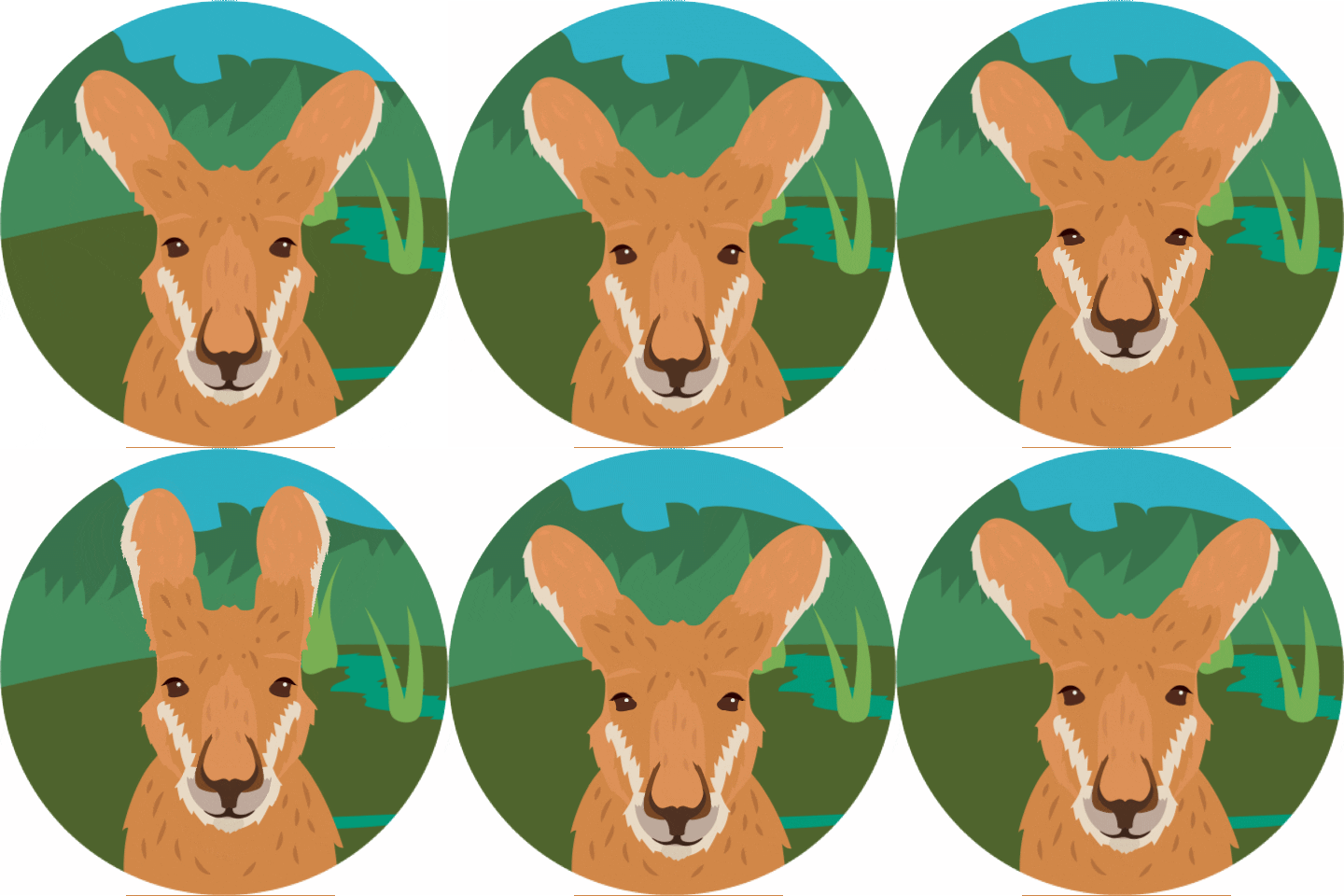
Today's animal don't need an introduction. It's native to Australia and is basically a symbol of it - Red Kangaroo.
Full notes
Full Zooconomy update
Read the full published notes in a cleaner layout. The original post stays linked below.
What changed
0 fixes1 addition1 change0 removals
Gameplay
Balance
addedRed KangarooAt times, red kangaroos congregate in large numbers; in areas with much forage, these groups can number as much as 1,500 individuals. Red kangaroos are mostly crepuscular and nocturnal, resting in the shade during the day. However, they sometimes move about during the day. Red kangaroos rely on small saltbushes or mulga bushes for shelter in extreme heat rather than rocky outcrops or caves. Grazing takes up most of their daily activities. Like most kangaroo species, they are mostly sedentary, staying within a relatively well-defined home range. However, great environmental changes can cause them to travel great distances. Kangaroos in New South Wales have weekly home ranges of 258–560 ha, with the larger areas belonging to adult males. When forage is poor and rainfall patchy, kangaroos will travel 25–30 km to more favourable feeding grounds. Another study of kangaroos in central Australia found that most of them stay close to remaining vegetation but disperse to find fresh plants after it rains. The red kangaroo is too big to be subject to significant non-human predation. They can use their robust legs and clawed feet to defend themselves from attackers with kicks and blows. However, dingoes and eagles can kill and eat joeys. Joeys are thus protected in their mother's pouch. The red kangaroo does have some major predators, like crocodiles. Extinct predators include the marsupial lion, the thylacine, Megalania, and the wonambi. Kangaroos are adept swimmers, and often flee into waterways if threatened by a predator. If pursued into the water, a kangaroo may use its forepaws to hold the predator underwater so as to drown it.
changedRed KangarooRed kangaroos live in groups of 2–4 members. The most common groups are females and their young. Larger groups can be found in densely populated areas and females are usually with a male. Membership of these groups is very flexible, and males (boomers) are not territorial, fighting only over females (flyers) that come into heat. Males develop proportionately much larger shoulders and arms than females. Most agonistic interactions occur between young males, which engage in ritualised fighting known as boxing. They usually stand up on their hind limbs and attempt to push their opponent off balance by jabbing him or locking forearms. If the fight escalates,
Zooconomy changes
addedAt times, red kangaroos congregate in large numbers; in areas with much forage, these groups can number as much as 1,500 individuals. Red kangaroos are mostly crepuscular and nocturnal, resting in the shade during the day. However, they sometimes move about during the day. Red kangaroos rely on small saltbushes or mulga bushes for shelter in extreme heat rather than rocky outcrops or caves. Grazing takes up most of their daily activities. Like most kangaroo species, they are mostly sedentary, staying within a relatively well-defined home range. However, great environmental changes can cause them to travel great distances. Kangaroos in New South Wales have weekly home ranges of 258–560 ha, with the larger areas belonging to adult males. When forage is poor and rainfall patchy, kangaroos will travel 25–30 km to more favourable feeding grounds. Another study of kangaroos in central Australia found that most of them stay close to remaining vegetation but disperse to find fresh plants after it rains. The red kangaroo is too big to be subject to significant non-human predation. They can use their robust legs and clawed feet to defend themselves from attackers with kicks and blows. However, dingoes and eagles can kill and eat joeys. Joeys are thus protected in their mother's pouch. The red kangaroo does have some major predators, like crocodiles. Extinct predators include the marsupial lion, the thylacine, Megalania, and the wonambi. Kangaroos are adept swimmers, and often flee into waterways if threatened by a predator. If pursued into the water, a kangaroo may use its forepaws to hold the predator underwater so as to drown it.
changedRed kangaroos live in groups of 2–4 members. The most common groups are females and their young. Larger groups can be found in densely populated areas and females are usually with a male. Membership of these groups is very flexible, and males (boomers) are not territorial, fighting only over females (flyers) that come into heat. Males develop proportionately much larger shoulders and arms than females. Most agonistic interactions occur between young males, which engage in ritualised fighting known as boxing. They usually stand up on their hind limbs and attempt to push their opponent off balance by jabbing him or locking forearms. If the fight escalates,
Today's animal don't need an introduction. It's native to Australia and is basically a symbol of it - Red Kangaroo.
Red Kangaroo
This species is a very large kangaroo with long, pointed ears and a square shaped muzzle [snout/nose]. They are sexually dimorphic as the males have short, red-brown fur, fading to pale buff below and on the limbs. Females are smaller than males and are blue-grey with a brown tinge, pale grey below, although arid zone females are coloured more like males. It has two forelimbs with small claws, two muscular hind-limbs, which are used for jumping, and a strong tail which is often used to create a tripod when standing upright. The red kangaroo's legs work much like a rubber band, with the Achilles tendon stretching as the animal comes down, then releasing its energy to propel the animal up and forward, enabling the characteristic bouncing locomotion.
The red kangaroo maintains its internal temperature at a point of homeostasis about 36 °C (97 °F) using a variety of physical, physiological, and behavioural adaptations. These include having an insulating layer of fur, being less active and staying in the shade when temperatures are high, panting, sweating, and licking its forelimbs. The red kangaroo's range of vision is approximately 300° (324° with about 25° overlap), due to the position of its eyes.
At times, red kangaroos congregate in large numbers; in areas with much forage, these groups can number as much as 1,500 individuals. Red kangaroos are mostly crepuscular and nocturnal, resting in the shade during the day. However, they sometimes move about during the day. Red kangaroos rely on small saltbushes or mulga bushes for shelter in extreme heat rather than rocky outcrops or caves. Grazing takes up most of their daily activities. Like most kangaroo species, they are mostly sedentary, staying within a relatively well-defined home range. However, great environmental changes can cause them to travel great distances. Kangaroos in New South Wales have weekly home ranges of 258–560 ha, with the larger areas belonging to adult males. When forage is poor and rainfall patchy, kangaroos will travel 25–30 km to more favourable feeding grounds. Another study of kangaroos in central Australia found that most of them stay close to remaining vegetation but disperse to find fresh plants after it rains. The red kangaroo is too big to be subject to significant non-human predation. They can use their robust legs and clawed feet to defend themselves from attackers with kicks and blows. However, dingoes and eagles can kill and eat joeys. Joeys are thus protected in their mother's pouch. The red kangaroo does have some major predators, like crocodiles. Extinct predators include the marsupial lion, the thylacine, Megalania, and the wonambi. Kangaroos are adept swimmers, and often flee into waterways if threatened by a predator. If pursued into the water, a kangaroo may use its forepaws to hold the predator underwater so as to drown it.
Red kangaroos live in groups of 2–4 members. The most common groups are females and their young. Larger groups can be found in densely populated areas and females are usually with a male. Membership of these groups is very flexible, and males (boomers) are not territorial, fighting only over females (flyers) that come into heat. Males develop proportionately much larger shoulders and arms than females. Most agonistic interactions occur between young males, which engage in ritualised fighting known as boxing. They usually stand up on their hind limbs and attempt to push their opponent off balance by jabbing him or locking forearms. If the fight escalates,