
Full notes
Full Zooconomy update
Read the full published notes in a cleaner layout. The original post stays linked below.
What changed
- Store
Zooconomy changes
In today's edition we will meet one of the most intelligent animals - Chimpanzee.
Chimpanzee
Adult chimpanzees have an average standing height of 150 cm (4 ft 11 in). Wild adult males weigh between 40 and 70 kg (88 and 154 lb) with females weighing between 27 and 50 kg (60 and 110 lb). In exceptional cases, certain individuals may considerably exceed these measurements, standing over 168 cm (5 ft 6 in) on two legs and weighing up to 136 kg (300 lb) in captivity.
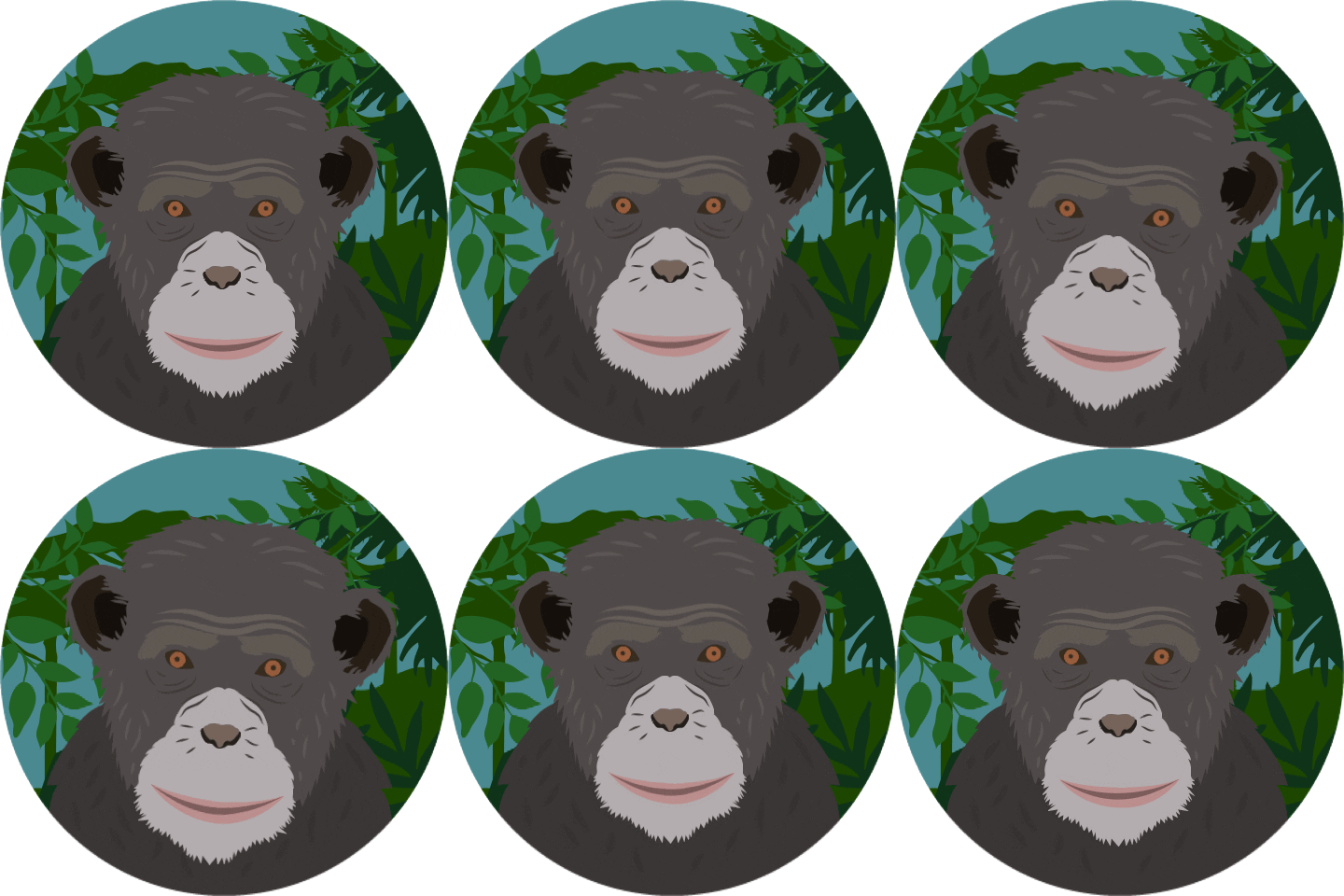
The chimpanzee is more robustly built than the bonobo but less than the gorilla. The arms of a chimpanzee are longer than its legs and can reach below the knees. The hands have long fingers with short thumbs and flat fingernails. The feet are adapted for grasping, and the big toe is opposable. The pelvis is long with an extended ilium. A chimpanzee's head is rounded with a prominent and prognathous face and a pronounced brow ridge. It has forward-facing eyes, a small nose, rounded non-lobed ears, a long mobile upper lip. Additionally, adult males have sharp canine teeth. Chimpanzees lack the prominent sagittal crest and associated head and neck musculature of gorillas.
Chimpanzee bodies are covered by coarse hair, except for the face, fingers, toes, palms of the hands, and soles of the feet. Chimpanzees lose more hair as they age and develop bald spots. The hair of a chimpanzee is typically black but can be brown or ginger. As they get older, white or grey patches may appear, particularly on the chin and lower region. The skin may range from pale to dark, though females develop swelling pink skin when in oestrus.
The chimpanzee is an omnivorous frugivore. It prefers fruit above all other food items but also eats leaves, leaf buds, seeds, blossoms, stems, pith, bark, and resin. A study in Budongo Forest, Uganda found that 64.5% of their feeding time concentrated on fruits (84.6% of which being ripe). In addition, 19% of feeding time was spent on arboreal leaves, mostly Broussonetia papyrifera and Celtis mildbraedii. While the chimpanzee is mostly herbivorous, it does eat honey, soil, insects, birds and their eggs, and small to medium-sized mammals, including other primates. Insect species consumed include the weaver ant Oecophylla longinoda, Macrotermes termites, and honey bees. The red colobus ranks at the top of preferred mammal prey. Other mammalian prey include red-tailed monkeys, infant and juvenile yellow baboons, bush babies, blue duikers, bushbucks, and common warthogs.
Chimpanzees live in communities that typically range from around 20 to more than 150 members but spend most of their time traveling in small, temporary groups consisting of a few individuals. These groups may consist of any combination of age and sexes. Both males and females sometimes travel alone. This fission-fusion society may include groups of four types: all-male, adult females and offspring, adults of both sexes, or one female and her offspring. These smaller groups emerge in a variety of types, for a variety of purposes. For example, an all-male troop may be organised to hunt for meat, while a group consisting of lactating females serves to act as a "nursery group" for the young.
At the core of social structures are males, which patrol the territory, protect group members, and search for food. Males remain in their natal communities, while females generally emigrate at adolescence. Males in a community are more likely to be related to one another than females are to each other. Among males, there is generally a dominance hierarchy, and males are dominant over females. However, this
Source
Changelog.gg summarizes and formats this update. How we read updates.