
Full notes
Full Zooconomy update
Read the full published notes in a cleaner layout. The original post stays linked below.
What changed
Zooconomy changes
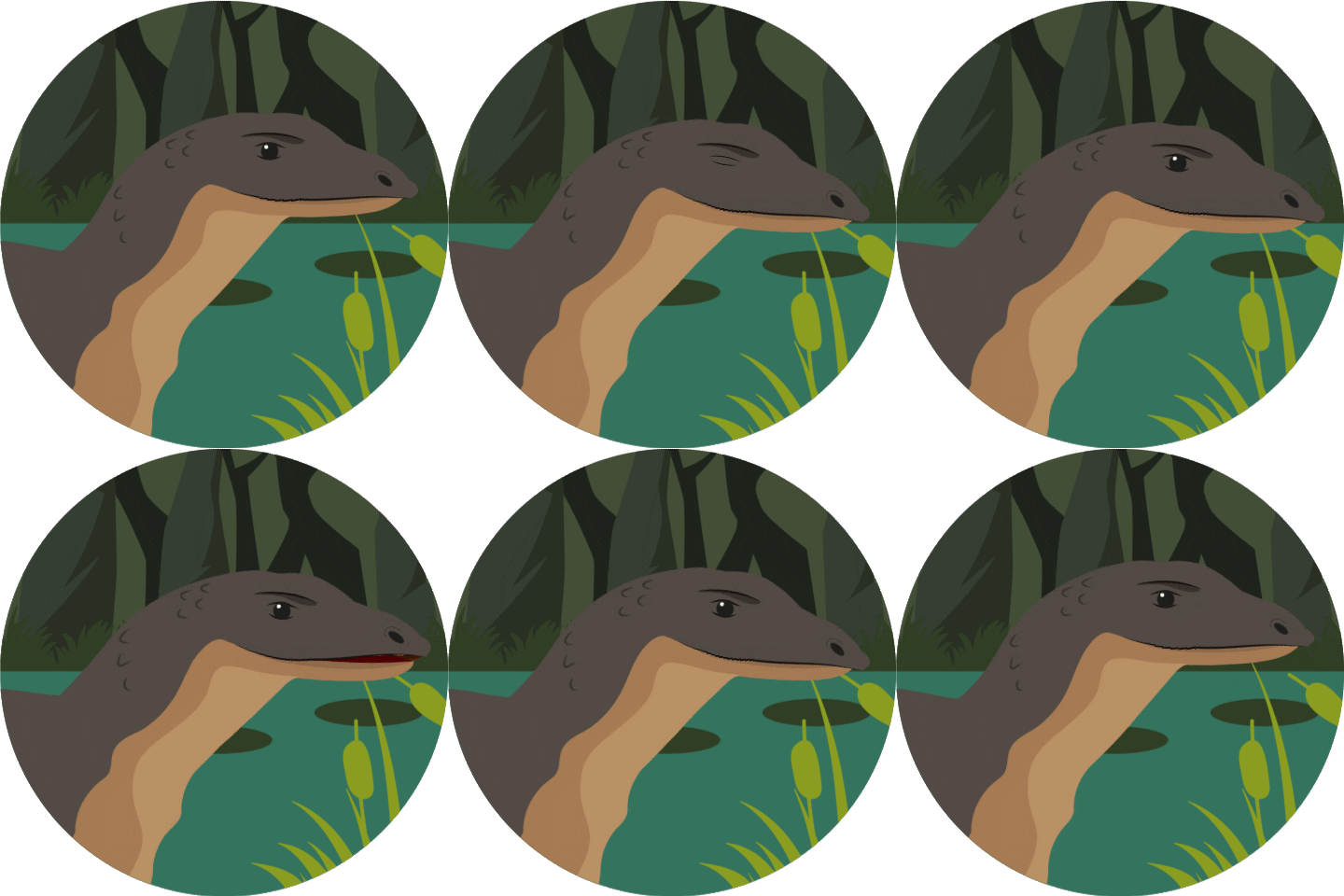
Let's meet one of the most common monitor lizards in Asia with a long blue forked tongue - Asian water monitor.
Asian water monitor
The water monitor is a large species of monitor lizard. Breeding maturity is attained for males when they are a relatively modest 40 cm (16 in) long and weigh 1 kg (2.2 lb), and for females at 50 cm (20 in). However, they grow much larger throughout life, with males being larger than females. Adults rarely exceed 1.5–2 m (4 ft 11 in – 6 ft 7 in) in length, but the largest specimen on record, from Sri Lanka, measured 3.21 m (10.5 ft). A common mature weight of V. salvator can be 19.5 kg (43 lb). However, 80 males killed for the leather trade in Sumatra averaged only 3.42 kg (7.5 lb) and 56.6 cm (22.3 in) snout-to-vent and 142 cm (56 in) in total length; 42 females averaged only 3.52 kg (7.8 lb) and 59 cm (23 in) snout-to-vent and 149.6 cm (58.9 in) in total length, although unskinned outsized specimens weighed 16 to 20 kg (35 to 44 lb). Another study from the same area by the same authors similarly estimated mean body mass for mature specimens at 20 kg (44 lb) while yet another study found a series of adults to weigh 7.6 kg (17 lb). The maximum weight of the species is over 50 kg (110 lb). In exceptional cases, the species has been reported to reach 75 to 90 kg (165 to 198 lb), though most such reports are unverified and may be unreliable. They are the world's second-heaviest lizard, after the Komodo dragon. Their bodies are muscular, with long, powerful, laterally compressed tails. The scales in this species are keeled; scales found on top of the head have been noted to be larger than those located on the back. Water monitors are often defined by their dark brown or blackish coloration with yellow spots found on their underside- these yellow markings have a tendency to disappear gradually with age. This species is also denoted by the blackish band with yellow edges extending back from each eye. These monitors have very long necks and an elongated snout. They use their powerful jaws, serrated teeth and sharp claws for both predation and defense. In captivity, Asian water monitors' life expectancy has been determined to be anywhere between 11–25 years depending on conditions, in the wild it is considerably shorter.
Water monitors defend themselves using their tails, claws, and jaws. They are excellent swimmers, using the raised fin on their tails to steer through water. When encountering smaller prey items, the water monitor will subdue it in its jaws and proceed to violently thrash its neck, destroying the prey’s organs and spine which leaves it dead or incapacitated. The lizard will then proceed to swallow it whole.
In dominantly aquatic habitats their semiaquatic behavior is considered to provide a measure of safety from predators. Paired with their generalist diet, this is thought to contribute to their ecological plasticity. When hunted by predators such as the king cobra they will climb trees using their powerful legs and claws. If this evasion is not enough to escape danger, they have also been known to jump from trees into streams for safety, a tactic similar to that of the green iguana.
Like the Komodo dragon, the water monitor will often eat carrion. They have a keen sense of smell and can smell a carcass from far away. They are known to feed on dead human bodies. While on the one
Source
Changelog.gg summarizes and formats this update. How we read updates.