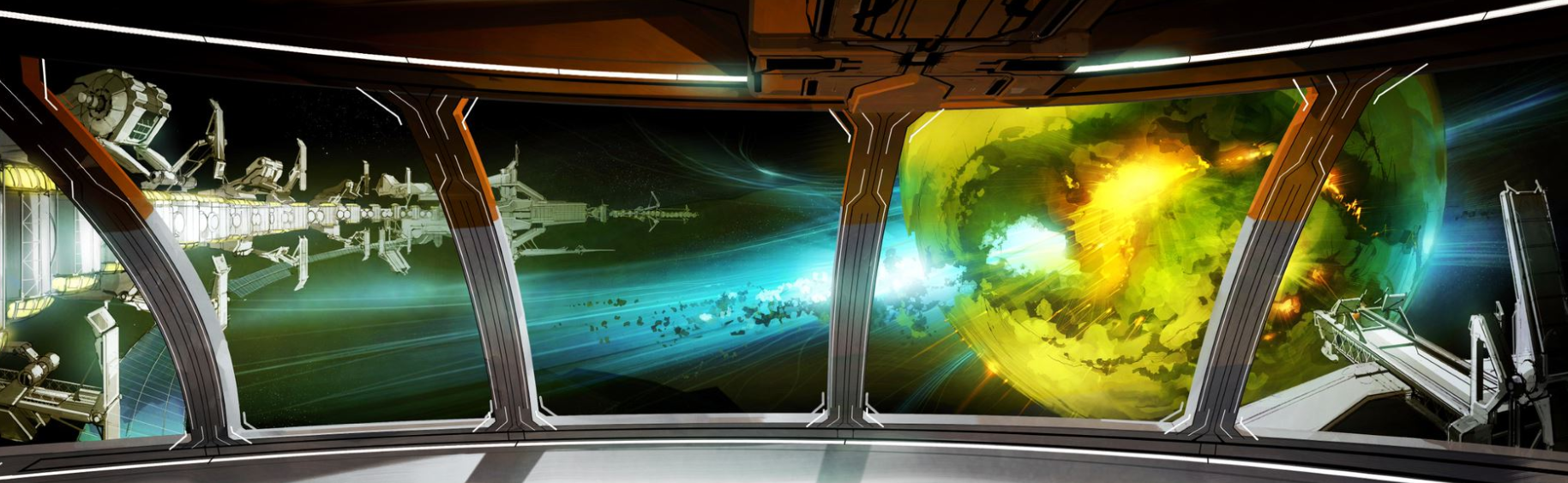
It's the year 2521 and you are stranded aboard a doomed deep space colony starship 1,291.6 light-years away from Earth. Today we’re taking a closer look at the technology of The Persistence.
Full notes
Full The Persistence update
Read the full published notes in a cleaner layout. The original post stays linked below.
What changed
0 fixes1 addition4 changes0 removals
Gameplay
Balance
Events
changedIt's the year 2521 and you are stranded aboard a doomed deep space colony starship 1,291.6 light-years away from Earth. Today we’re taking a closer look at the technology of The Persistence.
changedThe Eon-class colonisation vessel The Persistence is a self-configuring macrostructure imprinted inside the asteroid 19-Fortuna, a 200-km wide rock from the solar asteroid belt. Operating with a flight crew of seven personnel, the ship is designed for a maximum capacity of 780 settlers, to be clone-printed from the engram reservoir upon arrival at the intended destination.
addedMaking the journey with the smallest possible active crew is more resource efficient, and reduces psychological and political risks: deep space travel requires a particularly robust psyche. The ship is equipped with the latest singularity drive technology, and capable of making unprecedented 40 light year jumps. The previous generation of singularity drives capped out at about 20 light minutes (taking four jumps to cross from Earth to Titan, at a typical flight time of four weeks). These new drives use dark matter power feeds to extend the range of each jump by several orders of magnitude.
changedThe Persistence was headed towards Kepler Object of Interest 4742.0, at a distance of 1,291.6 light-years away from Earth. The exoplanet Kepler-442b Lyrus was the intended destination, owing to an advance survey mission having already established the potential for terraforming. 32 jumps were planned. On the thirteenth, however, a malfunction in the magnetic bottle containing the ship’s micro-singularity caused a ‘spark gap’ event, inexorably drawing the ship through a space-time fissure and into the gravity well of a black hole, believed to be the V4641 microquasar, 1,600 light-years from Earth.
changedNo ship has ever been known to survive a ‘spark gap’ event. Damage caused by the incident has destroyed key elements of the engram reservoir, disrupted the self-configuration functionality of the ship (causing the decks to intermittently reconfigure), corrupted one of the two clone printers, fried the sensor array, and put the singularity drive offline.
The Persistence changes
changedIt's the year 2521 and you are stranded aboard a doomed deep space colony starship 1,291.6 light-years away from Earth. Today we’re taking a closer look at the technology of The Persistence.
changedThe Eon-class colonisation vessel The Persistence is a self-configuring macrostructure imprinted inside the asteroid 19-Fortuna, a 200-km wide rock from the solar asteroid belt. Operating with a flight crew of seven personnel, the ship is designed for a maximum capacity of 780 settlers, to be clone-printed from the engram reservoir upon arrival at the intended destination.
addedMaking the journey with the smallest possible active crew is more resource efficient, and reduces psychological and political risks: deep space travel requires a particularly robust psyche. The ship is equipped with the latest singularity drive technology, and capable of making unprecedented 40 light year jumps. The previous generation of singularity drives capped out at about 20 light minutes (taking four jumps to cross from Earth to Titan, at a typical flight time of four weeks). These new drives use dark matter power feeds to extend the range of each jump by several orders of magnitude.
changedThe Persistence was headed towards Kepler Object of Interest 4742.0, at a distance of 1,291.6 light-years away from Earth. The exoplanet Kepler-442b Lyrus was the intended destination, owing to an advance survey mission having already established the potential for terraforming. 32 jumps were planned. On the thirteenth, however, a malfunction in the magnetic bottle containing the ship’s micro-singularity caused a ‘spark gap’ event, inexorably drawing the ship through a space-time fissure and into the gravity well of a black hole, believed to be the V4641 microquasar, 1,600 light-years from Earth.
changedNo ship has ever been known to survive a ‘spark gap’ event. Damage caused by the incident has destroyed key elements of the engram reservoir, disrupted the self-configuration functionality of the ship (causing the decks to intermittently reconfigure), corrupted one of the two clone printers, fried the sensor array, and put the singularity drive offline.
It's the year 2521 and you are stranded aboard a doomed deep space colony starship 1,291.6 light-years away from Earth. Today we’re taking a closer look at the technology of The Persistence.
The Eon-class colonisation vessel The Persistence is a self-configuring macrostructure imprinted inside the asteroid 19-Fortuna, a 200-km wide rock from the solar asteroid belt. Operating with a flight crew of seven personnel, the ship is designed for a maximum capacity of 780 settlers, to be clone-printed from the engram reservoir upon arrival at the intended destination.
Making the journey with the smallest possible active crew is more resource efficient, and reduces psychological and political risks: deep space travel requires a particularly robust psyche. The ship is equipped with the latest singularity drive technology, and capable of making unprecedented 40 light year jumps. The previous generation of singularity drives capped out at about 20 light minutes (taking four jumps to cross from Earth to Titan, at a typical flight time of four weeks). These new drives use dark matter power feeds to extend the range of each jump by several orders of magnitude.
The Persistence was headed towards Kepler Object of Interest 4742.0, at a distance of 1,291.6 light-years away from Earth. The exoplanet Kepler-442b Lyrus was the intended destination, owing to an advance survey mission having already established the potential for terraforming. 32 jumps were planned. On the thirteenth, however, a malfunction in the magnetic bottle containing the ship’s micro-singularity caused a ‘spark gap’ event, inexorably drawing the ship through a space-time fissure and into the gravity well of a black hole, believed to be the V4641 microquasar, 1,600 light-years from Earth.
No ship has ever been known to survive a ‘spark gap’ event. Damage caused by the incident has destroyed key elements of the engram reservoir, disrupted the self-configuration functionality of the ship (causing the decks to intermittently reconfigure), corrupted one of the two clone printers, fried the sensor array, and put the singularity drive offline.