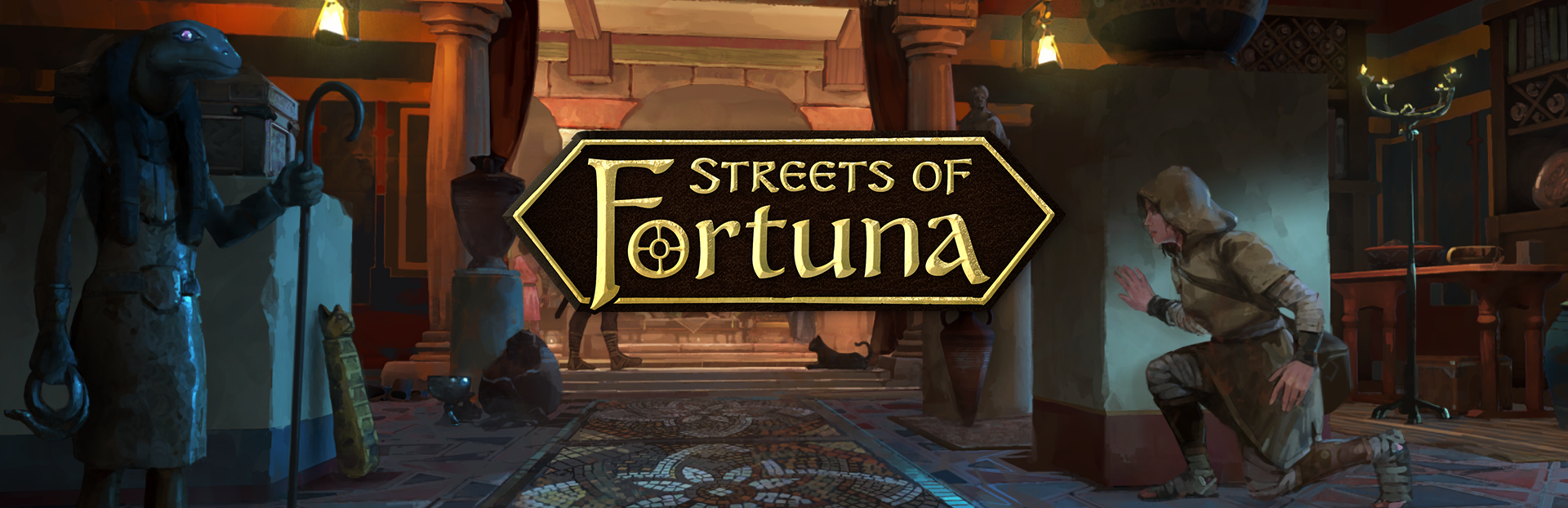
Different ways to make an antique city beautiful- Streets of Fortuna Devlog #8
Steam post image Hi my name is Xin, I'm the art director on Streets of Fortuna. Today I want to share the development process of our environment art.
Full notes
Full Streets of Fortuna update
Read the full published notes in a cleaner layout. The original post stays linked below.
What changed
0 fixes1 addition4 changes0 removals
Gameplay
changedLast year, the team went to Istanbul in Turkey for an amazing research trip. We learned so much from visiting historical architectural sites and museums, as well as just taking in the vibe. We took so many photos of different buildings, mosaics, and of course cats, and it all got us really inspired.
addedSo here are some of the initial exploration for our art style from a few years ago. At first we tried an unlit look, but we quickly realized that not having shadows made the game difficult to read because shadows help us understand depth and space. So we added lighting and shadows, which will become very important for features like stealth.
changedOne of our first successful tests was this brick wall. As a team, we really love that hand-painted look. We want there to be some level of stylization because it gives the game more character. It makes the buildings easier to read at different zoom levels, and also makes the game run better.
changedTo make our buildings in the game, we use a modular tileset system. It's a powerful tool that allows us to make a large number of buildings to populate the ever-expanding city of Fortuna. This also makes it easier for our in-game camera system to figure out which walls to hide and to reveal in a logical manner. Steam post image
changedCredits go to Quinn, our main 3D environment artist, and to Mehrdad, the main tile tool programmer. So this modular tile system also allows us to generate a large variety of styles for walls and floors, baseboards, trims, columns. What that means for the players is that buildings of different wealth levels, social classes, of different purposes--commercial, residential, government buildings, religious buildings, warehouses--they will all look different.
Streets of Fortuna changes
changedLast year, the team went to Istanbul in Turkey for an amazing research trip. We learned so much from visiting historical architectural sites and museums, as well as just taking in the vibe. We took so many photos of different buildings, mosaics, and of course cats, and it all got us really inspired.
addedSo here are some of the initial exploration for our art style from a few years ago. At first we tried an unlit look, but we quickly realized that not having shadows made the game difficult to read because shadows help us understand depth and space. So we added lighting and shadows, which will become very important for features like stealth.
changedOne of our first successful tests was this brick wall. As a team, we really love that hand-painted look. We want there to be some level of stylization because it gives the game more character. It makes the buildings easier to read at different zoom levels, and also makes the game run better.
changedTo make our buildings in the game, we use a modular tileset system. It's a powerful tool that allows us to make a large number of buildings to populate the ever-expanding city of Fortuna. This also makes it easier for our in-game camera system to figure out which walls to hide and to reveal in a logical manner. Steam post image
changedCredits go to Quinn, our main 3D environment artist, and to Mehrdad, the main tile tool programmer. So this modular tile system also allows us to generate a large variety of styles for walls and floors, baseboards, trims, columns. What that means for the players is that buildings of different wealth levels, social classes, of different purposes--commercial, residential, government buildings, religious buildings, warehouses--they will all look different.
Steam post image Hi my name is Xin, I'm the art director on Streets of Fortuna. Today I want to share the development process of our environment art. The look of our game is heavily influenced by the setting, which is inspired by fifth century Constantinople.
Last year, the team went to Istanbul in Turkey for an amazing research trip. We learned so much from visiting historical architectural sites and museums, as well as just taking in the vibe. We took so many photos of different buildings, mosaics, and of course cats, and it all got us really inspired.
Kitfox travel photos from Istanbul.
So here are some of the initial exploration for our art style from a few years ago. At first we tried an unlit look, but we quickly realized that not having shadows made the game difficult to read because shadows help us understand depth and space. So we added lighting and shadows, which will become very important for features like stealth.
Steam post image Early art exploration for Streets of Fortuna.
For example, we'll be able to tell more easily whether a character is in the light or in the shadows when you're sneaking around, and for showing the passage of time, which is an important element of simulating our NPC schedules.
Steam post image Time-laspe of the day/night cycle in a garden
One of our first successful tests was this brick wall. As a team, we really love that hand-painted look. We want there to be some level of stylization because it gives the game more character. It makes the buildings easier to read at different zoom levels, and also makes the game run better.
To make our buildings in the game, we use a modular tileset system. It's a powerful tool that allows us to make a large number of buildings to populate the ever-expanding city of Fortuna. This also makes it easier for our in-game camera system to figure out which walls to hide and to reveal in a logical manner. Steam post image
A small sampling of interior styles.
Credits go to Quinn, our main 3D environment artist, and to Mehrdad, the main tile tool programmer. So this modular tile system also allows us to generate a large variety of styles for walls and floors, baseboards, trims, columns. What that means for the players is that buildings of different wealth levels, social classes, of different purposes--commercial, residential, government buildings, religious buildings, warehouses--they will all look different.
We also have a video devlog of this update with footage of our art tools in action, and lots of behind-the-scenes art:
Our team is very excited to be working on the city of Fortuna, making it bigger and better-looking for our future players. You can check out all of our dev logs on YouTube, and we post daily updates to our Street of Fortuna channel on our Discord. On behalf of our little art team: Alex (characters), Quinn (environments), Thea (2d support) and myself (art lead), we thank you for reading. - Xin