
In this update15
Full notes
Full 商道逐权 Pursuit of Mercantile Power update
Read the full published notes in a cleaner layout. The original post stays linked below.
What changed
- Gameplay
- Events
- Performance
- Balance
- Security
- UI and audio
商道逐权 Pursuit of Mercantile Power changes
Hi everyone—this is the creator, MiFeng. Today I’m back with a quick follow-up on the content and development progress of Pursuit of Mercantile Power.
Today’s topic: the Bank.
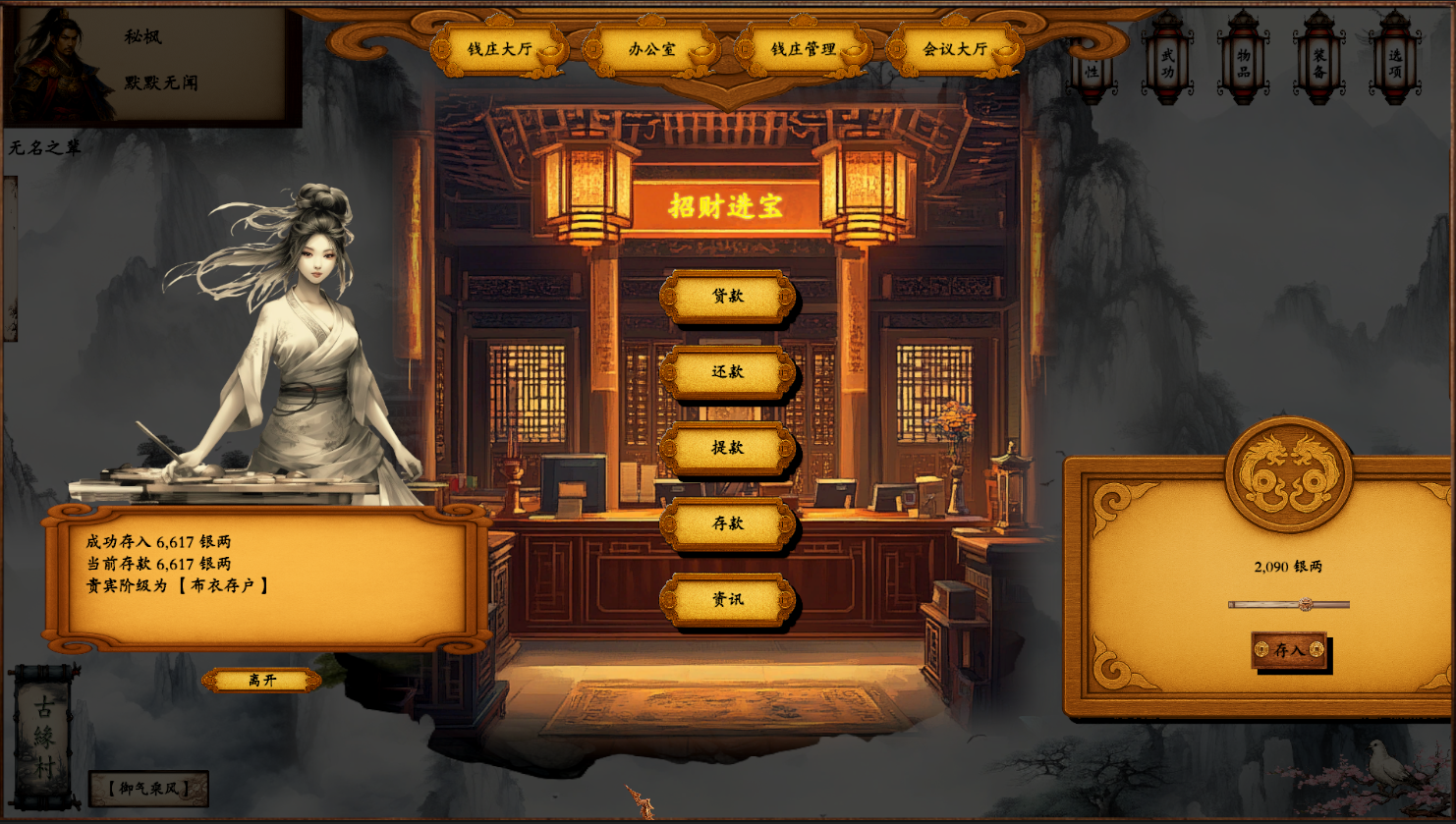
In Pursuit of Mercantile Power, the bank isn’t a decorative background building—it’s the true “heart” of the village’s cash flow. Everyone’s silver, every enterprise’s dividends, loans, interest, and financing all pass through here.
1) The Bank’s Role in the Village: Creating Value
In the current version, the bank roughly serves these roles:
Vault for depositors: The player, major enterprises (Escort Agency, Commerce Guild, Farm, Government), and villagers can deposit idle money to earn interest.
Loan broker: When an enterprise’s cash chain breaks, it comes here first to beg for liquidity. If the player needs money to acquire shares, loans can be used as leverage.
Settlement center: Many money movements circulate through the bank—dividends, deposits/withdrawals, loan repayments, and more.
Source of systemic risk: If the bank lends too aggressively and bad debt piles up, a bank run can occur. If liquidity dries up, the bank collapses first—and may drag the whole village down with it. Your deposits can vanish with the wreckage.
One blunt truth: if you can’t read the bank’s ledger, don’t talk about controlling commerce—you might not even know whether you’re about to blow up.
2) Deposits & VIP: The Richer You Are, the Politer the Bank Becomes
Once you open an account and deposit your idle funds, you start accumulating interest and a VIP level.
Already implemented:
Deposit interest
The more you deposit, the more interest you earn.
Interest is calculated daily and credited at month-end.
VIP tiers (based on deposit size)
Deposit more to unlock higher VIP.
Higher VIP can grant benefits such as:
friendlier loan limits and better rates
more “only-for-big-spenders” proposal options
higher proposal success rates
In one sentence: the more important you are to the bank, the gentler the bank becomes.
3) The Loan System: A Double-Edged Decision
The bank’s biggest business is lending. In Pursuit of Mercantile Power, both the player and enterprises can borrow—but the rules don’t favor anyone.
(1) Who can borrow?
Player: When you’re one step short of acquiring shares in the Escort Agency, Commerce Guild, the Bank itself, or the Farm—this is where you borrow.
Enterprises: The Escort Agency, Commerce Guild, Farm, and even the Bank itself can apply for loans when short on working capital.
Villagers: Villagers facing hardship can also request loans.
(2) How much can you borrow?
The loan cap isn’t based on “how great you are,” but on:
the bank’s current available liquidity
a system-defined “maximum lend-out ratio”
internal parameters such as bank staff size
Meaning: how much the bank dares to lend is calculated, not negotiated by tears.
(3) How is interest calculated?
Interest accrues daily and is charged monthly.
If you can’t pay interest that month, it is added into the principal—turning into a larger, uglier debt pile.
You may repay early during the loan period and gain a reputation reward—keeping your word still matters in this village.
(4) Who eats the bad debt?
If the borrower goes bankrupt, the fund pool is emptied, and repayment becomes impossible:
the loan is considered failed, and the bank takes the loss directly
depositors and shareholders feel it indirectly—worse interest returns, worse stock performance, and worse moods all around
From the player’s perspective:
You can use loans as leverage to seize shares and pull enterprise income into your own hands sooner…
Or you can get taught a lesson by compounding interest when things go wrong.Steam post image
4) Bankruptcy & Risk: When the Bank Falls, Who Gets Hurt?
The bank can also go bankrupt. The logic is consistent:
The bank runs out of money and can’t handle withdrawals or pay interest;
Or after chains of bad debt, the system determines the bank is truly drained.
Then the bank bankruptcy process triggers:
the bank stops normal operations
a large chunk of the village’s overall cash flow disappears
related stock prices and enterprise operations take a hit
If you’re a major shareholder of the bank, you don’t get to stand outside the blast radius. The more you earned, the more it hurts when it collapses.
The bank can be restarted—but only after all debts are repaid.Steam post image
5) Links to Other Systems (Already In, and What’s Coming)
In the current version, the bank is already connected to:
Cash-flow connectivity with major enterprises
Dividends, emergency financing, loans, and repayments across the Escort Agency, Commerce Guild, Farm, and Government may all pass through the bank. Your decisions in one enterprise can easily leave fingerprints in the bank’s ledger.
Integration with the stock system
The bank itself has shares.
You can be a depositor, a borrower, and a shareholder—all at once.
Bank profitability affects stock price and dividends.
Planned content to be added gradually in future updates includes:
“Bank Defense” events when security is too low: Bandits target the village’s biggest vault. The player must fight to protect the bank’s silver—or watch it get carried away piece by piece.
Bank + Government joint housing development: The bank provides capital, while the government provides land and building materials—creating long-term, mortgage-like projects that further enrich cash-flow routes.
These layers will stack over time—so you’ll need both a sharp ledger mind and a steady hand in combat.
6) What the Player Can Do at the Bank
To summarize, at the bank you can:
deposit money, earn interest, and push your VIP tier higher
borrow money as leverage to grab key shares before NPCs do
acquire shares and become a major shareholder
influence interest rate ranges and lending strategy (more proposals will be unlocked over time)
watch the ledger to judge whether you’ve pushed the whole village to the edge of systemic risk
If you just want to live safely on savings, the bank is happy to be your vault. If you want to become the shadow hand pulling the village’s cash flow, the bank is where you begin.
7) Current Development Status & What’s Next
Implemented (playable in the EA first release)
deposit and interest settlement system
player VIP tiers based on deposit size
loans for player and enterprises, interest, and overdue compounding logic
bad debt and bank bankruptcy mechanics
cash-flow links with Escort Agency, Commerce Guild, Farm, and Government
full save/load support (your debts won’t magically disappear)
Planned (to be added gradually)
more bank-focused story events (Bank Defense, housing development, etc.)
UI and report visualization improvements—easier to read, but also more brutal and revealing
Special reminder
This EA version includes theft events —so remember to deposit your silver in the bank. Otherwise… it really can get swiped.
Final Note
If you’re interested in a game where you calculate interest while fighting escort battles, while also manipulating shares and cash flow—please consider wishlisting Pursuit of Mercantile Power.
Every wishlist affects how much energy I can put into making these systems even more ruthless.
Thanks everyone—see you next time with another system.
Source
Changelog.gg summarizes and formats this update. How we read updates.