This week, I wanted to share my journey of incorporating puzzles into IHAS, an aspect of the game that enhances gameplay by breaking up the action.
Full notes
Full IHAS update
Read the full published notes in a cleaner layout. The original post stays linked below.
What changed
0 fixes2 additions5 changes0 removals
Gameplay
Events
UI and audio
changedThis week, I wanted to share my journey of incorporating puzzles into IHAS, an aspect of the game that enhances gameplay by breaking up the action. While IHAS is primarily a first-person shooter, I recognized early on that a stream of constant shooter sequences could lead to player fatigue. By introducing puzzles, I aimed to create a more balanced and engaging experience. The Puzzle Development Process
changedCreating the first puzzle was quite the challenge. Inspired by Remedy Entertainment’s Control I initially focused on mechanics like telekinesis for object manipulation . In my early attempts I quickly ran into issues such as objects clipping through walls and erratic movement. However, after several iterations and helpful tutorials, I finally achieved a functional grab mechanic.
changedWith that foundation laid, I moved on to designing puzzles. The first was a simple keypad puzzle, requiring players to input a 4-digit code to open a door. Following that, I created a "Key-Part" puzzle where players must find an item — be it a key, switch, or button — to unlock a door.
addedI also introduced jump pads into the game. I was playing Portal 2 at the time and thought they added to the environment, encouraging exploration and creativity in navigation, and are quite fun to use.
changedThe challenge with puzzles lies in ensuring they enhance gameplay without disrupting flow. I focused on making them intuitive, integrating them into the game world seamlessly . This required careful consideration of level design and how players would naturally interact with their surroundings - which proved to be a challenge in and of itself.
addedCreating puzzles for IHAS has proven to be a rewarding endeavor. They add depth and variety, enriching the player experience and complementing the game's action elements. I look forward to sharing more insights in future devlogs as I continue to refine and expand upon these mechanics.
IHAS changes
changedThis week, I wanted to share my journey of incorporating puzzles into IHAS, an aspect of the game that enhances gameplay by breaking up the action. While IHAS is primarily a first-person shooter, I recognized early on that a stream of constant shooter sequences could lead to player fatigue. By introducing puzzles, I aimed to create a more balanced and engaging experience. The Puzzle Development Process
changedCreating the first puzzle was quite the challenge. Inspired by Remedy Entertainment’s Control I initially focused on mechanics like telekinesis for object manipulation . In my early attempts I quickly ran into issues such as objects clipping through walls and erratic movement. However, after several iterations and helpful tutorials, I finally achieved a functional grab mechanic.
changedWith that foundation laid, I moved on to designing puzzles. The first was a simple keypad puzzle, requiring players to input a 4-digit code to open a door. Following that, I created a "Key-Part" puzzle where players must find an item — be it a key, switch, or button — to unlock a door.
addedI also introduced jump pads into the game. I was playing Portal 2 at the time and thought they added to the environment, encouraging exploration and creativity in navigation, and are quite fun to use.
changedThe challenge with puzzles lies in ensuring they enhance gameplay without disrupting flow. I focused on making them intuitive, integrating them into the game world seamlessly . This required careful consideration of level design and how players would naturally interact with their surroundings - which proved to be a challenge in and of itself.
This week, I wanted to share my journey of incorporating puzzles into IHAS, an aspect of the game that enhances gameplay by breaking up the action. While IHAS is primarily a first-person shooter, I recognized early on that a stream of constant shooter sequences could lead to player fatigue. By introducing puzzles, I aimed to create a more balanced and engaging experience.The Puzzle Development Process
Creating the first puzzle was quite the challenge. Inspired by Remedy Entertainment’s Control I initially focused on mechanics like telekinesis for object manipulation. In my early attempts I quickly ran into issues such as objects clipping through walls and erratic movement. However, after several iterations and helpful tutorials, I finally achieved a functional grab mechanic.
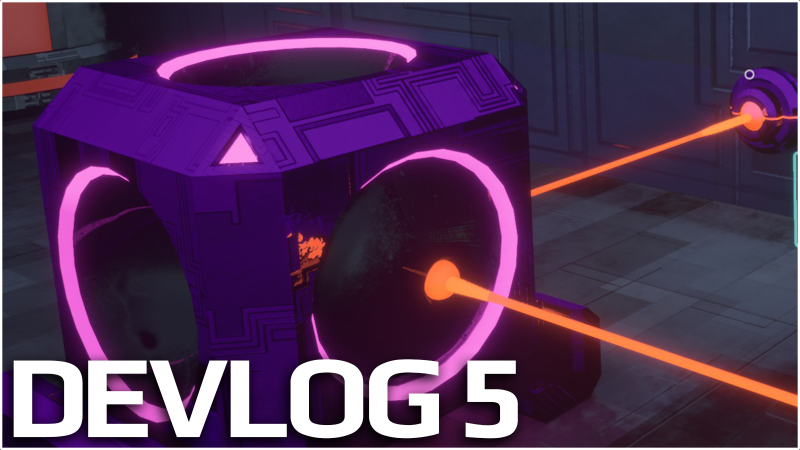
One of the earlier puzzles designed for IHAS.
With that foundation laid, I moved on to designing puzzles. The first was a simple keypad puzzle, requiring players to input a 4-digit code to open a door. Following that, I created a "Key-Part" puzzle where players must find an item — be it a key, switch, or button — to unlock a door.
I also introduced jump pads into the game. I was playing Portal 2 at the time and thought they added to the environment, encouraging exploration and creativity in navigation, and are quite fun to use.
Crafting Engaging Experiences
The challenge with puzzles lies in ensuring they enhance gameplay without disrupting flow. I focused on making them intuitive, integrating them into the game world seamlessly. This required careful consideration of level design and how players would naturally interact with their surroundings - which proved to be a challenge in and of itself.
Creating puzzles for IHAS has proven to be a rewarding endeavor. They add depth and variety, enriching the player experience and complementing the game's action elements. I look forward to sharing more insights in future devlogs as I continue to refine and expand upon these mechanics.