
In this update5
Full notes
Full Dark Queen of Samobor update
Read the full published notes in a cleaner layout. The original post stays linked below.
Repeated intro
Greetings, everyone.
What changed
- Maps
- Gameplay
Dark Queen of Samobor changes
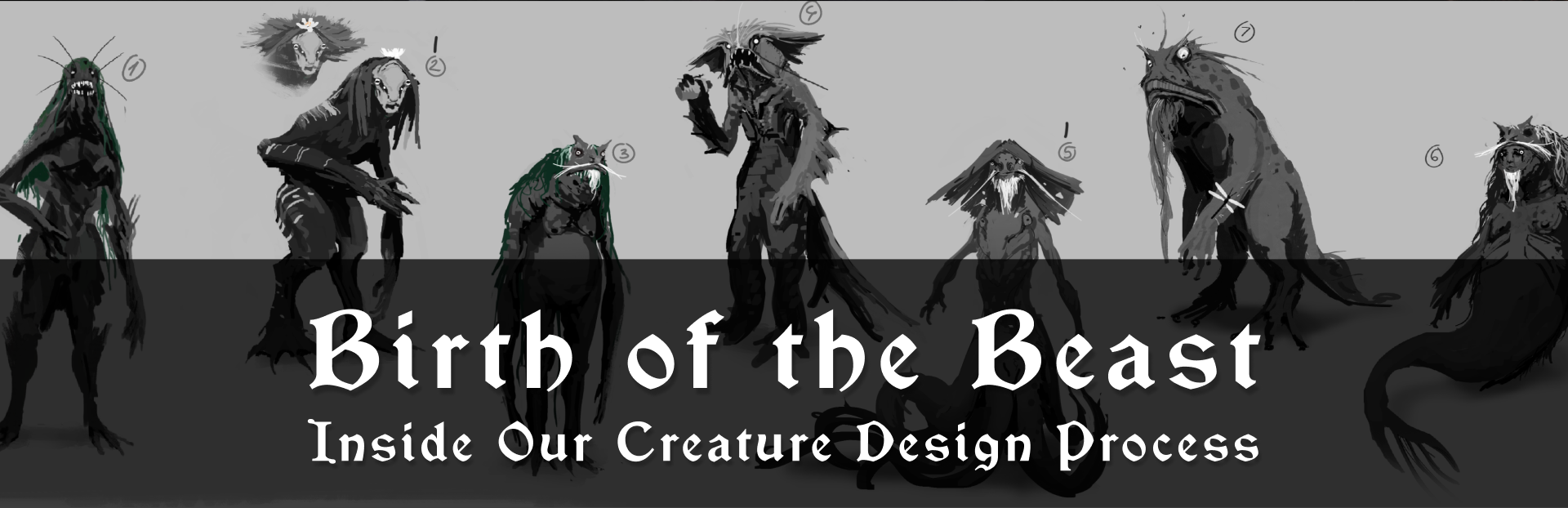
In this post, we’d like to give you a behind-the-scenes look at how we design our monsters. Every creature in our game goes through multiple stages of exploration and iteration before we settle on a final look. To show this process in action, let’s walk through the creation of one of our monsters: the Grabar.
Exploration
We always begin by exploring the overall shape, silhouette, and mood of a creature. At this stage, nothing is final. The goal is to experiment freely and discover interesting directions. Our designs are heavily inspired by local wildlife, especially when it comes to color palettes, textures, and small details. For the Grabar, we started with several rough concepts to explore different forms and personalities.
Steam post imageGrabar exploration - Concepts by Fran Petar Domljan
Variations
Once we settle on a general direction, we decide how the creature functions in gameplay. For the Grabar, we chose to create two variations: melee and ranged. After selecting the base look for each variation, we dive deeper into refining them individually. Below is our exploration of the ranged version of the Grabar, also known as the Spitter.
Steam post imageSpitter variations - Concepts by Fran Petar Domljan
Details
With the overall form locked in, we move on to detailing. This stage focuses on refining shapes and adding personality. Here are two head variations we explored for the Spitter, each pushing the character in a slightly different direction.
Steam post imageSpitter variations, head - Concepts by Fran Petar Domljan
Final variations
After multiple iterations, we narrow the designs down to a few strong candidates. These are close to what you’ll see in-game, with only minor tweaks left to be made. For the Grabar, we ended up with several “final look” options before making our last decision.
Steam post imageGrabar advanced variations - Concepts by Fran Petar Domljan
Final look
In the end, we selected these two versions as the definitive designs for the Grabar: the ranged and melee variants you’ll encounter in the game.
Steam post imageGrabar final look - Concepts by Fran Petar Domljan
This process is repeated for every monster and character we create. While we won’t go into the same level of detail for all of them here, we wanted to share a few more examples. Here is Bjesomar, an ancient creature of the forest, and Cesar, the ruler of the animals and guardian of the Queen’s treasure.
Steam post imageBjesomar exploration - Concepts by Mato Vincetic
Steam post imageCesar exploration - Concepts by Mato Vincetic
That’s all we wanted to share in this blog post. We hope you enjoyed this look into our creative process, and we’ll be back with more soon.
Thank you for following along!
Downtown Game Studio team
Source
Changelog.gg summarizes and formats this update. How we read updates.