Hello everyone, I'm Lucas, one of the designers of Gravity Royale VR. Today, I'd like to share how we designed the game levels in Gravity Royale VR. Game-level design for VR games posed a significant challenge for us.
Full notes
Full Z-Grav: Clash update
Read the full published notes in a cleaner layout. The original post stays linked below.
Repeated intro
Hello everyone, I'm Lucas, one of the designers of Gravity Royale VR. Today, I'd like to share how we designed the game levels in Gravity Royale VR.
What changed
0 fixes3 additions1 change0 removals
Events
Gameplay
Maps
addedGame-level design for VR games posed a significant challenge for us. Before starting the design process, we researched VR open-world game levels, such as Population One, Ghost of Tabor, Stand Out VR Battle Royale, etc. During this process, we realized that most open-world VR games were limited by the capabilities of all-in-one headsets, which restricted the design possibilities of the game level. Therefore, we made some new attempts, hoping that this direction would be right and loved by players. Drawing from our previous design experience and insights from traditional PC shooting games like Valorant, COD, and CSGO, we expanded our design thinking.
addedOur first focus was to ensure that players wouldn't feel bored while moving through the levels. We discovered an issue while playing a VR game where the non-combat moments consisted of long movement and item collection periods. Without adding some points of interest, this part of the gameplay could become dull. Therefore, in addition to the inherent fun of character movement mechanics, the environments themselves had to play a role. We wanted players to experience a sight for sore eyes and make a lasting impression on various areas and buildings as they moved through our scenes. Therefore, we placed a strong emphasis on the visual presentation of the game levels, aiming to showcase the aesthetic appeal to the fullest extent.
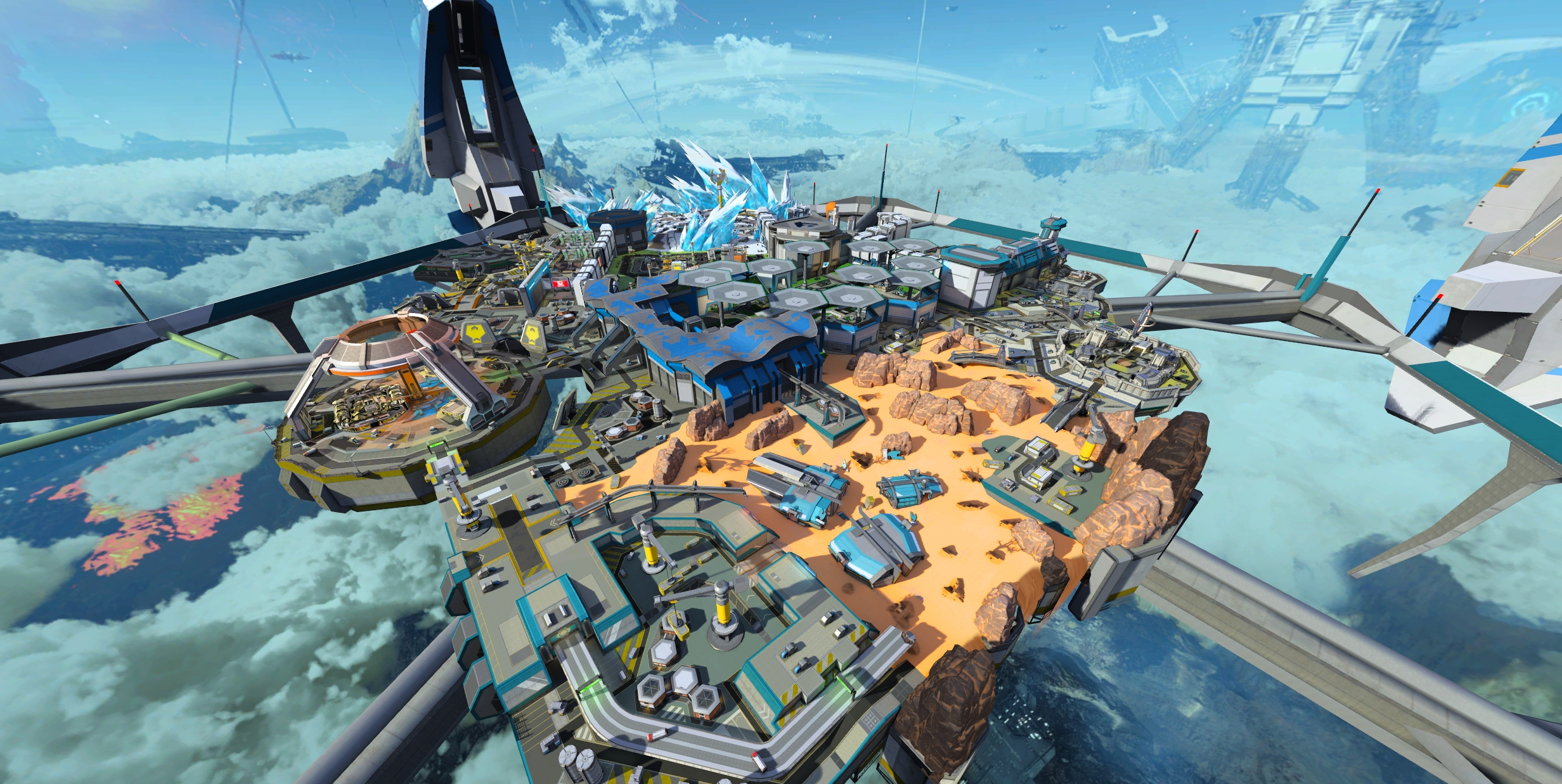
changedSecondly, we wanted players to experience combat in a futuristic world. Who wouldn't want to be a warrior fighting in space like Alita? Hence, our scenes were designed to have a technological and futuristic feel. Taking the first BR map in Pre-Alpha as an example, in our world-building, it's a floating city with industrial zones, residential areas, and even gardens. We have extensively crafted the setting for the first map, forming a small society within it and giving the city a beautiful name - Floating City. (It's both a floating city and "Float" is a programming term, XD).
addedThirdly, considering our character's unique movement mechanics and emphasizing multidimensional combat, we incorporated a significant amount of verticality into the level design. Unlike traditional PC levels that mainly focus on flat combat, VR players have more freedom to observe the vertical dimension. Therefore, we added numerous buildings and terrains with height variations. By combining this with the special rules of the BR mode, players who secure high ground in the safe zone early on gain a significant advantage.
Z-Grav: Clash changes
addedGame-level design for VR games posed a significant challenge for us. Before starting the design process, we researched VR open-world game levels, such as Population One, Ghost of Tabor, Stand Out VR Battle Royale, etc. During this process, we realized that most open-world VR games were limited by the capabilities of all-in-one headsets, which restricted the design possibilities of the game level. Therefore, we made some new attempts, hoping that this direction would be right and loved by players. Drawing from our previous design experience and insights from traditional PC shooting games like Valorant, COD, and CSGO, we expanded our design thinking.
addedOur first focus was to ensure that players wouldn't feel bored while moving through the levels. We discovered an issue while playing a VR game where the non-combat moments consisted of long movement and item collection periods. Without adding some points of interest, this part of the gameplay could become dull. Therefore, in addition to the inherent fun of character movement mechanics, the environments themselves had to play a role. We wanted players to experience a sight for sore eyes and make a lasting impression on various areas and buildings as they moved through our scenes. Therefore, we placed a strong emphasis on the visual presentation of the game levels, aiming to showcase the aesthetic appeal to the fullest extent.
changedSecondly, we wanted players to experience combat in a futuristic world. Who wouldn't want to be a warrior fighting in space like Alita? Hence, our scenes were designed to have a technological and futuristic feel. Taking the first BR map in Pre-Alpha as an example, in our world-building, it's a floating city with industrial zones, residential areas, and even gardens. We have extensively crafted the setting for the first map, forming a small society within it and giving the city a beautiful name - Floating City. (It's both a floating city and "Float" is a programming term, XD).
addedThirdly, considering our character's unique movement mechanics and emphasizing multidimensional combat, we incorporated a significant amount of verticality into the level design. Unlike traditional PC levels that mainly focus on flat combat, VR players have more freedom to observe the vertical dimension. Therefore, we added numerous buildings and terrains with height variations. By combining this with the special rules of the BR mode, players who secure high ground in the safe zone early on gain a significant advantage.
Game-level design for VR games posed a significant challenge for us. Before starting the design process, we researched VR open-world game levels, such as Population One, Ghost of Tabor, Stand Out VR Battle Royale, etc. During this process, we realized that most open-world VR games were limited by the capabilities of all-in-one headsets, which restricted the design possibilities of the game level. Therefore, we made some new attempts, hoping that this direction would be right and loved by players. Drawing from our previous design experience and insights from traditional PC shooting games like Valorant, COD, and CSGO, we expanded our design thinking.
Our first focus was to ensure that players wouldn't feel bored while moving through the levels. We discovered an issue while playing a VR game where the non-combat moments consisted of long movement and item collection periods. Without adding some points of interest, this part of the gameplay could become dull. Therefore, in addition to the inherent fun of character movement mechanics, the environments themselves had to play a role. We wanted players to experience a sight for sore eyes and make a lasting impression on various areas and buildings as they moved through our scenes. Therefore, we placed a strong emphasis on the visual presentation of the game levels, aiming to showcase the aesthetic appeal to the fullest extent.
Secondly, we wanted players to experience combat in a futuristic world. Who wouldn't want to be a warrior fighting in space like Alita? Hence, our scenes were designed to have a technological and futuristic feel. Taking the first BR map in Pre-Alpha as an example, in our world-building, it's a floating city with industrial zones, residential areas, and even gardens. We have extensively crafted the setting for the first map, forming a small society within it and giving the city a beautiful name - Floating City. (It's both a floating city and "Float" is a programming term, XD).
Thirdly, considering our character's unique movement mechanics and emphasizing multidimensional combat, we incorporated a significant amount of verticality into the level design. Unlike traditional PC levels that mainly focus on flat combat, VR players have more freedom to observe the vertical dimension. Therefore, we added numerous buildings and terrains with height variations. By combining this with the special rules of the BR mode, players who secure high ground in the safe zone early on gain a significant advantage.
In addition, our level design team has many imaginative ideas for VR scenes and can't wait to introduce these levels to players in the future. Of course, if you have any good ideas or suggestions, you are highly welcome to leave a message on our Discord community or other media platforms.
We will continuously improve Gravity Royale VR and let's create an incredible gaming experience together!