
Full notes
Full THE LIFT: Supernatural Handyman Simulator update
Read the full published notes in a cleaner layout. The original post stays linked below.
What changed
- Gameplay
- Balance
THE LIFT: Supernatural Handyman Simulator changes
Hello!
This is the Narrative Designer from Fantastic Signals checking in…shall we talk about immersive storytelling?
The LIFT doors are closing, the engine has sneezed a couple of times, and now it’s good to go.
It’ll be just fine.
From the first floor, where we discussed the results of the Playtest, we’re heading up to the second; exploring the narrative of our game.
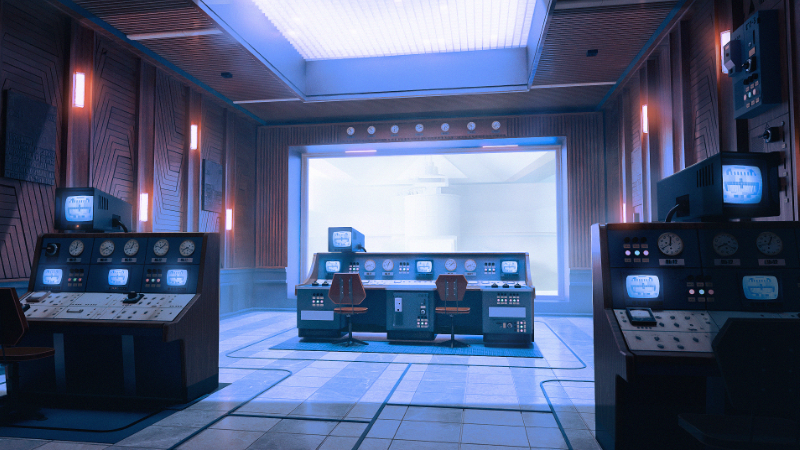
Hang on one second…I’ll just adjust the lights and repair the armchair for you.
Steam post imageNow, that’s better. We’re in an immersive sim, after all.
Or…are we?
Is The LIFT just an immersive sim where you restore an abandoned research facility because a higher authority tells you to, without really knowing why?
This is the dilemma we had on our hands back in early 2025. A solid, sturdy game with a great nostalgic vibe. The flow was already clicking, the concepts felt locked in, and the core gameplay was almost there. But when it came to narrative, we were stuck.
On paper, the premise is rich: you wake up from stasis on an abandoned station. You have no idea what happened, yet it’s obvious something went very wrong. It’s the perfect playground for a detective story, a thriller, a sci-fi drama about phantom nostalgia for a lost paradise. Yet your main job as a character is restoring the station according to the job manual. Fix what’s broken. Replace what’s missing. Clock in, clock out. So how do you fit a complex mystery with moral choices into the plot of a blue-collar immersive sim? The genre and its rules caught us in a trap.
At first, we tried adding a narrative beat to every step of the main progression along the engineering path of restoring the station. But it quickly felt like the experience was being forced onto the player. We planned everything, from the economy, to the repairs, to key story beats, and ended up trapping the story instead of letting it live. It was pure spoon-feeding, rather than letting players discover the narrative for themselves.
Everything was locked down: the Reactor floor, the narrative, even the excitement…
Until we realized the genre was also the key to get out of this trap.
How so?
Well, in immersive sims (or should I say, in games in general?), it’s not about forcing you to act, it’s about making you want to. Step into a role, start being that character, and let the urge to act like them guide your choices. The same design logic applies to everything: from fixing the fuse box to wanting to uncover the story.
We don’t make the player fix every little thing on the floor, as it’s not required for the main progression. You could just turn on the Reactor and other devices when prompted and move on to the next task. But the world is built so that you want to do more than that: to fix things that aren’t strictly necessary for the next quest, yet matter to the strange creatures inhabiting the station. To discover what went wrong with those who lived here before. To uncover the little story beats that make the station feel alive.
And as the genre demands, you’re learning the story the same way you repair basically anything in the station: elbow‑deep, hands dirty. Not just repairing the station, but reviving the past and saving the world your way, to the extent you feel is necessary.
Steam post image Yes, around here we believe in personal responsibility.
In more practical terms: the player now gets to discover the story through side content. Tons of it. Yes, you’re still restoring the station as part of the main storyline. But while you’re doing what you were told to do (because, well, it’s literally your job), life keeps happening around you. And you get to choose how you take part in it. Who you talk to. What you ask. Who you listen to. What you ignore. Whose requests you fulfil. Who you help. Who you befriend. What you investigate.
That’s probably why our Narrative Department’s Notion page is now called “Life is a set of side quests”.
For the game, though, this decision had massive consequences, in the best possible way.
Here’s how the Miro board for our Post Office floor from the playtest looked in early 2025:
Steam post image White boxes are the main quest steps, blue boxes are the side quest steps.
…and here’s how it looks in February 2026. Same game, same floor:
Steam post image White boxes are still the main quest steps, blue boxes are still the side quest steps. But there’s more! Green boxes are for the task sequences — smaller story beats that are not tracked in the quest log (more about our new quest log later!). Yellow boxes are for the topics that can be discussed with the NPCs, so that they can tell the story from their own perspective.
The colors on the Miro boards almost speak for themselves, here.
A pretty reliable sign that you’ve escaped a narrative dead-end is when things start happening with the plot and characters almost on their own.
Remember Scrapper from the playtest? So: you arrive on an abandoned floor. Everyone’s gone. And then you see this creature, a Gollum-like scavenger, a hoarder, in cute sunglasses. But from a narrative point of view he’s more than a weird character. He’s actually a goldmine of stories and secrets for us to dig into. What could he offer you? Who does he think you are? Who does he dream of after closing his booth?
Steam post image Scrapper babbling on endlessly in his booth.
In the 2025 version of the Post Office, he was basically a shy little detour from the main path.
One tiny quest
he wanted a “Best Employee of the Post Office” plaque.
Sure, there was a bit of story there
a pathetic-but-sweet character, a small hint of who used to work here before, and that was it. Just some flavor on your way between work tasks.
But in the 2026 Post Office, the Scrapper finally got to stretch his legs. His eyes are glowing. (Okay, technically it’s the narrative team’s eyes that are glowing, and you can’t see Scrapper’s eyes behind the sunglasses anyways, but you get the idea). He wants everything. He cares about everything. He has an opinion on everything. He’s even getting excited about the idea of fixing that thing in the …
… oh, my Game Director told me I’m not allowed to spoil quest plots. Or gameplay for that matter.
So, let’s move on. Time to get up from that warm armchair and step into somewhere new. There’s a new narrative feature to keep you on track through our expanded narrative.
Illuminating the path chosen entirely by you.
Look, we’ve lit the way so that you don’t stumble in the dark of our complex story!
It’s a brand new quest log!
The old one was as simple as it gets. It had tasks. That was it. It covered the main quests.
The B.U.G. (’Bureau Utility Guide’) you were given in the Intro.
Now, narratively, our game is all about multitasking, making friends, and taking part in as many little things happening around you as you want to. So, we’re making some changes to the B.U.G.:
The main tab that will now be called Assigned Duties isn’t going anywhere. That’s still your main quest, straight from the Bureau.
We’re adding another tab, Additional Tasks, for the side quests given to you by the NPCs.
We are also building a fully separate tab for Matters for Discussion. Now, whenever you come across a curious find or run into a problem in the echoing corridors of the Institute, you’ll have a list of NPCs and the topics you can discuss with them right in your pocket!
Once our programmers wrap up implementation, we’ll bring you more as it’s ready.
Speaking of bringing you more, what would you like to learn next from our dev journey? We’ve got a whole queue of team members ready to share insights, whether it’s core gameplay, art direction, the music score, the game’s economy and flow, or how we build (and break!) the objects you interact with. Let us know what to highlight and what sparks your curiosity!
Thank you for the LIFT ride, and see you soon!
Vera Alexandrova, the narrative designer of Fantastic Signals
P.S.
Hey folks,
It’s Ivan here, popping in for a quick announcement!
We are going to have a series of playtests, starting with a small, closed one for members of our Discord community in a couple of weeks. Please join in and check out the announcements channel for more info!
Source
Changelog.gg summarizes and formats this update. How we read updates.