
Full notes
Full Sanctuary: Shattered Sun update
Read the full published notes in a cleaner layout. The original post stays linked below.
What changed
- Gameplay
- Performance
- Maps
- Balance
- Events
Sanctuary: Shattered Sun changes
A specific task has been to create distinct VFX that separate each factions own style. Each faction has their own unique technology they use from building their army to generating propulsion for their arsenal.
Factions
EDA being the earth forces have standard technology, although for bigger units the tier of these technological weapons are cranked up a notch. EDA ground and air units have advanced tanks and drone technology, so the references we explored are mostly from modern military. From rocket launchers to railguns, EDA VFX is an advanced earthly force that combines conventional warfare methods. EDA effects pack detailed explosions, sparks and unit debris flying everywhere.
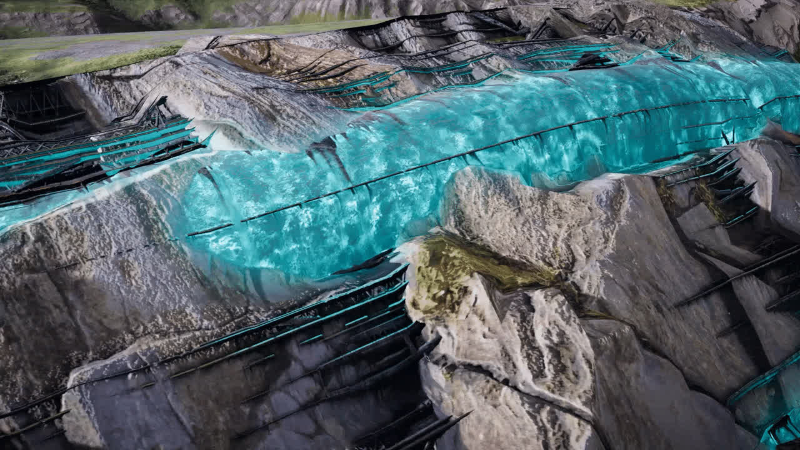
Chosen have mastered the liquid plasma technology that propels their most destructive forces. The burning liquid plasma can be utilized through rockets, artillery strikes and be shot by air units. When their units die they crash and burn with blue persistent plasma boiling the environment. Their organic designs translate into the VFX, curving and bending with various forces. Chosen VFX is centred around liquid simulations as their physics carry more physical weight as opposed to classic explosions.
Guard has excelled in integrating forces used by celestial objects such as the sun and its magnetic properties. Their technology can effectively destroy enemy units as if they can unleash the burning fuel of stars packed up in bombs and rockets. They have also integrated strong lasers that can apply massive damages to enemy strongholds. Guard VFX ranges from fiery blasts to molten metals bending in magnetic fields.
Environmental VFX
There are various environmental VFX that decorate the background as the players battle on the map. From huge broken pieces of gigantic rings to split open landscapes revealing the underlying structure of the tech driven planet. Background assets are baked to either 2d cards or lowpoly versions with packed detail that doesn't need to be seen up close—baking to skybox, creating matte plates with layers for depth, or simplified meshes that fill the horizon.
The camera can be played from top down but also viewed from side angles where it sees the horizon. This created challenges where background details had to be stitched as they merge with the playable area of the map.
The specific challenges of an RTS VFX
When there are near thousands of units all shooting and exploding at the same time along with idle environmental VFX, it is very easy to choke the graphics performance without specialized optimization.
A major optimization is to cull the amount of particles visible on screen so that no matter how dense the battle gets the rendering of special effects does not exceed its quota. A script collects all instanced particles on the entire map and sets a custom amount only rendered near where the camera is. This gives understanding for how VFX will impact performance at its most intensive scenarios and makes it easy to scale quality options by changing the capped particle settings.
Another big issue is overdraw where multiple particles are rendered on top of each other. While mesh renderers can have native culling solutions, the transparent nature of particles makes this harder to tackle. Smaller units create smaller particles while bigger units create larger long lasting particles that can become unavoidable for overdraw.
There needs to be a balance for packing information to a single quad along with using special meshes that fake volumetric effects from specific angles. Additive blended effects like sparks, plasma and fire can be adaptive to quads viewed from many angles due to their wispy structures but a large plume of smoke can look odd from a diagonal angle. Smokes all have to face the camera yet fire and sparks can have 3d meshes that don't need to orient towards the camera.
Using simulations to create and bake VFX
The texture flipbook system for particles is the most useful solution used today to bake simulations onto a single texture. Solutions like frame blending and motion vectors warp each step into the next frame to create smooth transitions. The challenge is finding the sweet spot for how many frames an effect should have versus how detailed it should look per frame.
For the full technical breakdown including our particle lighting solutions, terrain decal systems, cliff mesh implementation, and custom microdetailer feature, read the complete VFX development article on our devblog: https://www.sanctuaryshatteredsun.com/post/vfx-of-sanctuary-shattered-sun
Source
Changelog.gg summarizes and formats this update. How we read updates.