
Full notes
Full Rumbral update
Read the full published notes in a cleaner layout. The original post stays linked below.
What changed
- UI and audio
- Gameplay
Rumbral changes
In Rumbral, color is not just an aesthetic decision. It is part of the language of the world.
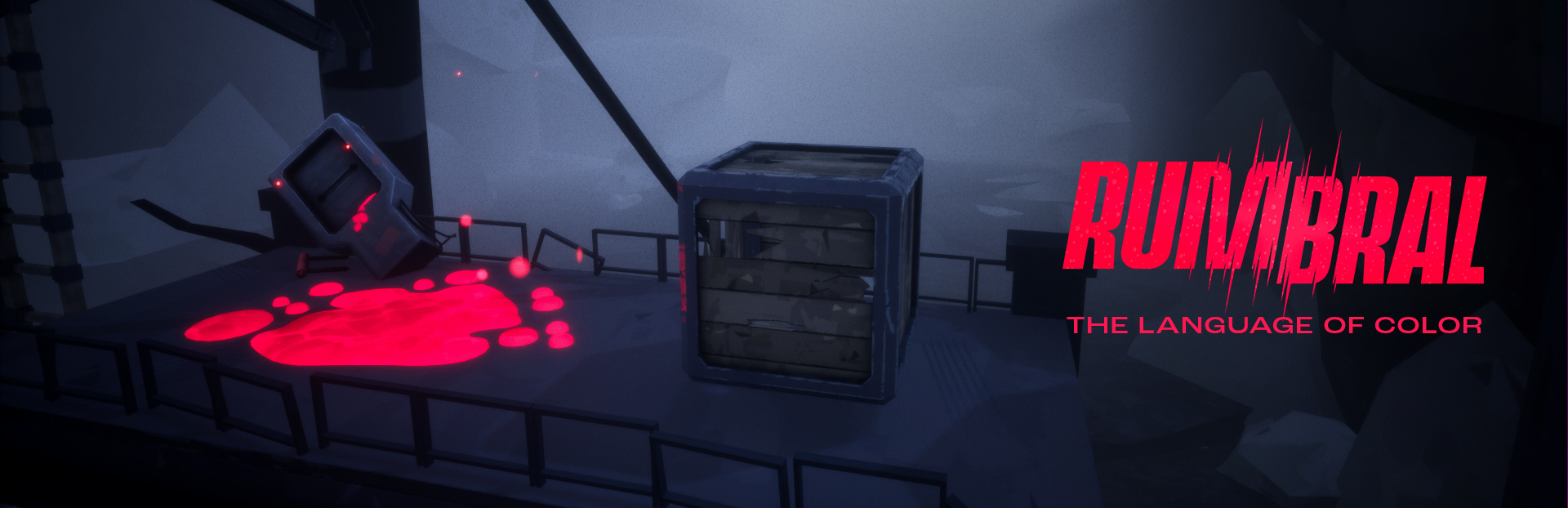
From the beginning, we chose to work with a restrained and minimal color palette. Most environments lean toward a nearly monochromatic range of tones, where nothing stands out too strongly on its own. Atmospheric fog helps blend shapes and surfaces together, making every element feel like part of the same world.
Throughout the journey, the palette slowly evolves. Early areas are dominated by cold green tones, which gradually shift toward deeper blues and eventually subtle violet hues as the player progresses. These transitions are meant to reinforce the feeling of moving through a place that is quiet, distant and slightly unsettling.
This restrained palette also serves another purpose: it creates a canvas.
Because at certain moments, the world breaks that visual harmony.
The strange magenta liquid that allows you to shift between timelines is the only color that truly disrupts the environment. Its saturation, contrast and complementary relationship with the surrounding tones make it impossible to ignore.
That magenta is not only a gameplay mechanic, it became the visual identity of Rumbral itself.
To highlight it, we carefully balanced several elements: complementary colors, contrast between light and shadow, variations in saturation, and the overall composition of the scene. All of these decisions work together so that when the magenta appears, the world immediately feels different.
It signals that something is about to change.
Without markers, arrows or explicit instructions, color quietly becomes one of the ways the game communicates with the player.
Sometimes the world doesn’t tell you what to do. It simply lets the colors guide you.
— The Rumbral Team
Source
Changelog.gg summarizes and formats this update. How we read updates.