
In this update15
Full notes
Full Raveren: The Legend Of Etheria update
Read the full published notes in a cleaner layout. The original post stays linked below.
What changed
- Performance
- Maps
- UI and audio
- Gameplay
- Balance
Raveren: The Legend Of Etheria changes
Weather Foundations, Engine Migration, Performance Gains & Worldbuilding Progress
Welcome back to another monthly update. February has been a big turning point for Raveren—not because we dropped new content, but because we spent the month strengthening the systems that will define how the game feels for years to come.
This update is a peek behind the curtain at the tech, tools, and worldbuilding work happening right now. None of this is public yet, but it sets the stage for everything that comes next.
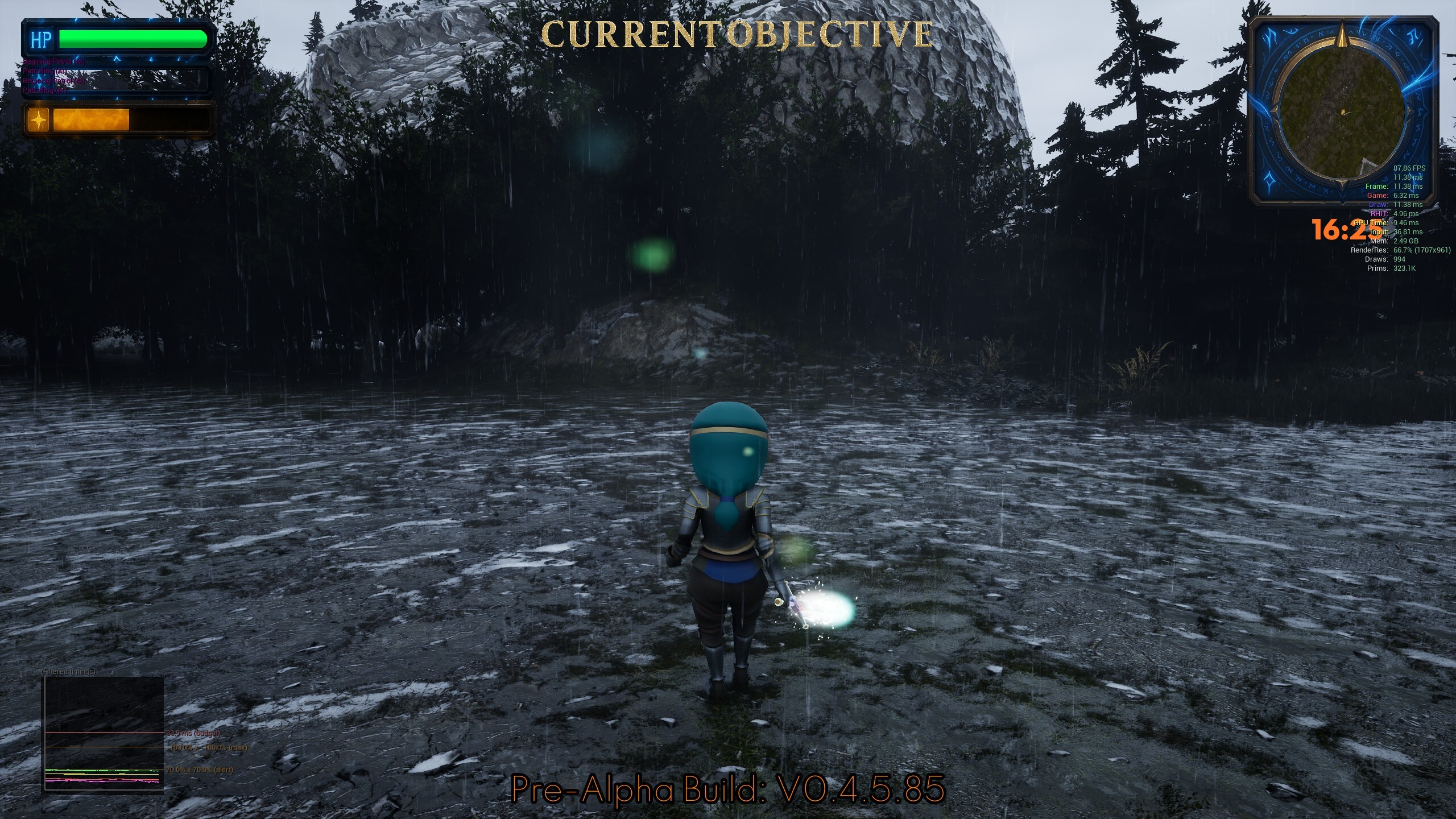
Dynamic Weather System
Weather has always been a core part of Raveren’s identity, and we want the game to reflect that. This month, we wrapped up the first full implementation pass of our dynamic weather system—a huge foundational milestone.
What’s Working So Far
A central weather controller that manages global and regional conditions
Smooth transitions between weather states
Procedural storms that form and fade based on simulation rules
Fog that drifts, thickens, and thins depending on wind and terrain
Wind‑responsive effects across foliage, debris, cloth, and rain
Lighting that reacts to cloud cover, precipitation, and time of day
Ambience and audio that shift with temperature, humidity, and wind
A new material‑integrated weather function, letting materials react physically to conditions—snow now falls and blows in a much more natural way
Even in this early state, the island feels noticeably more alive. Walking from a calm beach into a fog‑soaked forest now feels like a genuine change in atmosphere.
Why It Matters
Weather isn’t just a visual effect for us—it’s a storytelling tool. It sets the tone, shapes pacing, and influences how players experience the island. Raveren should feel like a place with moods, not a static backdrop.
What’s Coming Next
Biome‑specific weather (coastal storms, inland fog, highland winds)
More nuanced transitions
Early gameplay systems that react to weather
Better cloud behaviour and sky response
Environmental storytelling tied to conditions
This system will keep growing throughout development and eventually become one of the game’s signature features.
Unreal Engine 5.7 Migration – A Big Technical Step Forward
We’ve fully migrated Raveren to Unreal Engine 5.7. Engine upgrades are never simple—especially for a large, streaming‑heavy world—but the benefits are already showing.
Why We Made the Jump
More stable world partition behaviour
Better foliage and landscape handling
Improved streaming performance
Updated rendering features for atmospheric scenes
Faster shader compilation
Stronger debugging and profiling tools
The upgrade also gave us a chance to clean up old systems, remove workarounds, and modernise parts of the pipeline that had built up technical debt.
Performance Gains
Early internal tests show an average 10% performance boost over 5.6 on the same hardware. Lower‑power devices—especially Steam Deck—are seeing big improvements too, now performing closer to our UE4.27 builds.
These numbers will shift as development continues, but it’s a great sign that the upgrade gives us more breathing room as the world grows.
Stability & Workflow Improvements
Better editor stability during large world edits
More consistent streaming during traversal
Faster iteration on lighting and atmosphere
More reliable builds across the team
All of this helps us work faster and with fewer headaches.
Worldbuilding & Environment Progress
Even with all the technical work happening, worldbuilding has continued steadily. Raveren’s environments are becoming more cohesive, atmospheric, and grounded in the island’s tone.
What We Worked on This Month
Continued development of district‑level layouts
Early environmental storytelling passes in key locations
Refining foliage density, composition, and wind behaviour
Lighting improvements for dawn, dusk, and stormy conditions
Material updates to support the new weather system
Better shoreline behaviour and coastal ambience
The island is starting to feel like a place with history and culture—not just a collection of assets.
Atmosphere as a Design Pillar
Our goal is for Raveren to feel lived‑in, weathered, and touched by its own past. This month’s work focused on:
Subtle storytelling details
Layered ambience
Environmental wear and decay
Region‑specific identity cues
These small touches add up and play a huge role in the game’s overall mood.
Sneak Peek – Thornmere, Our Second Campaign Level
We’re also sharing an early look at Thornmere, the second campaign level currently in development. It’s a coastal town built around a working port—a community shaped by trade, tides, and the quiet tension of living on the edge of the island’s mysteries.
Even in its early state, Thornmere is already developing a strong identity:
A dense, weather‑beaten town centre with narrow streets and layered history
A fully realised port district with docks, warehouses, and maritime infrastructure
Early environmental storytelling tied to the town’s past and its role in the wider narrative
Unique ambience and lighting tuned for its coastal, industrial character
Thornmere is meant to contrast the island’s wilder regions—a grounded, human space where the environment still sets the mood.
Tools, Pipeline & Workflow Improvements – The Invisible Work That Makes Everything Possible
A lot of this month’s progress happened behind the scenes. These improvements aren’t things players will see directly, but they make development smoother and help us deliver more consistent updates.
Key Improvements
Faster iteration when tuning weather
More reliable world partition workflows
Better profiling tools for streaming and traversal
Updated internal tools for asset placement and validation
Improved build stability after the engine upgrade
Cleaner data structures for weather, lighting, and ambience
These changes help us move faster and keep the world consistent as it grows.
Looking Ahead – March & Beyond
Here’s what we’re focusing on next:
Expanding the dynamic weather system with biome‑specific behaviour
Adding early gameplay interactions tied to weather
Continued optimisation for streaming and traversal
More worldbuilding across Raveren’s key districts
Additional lighting and ambience refinement
Preparing the next round of internal playtests
Expanding environmental storytelling across the island
Raveren is steadily becoming the atmospheric, reactive island experience we’ve envisioned. The systems we built this month lay the groundwork for some of the game’s most important features, and we’re excited to keep sharing the journey with you.
Thanks for reading, and we’ll see you in next month’s update.
Source
Changelog.gg summarizes and formats this update. How we read updates.