A Heart to Heart with the Possessor(s) Level Design Crew
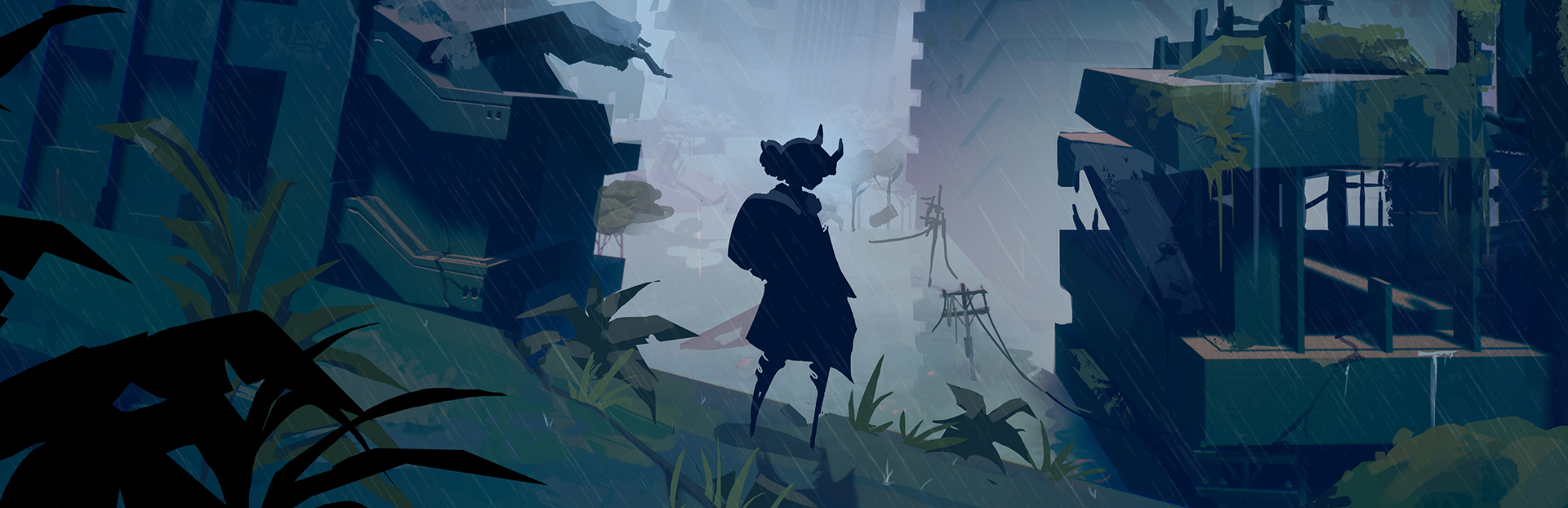
Step into the minds of our level design team as we explore the creative philosophies and guiding principles behind the worlds they build.
In this update5
Full notes
Full Possessor(s) update
Read the full published notes in a cleaner layout. The original post stays linked below.
What changed
0 fixes1 addition5 changes0 removals
Events
Gameplay
Balance
UI and audio
Store
changedStep into the minds of our level design team as we explore the creative philosophies and guiding principles behind the worlds they build. In this blog, we ask our designers how they craft spaces that challenge, inspire, and immerse players at every turn.
changedCan you share a little about Possessor(s) overall level design principles? “One of our main level design goals in Possessor(s) is balancing excellent room flow with grounded, naturalistic 3D spaces.Making memorable, interesting, large-scale 3D spaces was almost second nature for us by the time Solar Ash shipped. When we started out working on Possessor(s), we continued our momentum from Solar Ash and built large 3D spaces where the “game plane” (the playable area of the 3D world where the player character is) was just a slice through memorable, expansive 3D spaces in the style of a Solar Ash level. We avoided having too much of the world aligned to the game plane, favoring spaces that were rotated at odd angles so that the player wouldn’t be able to see the grid/”gaminess”. This resulted in a very unique, naturalistic feel to our levels. However, it also resulted in poor gameplay readability. It was hard to tell how far platforms were from each other, and some objects that were close to the game plane but didn’t intersect would appear to be meaningful platforms. Players couldn’t tell where the limits of the playable space were, so the game wasn’t comfortable to navigate.
changedCan you share a little about Possessor(s) overall level design principles? “One of our main level design goals in Possessor(s) is balancing excellent room flow with grounded, naturalistic 3D spaces.After a lot (A LOT) of iteration, we landed on a balance between the grounded, naturalistic spaces we were building early in pre-production and the excellent gameplay clarity that’s characteristic of the side-scroller genre.” - June Patterson, Possessor(s) Co-Director
changedTalk about your level design approach from the start and how it led to where we are now with Possessor(s). “Our approach to level design for Possessor(s) wasn’t necessarily what you’d call typical. We did what we called ‘Designer Deco’—no paper prototyping, just bringing things straight into the engine, testing over and over, and then layering in concept work, art, and audio afterward.Instead of starting with rigid tile-based layouts, we jumped in and got super loosey-goosey with it. Early on, we were just building these believable spaces in a world that’s been ripped apart. A lot of trial and error—Jordan, June and I would build levels, play through them, and figure out what worked and what challenges came up.” - Mars Ashton, Senior Designer
changedTalk about your level design approach from the start and how it led to where we are now with Possessor(s). “Our approach to level design for Possessor(s) wasn’t necessarily what you’d call typical. We did what we called ‘Designer Deco’—no paper prototyping, just bringing things straight into the engine, testing over and over, and then layering in concept work, art, and audio afterward.“Since Possessor(s) is the combination of 2D and 3D elements, it took a while to figure out that balance. - Jordan Fanaris, Level Designer
added“There’s a lot of variation in room dimensions game-to-game. We tried a wide spectrum of room sizes before landing on what we now consider to be our standard.First, we had no rooms. Every zone was a single contiguous space. This made navigation very difficult. Clear room boundaries and transitions between rooms are essential to players understanding the space and being able to confidently explore. Room transitions specifically allow the player to empty their mind of what they were focused on in the previous room and start taking in new information fresh. We struggled with giant continuous spaces because it felt like everything was relevant all the time — the player was constantly accruing new seemingly relevant information without ever having a mental break, and eventually, players gave up on making intentional navigation decisions." - June Patterson, Co-Director We hope you've enjoyed this small dive into development - Possessor(s) is OUT NOW! [dynamiclink href="https://store.steampowered.com/app/2132890/Possessors/"]
Possessor(s) changes
changedStep into the minds of our level design team as we explore the creative philosophies and guiding principles behind the worlds they build. In this blog, we ask our designers how they craft spaces that challenge, inspire, and immerse players at every turn.
changedMaking memorable, interesting, large-scale 3D spaces was almost second nature for us by the time Solar Ash shipped. When we started out working on Possessor(s), we continued our momentum from Solar Ash and built large 3D spaces where the “game plane” (the playable area of the 3D world where the player character is) was just a slice through memorable, expansive 3D spaces in the style of a Solar Ash level. We avoided having too much of the world aligned to the game plane, favoring spaces that were rotated at odd angles so that the player wouldn’t be able to see the grid/”gaminess”. This resulted in a very unique, naturalistic feel to our levels. However, it also resulted in poor gameplay readability. It was hard to tell how far platforms were from each other, and some objects that were close to the game plane but didn’t intersect would appear to be meaningful platforms. Players couldn’t tell where the limits of the playable space were, so the game wasn’t comfortable to navigate.
changedAfter a lot (A LOT) of iteration, we landed on a balance between the grounded, naturalistic spaces we were building early in pre-production and the excellent gameplay clarity that’s characteristic of the side-scroller genre.” - June Patterson, Possessor(s) Co-Director
changedInstead of starting with rigid tile-based layouts, we jumped in and got super loosey-goosey with it. Early on, we were just building these believable spaces in a world that’s been ripped apart. A lot of trial and error—Jordan, June and I would build levels, play through them, and figure out what worked and what challenges came up.” - Mars Ashton, Senior Designer
changed“Since Possessor(s) is the combination of 2D and 3D elements, it took a while to figure out that balance. - Jordan Fanaris, Level Designer
Step into the minds of our level design team as we explore the creative philosophies and guiding principles behind the worlds they build. In this blog, we ask our designers how they craft spaces that challenge, inspire, and immerse players at every turn.
Can you share a little about Possessor(s) overall level design principles?“One of our main level design goals in Possessor(s) is balancing excellent room flow with grounded, naturalistic 3D spaces.
Making memorable, interesting, large-scale 3D spaces was almost second nature for us by the time Solar Ash shipped. When we started out working on Possessor(s), we continued our momentum from Solar Ash and built large 3D spaces where the “game plane” (the playable area of the 3D world where the player character is) was just a slice through memorable, expansive 3D spaces in the style of a Solar Ash level. We avoided having too much of the world aligned to the game plane, favoring spaces that were rotated at odd angles so that the player wouldn’t be able to see the grid/”gaminess”. This resulted in a very unique, naturalistic feel to our levels. However, it also resulted in poor gameplay readability. It was hard to tell how far platforms were from each other, and some objects that were close to the game plane but didn’t intersect would appear to be meaningful platforms. Players couldn’t tell where the limits of the playable space were, so the game wasn’t comfortable to navigate.
After a lot (A LOT) of iteration, we landed on a balance between the grounded, naturalistic spaces we were building early in pre-production and the excellent gameplay clarity that’s characteristic of the side-scroller genre.” -June Patterson, Possessor(s) Co-Director
[carousel]
[/carousel]
What about your own core philosophies around level design?“The approach really depends on the game. I’ve worked on a Metroidvania like this before, but the philosophy for that was very different. Here, we’re telling a story about bad relationships—our goal is for the narrative to help characters grow and understand healthy relationships better.
Looking at the world itself and how it ties into this theme is crucial. We’re creating a playground where the spaces, the characters, and their connections all feed into the levels. Lore tidbits, cutscenes, and environmental storytelling help reinforce that. A big focus for me has been weaving platforming and combat encounters seamlessly into this experience.” -Mars Ashton, Senior Designer
Talk about your level design approach from the start and how it led to where we are now with Possessor(s).“Our approach to level design for Possessor(s) wasn’t necessarily what you’d call typical. We did what we called ‘Designer Deco’—no paper prototyping, just bringing things straight into the engine, testing over and over, and then layering in concept work, art, and audio afterward.
Instead of starting with rigid tile-based layouts, we jumped in and got super loosey-goosey with it. Early on, we were just building these believable spaces in a world that’s been ripped apart. A lot of trial and error—Jordan, June and I would build levels, play through them, and figure out what worked and what challenges came up.” - Mars Ashton, Senior Designer
“Since Possessor(s) is the combination of 2D and 3D elements, it took a while to figure out that balance. - Jordan Fanaris, Level Designer
Room Size Matters
“There’s a lot of variation in room dimensions game-to-game. We tried a wide spectrum of room sizes before landing on what we now consider to be our standard.
First, we had no rooms. Every zone was a single contiguous space. This made navigation very difficult. Clear room boundaries and transitions between rooms are essential to players understanding the space and being able to confidently explore. Room transitions specifically allow the player to empty their mind of what they were focused on in the previous room and start taking in new information fresh. We struggled with giant continuous spaces because it felt like everything was relevant all the time — the player was constantly accruing new seemingly relevant information without ever having a mental break, and eventually, players gave up on making intentional navigation decisions."- June Patterson, Co-Director We hope you've enjoyed this small dive into development - Possessor(s) is OUT NOW! [dynamiclink href="https://store.steampowered.com/app/2132890/Possessors/"]