
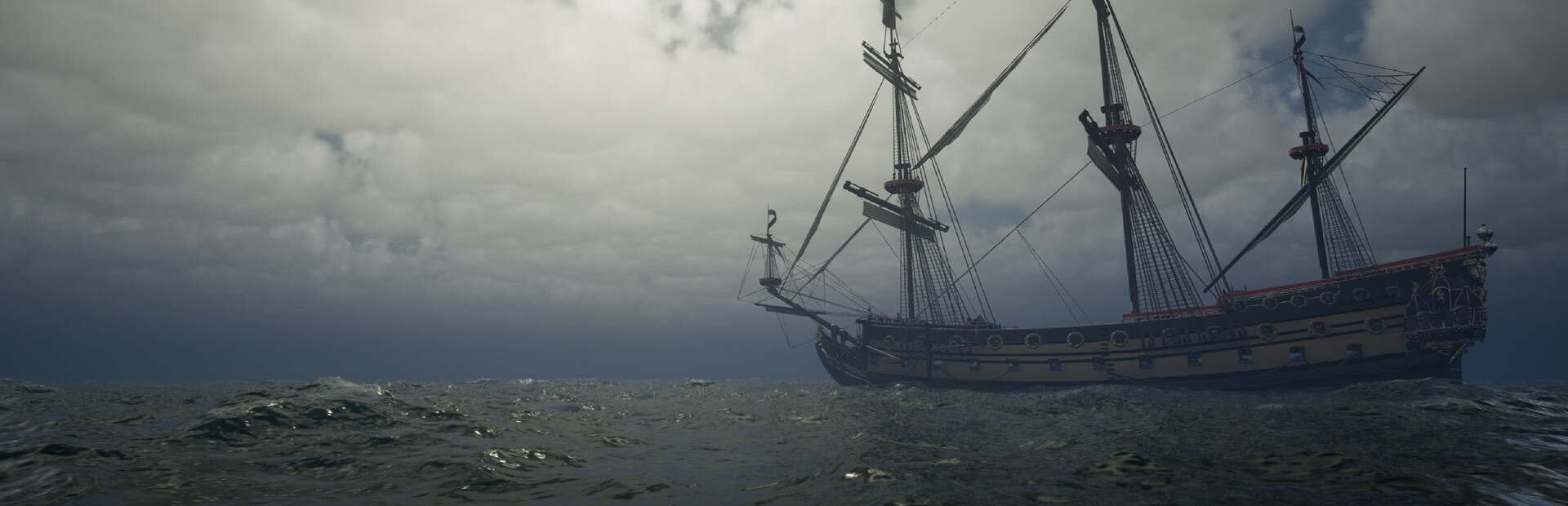
Update log
Full Neverseas update
The complete published notes, normalized for clean reading and source attribution.
Extracted changes
- Maps
- Balance
- Performance
Greetings, travelers!
Six bells on the watch — a new devlog rises on the horizon!
Two weeks have passed, and we’re back with fresh updates on the development of Neverseas. Today, we continue the topic from our previous journal and dive deeper into the economic and political systems of the game world.
Every team building an open-world game aims to make that world feel alive and dynamic — and we are no exception. Right now, we’re focused on creating an organic, responsive system that makes the seas of Neverseas truly breathe.
During your voyages, you’ll encounter a wide variety of ships — from lone merchants to armed escorts, from small caravans to entire fleets. Our goal is to ensure none of these encounters feel random. Every ship, convoy, or fleet you meet has a purpose: trading vessels follow orders from their home colonies, while warships act under the directives of their factions. It’s all part of a living system that reacts to the player’s actions and evolves with the world.
So, how does the economy of Neverseas work?
Let’s start with the basics. The world map contains a fixed number of islands, each hosting one or more settlements. We call these settlements colonies — it’s the most accurate term for their role in the system.
At the beginning of the game, there’s little disparity in wealth or military strength between colonies. Each colony independently decides what buildings to construct and what path of development to follow. This level of management is what we call the colonial level.
Multiple colonies can unite under a faction. The faction oversees long-term strategies and makes high-level decisions for its member colonies — this is the factional level of governance.
A faction remains in existence as long as it controls at least one colony. Losing all colonies means the dissolution of the faction as a political force.
Now that we’ve covered the basics, let’s look at the system in action.
At the colonial level, the driving force behind each colony is the desire to grow — to increase in size, wealth, and stability. Colonies are apolitical by nature: they are not interested in conflict or territorial expansion, only in prosperity and self-sufficiency.
At the factional level, the goal shifts: factions strive to increase the number of colonies under their control. They operate strategically and aggressively — utilizing blockades, conquests, raids on trade routes, and full-scale military campaigns.
It’s important to understand that while colonies and factions are connected, their goals don’t always align. This creates fertile ground for tension and dynamic conflict. Factions may push colonies toward war, while the colonies themselves prefer to build, trade, and thrive in peace.
Let’s look closer at the colonial level.
As a colony’s population grows, it expands its industrial base and fortifications. This development depends on several factors:
Its geographic proximity to other settlements
The terrain and climate of its island
The evolving needs of its population
Industry
Industrial buildings serve two main purposes:
Meeting internal demands — As the population grows, so does the demand for goods, both in quantity and quality.
Generating profit through exports — Colonies sell surpluses to gain profit and purchase goods they lack, since no single island can provide for all its needs alone.
Defense
Defensive structures are built systematically, but their pace depends heavily on the political and military situation. Colonies in peaceful factions or remote regions often deprioritize fortifications. In contrast, those near conflict zones or hostile territories tend to bolster their
Source