
Full notes
Full Jingjie: Signals update
Read the full published notes in a cleaner layout. The original post stays linked below.
What changed
- Balance
- Events
- Gameplay
- Performance
Jingjie: Signals changes
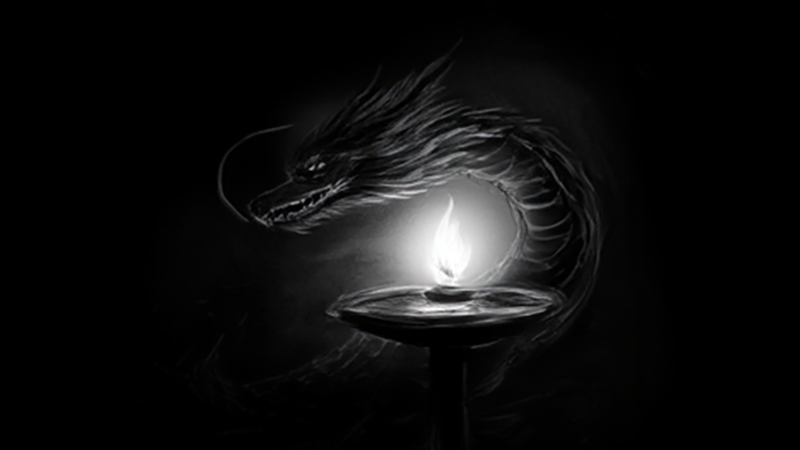
I remembered an ancient text on the road: "In the northwest lies the sunless land of the netherworld. A dragon with a torch in its mouth illuminates it. When it closes its eyes, it is night; when it opens them, it is day."I wanted to use the abstraction of the Fourier Torch Dragon to embed a foundational system time into Jingjie.
In the "Jingjie Engine Constitution v1.0", we have made it clear: Randomness is a lower form of intelligence. True variation must emerge from unpredictable determinism within a structured system.
Therefore, the Torch Dragon can never be a simple wrapper for [c]Math.random()[/c]. It must be:
1.The Master Clock
It is the heart of the entire simulation loop. Its heartbeat (Ticks) drives the progression of the underlying physics pipeline. The lifecycles, incubation periods, and decay rates of all particles are measured in "Dragon Breath", not seconds.
2.The Canonical Noise Source
It is the source of Deterministic Chaos. In Jingjie, particles are strictly prohibited from calling random numbers themselves. Wherever uncertainty is needed (such as initial positions, mutation directions, or emotional deviations), they must "borrow fire" from the Torch Dragon. This guarantees one of Jingjie's most vital features: true retro-causality. If we rewind time, every cause and effect will replay perfectly.
What will you ultimately get?
A constitutional world clock
A rare event mechanism (Rare Event)
With this update, we only want to answer a much simpler question: Can you still be moved?
Most causality is merely an after-the-fact explanation, but what we want in Jingjie is the right to interpret "Honest Time". It uses the most rigorous entanglement of irrational numbers and the tides of the longest epochs, all to exchange for those fractions of a second of "untampered sincerity."
To achieve this, we rewrote the foundational architecture.
- The Fourier Torch DragonA Three-Tiered System Time We discarded the traditional, unidirectional ticking hand of a clock, adopting the cycle of the "Fourier Torch Dragon" as Jingjie's new system time. Time is deconstructed into a superposition of three scales, isomorphic to the multi-scale resonance inherent in a dancer's movements:
Low Frequency (Fate): Slow and massive positioning, the irresistible inertia of the era.
Medium Frequency (Will): The precise rhythm of footsteps, the individual's active calibration within the grand narrative.
High Frequency (Noise/Perturbation): The subtle tremors, like the unpredictable, faintly glowing gaze in a dancer's eyes when they freeze in motion.
The Mathematical Verdict of Rare Events We locked the gears of these three layers of time with the ratios of irrational numbers, ensuring they almost never repeat over vast stretches of history. In Jingjie's time, aligning ten thousand times a day isn't moving; it's noise. Aligning once in ten thousand years isn't moving either; it's a system crash. Therefore, we meticulously designed these mathematical parameters for one purpose: to make the "perfect alignment" of the three frequencies a perceivable yet absolutely rare event.
Finite Life, Irreproducible Moments Jingjie's underlying physics formulas are real. The cascaded binary analog causality is real. But added together, they do not equal that moment.
That moment is moving not because of causality. The reason we expend immense computing power to demonstrate the inevitability of this causality is that our lives are finite. We can only experience it once; we can never rewind and replay it.
In this update, what I want to protect is not those formulas, but that fraction of a second. When it happens, the system will see it and record it. It will forever be traceable and will never be erased or rewritten by any after-the-fact explanations.
In that moment, we honestly faced time.
— Developer K of Jingjie
Source
Changelog.gg summarizes and formats this update. How we read updates.