
In this update6
Full notes
Full HUNGER update
Read the full published notes in a cleaner layout. The original post stays linked below.
Repeated intro
Hello, Living.
What changed
- Maps
- Gameplay
- Balance
- Store
- UI and audio
- Server
HUNGER changes
Not every threat in Hunger comes from what you can see. Some are waiting - buried beneath leaves, coiled behind a doorway, or sitting in silence just long enough to make you question the ground you walk on.
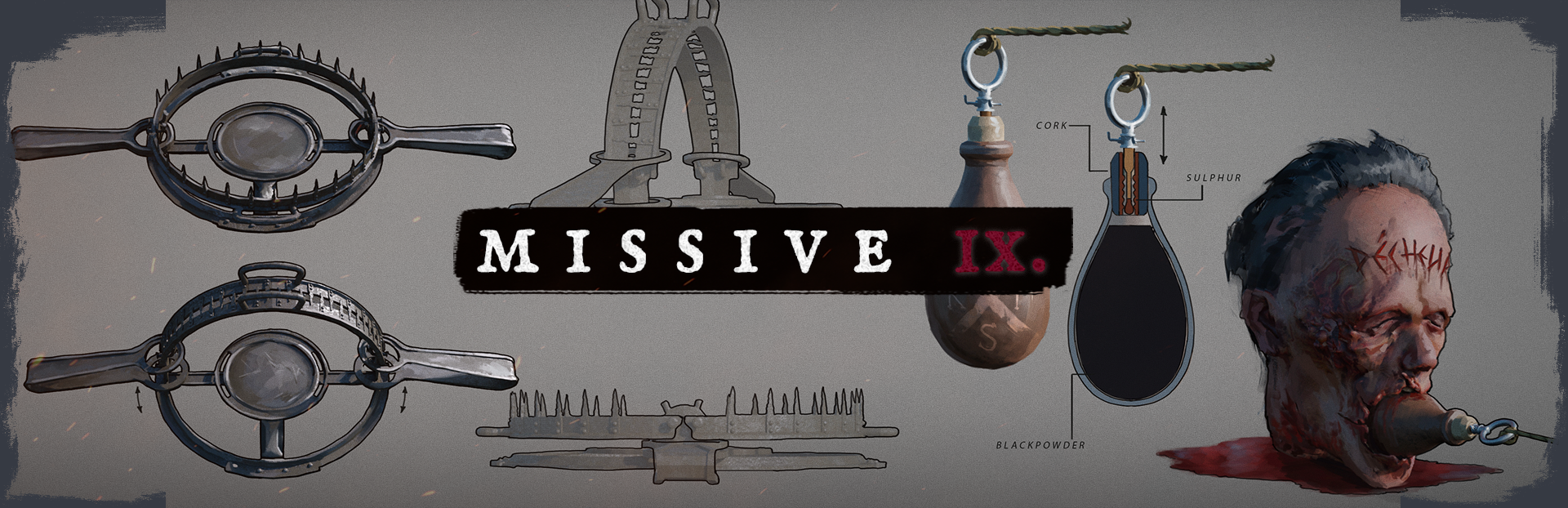
This Missive explores the two kinds of traps that shape life - and death - in the World After the End.
Map Traps
Map Traps are part of the world itself, built directly into the environments you explore. They exist as part of the level design, placed within ruins, beneath bridges, or hidden in the darker corners of the battlefield.
These traps act as environmental hazards. Some explode. Some release poison. Others leave you bleeding as you scramble to escape their reach. They are designed to threaten the Living, but can also be used in creative ways by the Living against the Hunger.
Certain points of interest and many dungeons may contain unique trap types or more complex arrangements. In these places, traps are not simply hazards but deliberate challenges. Some areas test more than reflexes alone - they test observation, patience, and memory. The most prepared survivors learn to read the environment carefully and recognize the signs that danger lies ahead.
Map traps can always be found in the same area, but their chance of appearance varies from Expedition to Expedition. If you activate one, remember the location as it’ll come in handy for the future - both for yourself and the potential to use it against a pursuing player or Hunger.
Player Traps
Later in development, players will gain access to their own deployable traps - items that can be brought into Expeditions as part of a loadout and placed strategically during play.
These tools are not part of the Early Access launch but will arrive later as Hunger ’s arsenal expands.
Player Traps can down or kill other players, and these outcomes contribute directly to the trapper’s own down and kill count, which boosts the experience they gain. They can also be used against AI, allowing players to control space, shape engagements, and manage threats from a distance.
A player and their allies cannot trigger their own traps. This ensures that careful placement and planning are rewarded rather than punished.
One exception exists for those who pursue the Survival mastery tree. Players who unlock Turncoat Mechanism gain the rare ability to assume ownership of traps placed by others, including those found within the world itself - provided they identify them and avoid them first. This allows them to move safely through hazards and even turn another player’s trap into a weapon against its original owner.
Masteries and the Art of Trapping
Traps are not only to be feared - they can be mastered. Through progression in the Survival mastery tree, players can unlock tools and abilities that make traps easier to detect, disarm, and - as mentioned above, convert into their own control.
For those who invest in this path, the battlefield itself becomes an extension of their strategy - every hazard, every snare, another weapon to be turned against the unwary.
In addition, as Hunger expands, more and more trap types will be added to the maps - both ancient traps found in levels as well as those to be placed by the player. Flashing, shocking, smoking or making large amounts of loud noise will all be mechanics to come.
Finally, like most items in Hunger, player-placed traps will be craftable by players with the right Profession.
Development Update
Good progress continues to be made on scaling our backend stack. In addition to this work, the current focus is on matchmaking and continued polish across the game.
Alongside this, the team continues to carry out general polish across the game. This includes performance improvements, system refinements, bug fixing, ongoing balancing work, and the addition of further atmospheric detail across our maps.
One system currently in development is staged reloads. This will allow players who interrupt a long reload to return to the weapon and resume the reload from the stage they previously reached. Because many of our weapons have multi step reload processes, implementing this requires a significant amount of manual work across the weapon roster. As a result, we prioritised this work after making major updates to the mastery tree.
Players will also see balance adjustments across the entire weapon roster. We have worked to smooth the highs and lows between weapons so that the overall power curve remains intact while reducing extreme outliers in damage spikes. Early weapons, particularly flintlock and ramrod weapons, can now be specialised into earlier through the mastery tree in ways that make them genuinely formidable. Internally we are already seeing players choose to continue running these weapons well into the late game.
These weapons still carry their natural drawbacks, particularly very long reload times, but their damage and specialisation potential now better reflect that trade off. The mastery tree has been adjusted accordingly, with several elements split out to better support these playstyles.
We are also continuing to add quality of life features. One example is a new bookmarking system that allows players to bookmark essentially any item in the game. Players will naturally use this for things like crafting recipes, cosmetic schemas, and other items they wish to track. Initially we considered building separate systems that allowed players to bookmark specific categories such as schemas or crafting ingredients, but we concluded that a more general system would be more useful. By allowing players to bookmark and highlight anything they choose, the feature becomes purpose agnostic and adaptable to different playstyles.
Quest content has also continued to expand. We have added a large number of additional repeatable quests and completed a final tone of voice pass across all existing quest arcs. At the same time, work has begun in earnest on the Cauldron quest givers and the next layer of story progression within the Chateau. We have also introduced a number of high value items (cosmetic schema, etc.) for players to work toward in both the Outer Ramparts and the Cauldron, all purchasable with in game currency.
Cosmetics work has also progressed, with Prestige II cosmetics now being introduced for most Living. In parallel, development has begun on several new Living characters planned for post launch introduction.
We are also currently working on a tutorial experience designed to help new players establish some of the fundamentals of the game before entering their first live expedition. Hunger contains a large number of interconnected systems, and the tutorial is intended to introduce players to core mechanics such as movement, looting, healing, and extraction in a controlled environment before they encounter the full risk of a live expedition.
Much of this additional work is being completed in parallel with the backend engineering mentioned above. While the backend scaling architecture and server management systems are being implemented, other parts of the team are using that time to add as much value as possible to the game. As a result, a number of improvements, features, and pieces of content are being implemented now that we had originally expected would only arrive post launch.
We know many of you are eager for the announcement of the next tech test. We are working toward confirming the date and sharing it as soon as possible, but the remaining core systems must be completed first, specifically the backend scaling architecture and the server management systems that allow the game to reliably handle larger concurrent player populations. The good news is that strong progress is being made.
This is a smaller development update, but it reflects the necessary work required before we move forward to the next stage.
The Lore of the World After the End
In continuation of sharing the lore that underpins the World After the End, we present the following excerpt from De Bacterium.
These fragments form part of the surviving accounts that attempt to understand the calamity that befell the old world. We hope you enjoy.
The Bacterium Takes Hold
De Bacterium Volume I - Being a True Account of the Bacterium and the Undoing of Men
Set Down in the Year of Our Lord, 1815, by One Who Watches, Nameless
Among those who have examined the early records of the Bacterium, there remains a persistent question which no account has yet answered to general satisfaction: why was the contagion not extinguished in its first appearances, as similar disorders seem to have been in earlier years? The archives, as already noted, contain notices reaching back at least to the last decades of the previous century, and perhaps further, describing outbreaks of violence and delirium that bear every resemblance to the later affliction. In those instances the disturbance was local, brief, and soon suppressed. A handful of the sick were restrained or killed, the matter was entered in the parish register or the army rolls, and life continued.
That such incidents occurred without consequence makes the later catastrophe more difficult to explain. If the Bacterium had shown itself before, why did it not then produce the same ruin? Why did it pass unnoticed for years, only to emerge at last with such force that whole provinces were lost before the authorities understood what they faced?
The explanation most often given is that the wars of the Empire provided a state of affairs in which the contagion could no longer be contained. Never before had France, nor indeed the other powers of Europe, maintained armies of such size, nor kept them so constantly in motion. In earlier campaigns of the century, a field army of forty or fifty thousand men was thought considerable. By the first years of the nineteenth century it was no longer unusual for a single French army to number one hundred thousand men under arms, and in the great campaigns the Emperor assembled forces exceeding two hundred thousand, drawn from many nations and moved across enormous distances.
Nor must one consider only the soldiers themselves. Every army of the period carried with it a second multitude, seldom entered in the lists submitted to the ministry but no less real. The baggage trains included artificers, drivers, sutlers, servants, laundresses, wives, children, and the innumerable invalids who gather wherever men live long in camp. Prisoners marched under guard, labourers were impressed along the road, merchants followed in search of profit, and refugees attached themselves to the columns for protection. Contemporary estimates suggest that for every ten thousand men under arms there might be several thousands more moving in their train, sometimes nearly as many as the troops themselves, especially in prolonged operations.
When such numbers advanced across Europe, the distinction between army and town was often slight. A marching column might stretch for miles, its rear not yet departed when its vanguard had already reached the next district. Camps grew into vast encampments resembling towns, crowded, ill-drained, and full of men weakened by wounds, famine, or fatigue. In such places, sickness found cover easily and spread before it was understood.
If even one man among these numbers had been touched by the Bacterium in its earlier, uncertain form, he would not have been isolated in the manner once possible in a village or provincial garrison. He would have travelled among hundreds already exhausted, sleeping close, eating from the same stores, and sharing the same infirmaries. The weakest - the wounded, the fevered, the women and children of the train, the stragglers who could not keep pace - formed the easiest prey. What might once have ended with the death of a single sufferer could, under such circumstances, pass unnoticed until it had already taken hold among many.
The fall of Brussels is frequently cited in support of this view. Though the full circumstances must be treated elsewhere, it is widely believed that the first true loss of the city began not with open assault, but with sickness among the remaining French garrison. The troops stationed there had been reduced in number, ill-supplied, and long confined within the walls after repeated movements of the army. Reports suggest that the force left to hold the city was small compared with the population it was meant to control, and that the hospitals were already crowded with men unfit for further service.
When disorder appeared among these soldiers, it was at first treated as nothing more than fever and indiscipline, such as often followed a hard campaign. By the time the nature of the affliction became clear, the inhabitants themselves had already been exposed. Brussels, by its situation, proved an unfortunate place for such an outbreak. The crowded quarters, the constant movement through the gates, and the mixture of soldiers, civilians, and camp followers allowed the contagion to pass rapidly from one to another. Where earlier incidents had involved only a few individuals, here the numbers grew faster than they could be restrained. Once the sickness had taken hold among both garrison and townspeople, the means of suppression failed entirely.
In former times, disturbances of this kind were usually met by the local militia, the watch, or by troops quartered nearby. A handful of men seized by frenzy could be overcome before the disorder extended further. During the great wars, however, such protection was often lacking. The strength of the state had been drawn away from the provinces. Troops that might once have remained within the kingdom were instead marching in Germany, in Italy, in Spain, or beyond. The gendarmerie, left without support, could manage ordinary crime, but not the kind of violence the Bacterium produced when it appeared in numbers. Once an outbreak passed beyond the reach of a few patrols, there were often no soldiers close enough to restore order before the contagion had already spread.
A second theory, less often spoken openly but difficult to dismiss, concerns the conduct of the nations themselves during those same years. The wars of the Empire divided governments that might otherwise have acted in concert when faced with a common danger. In earlier times, the appearance of a strange pestilence in one port or province was quickly reported to neighbouring states, if only from fear that the disease might cross the frontier. Notices were exchanged, precautions taken, and each power had reason to prevent the misfortune of one from becoming the ruin of all.
During the long struggle of the Empire, such understanding could not be relied upon. Reports of disorder in a rival’s territory were as likely to be welcomed as feared. If sickness weakened an enemy garrison, it was not always in the interest of his opponents to hasten its suppression. Messages travelled slowly, were intercepted, or dismissed as inventions. Thus it is conceivable that outbreaks which might once have been checked were allowed to grow simply because no nation wished to spare strength from the war in order to aid another.
To this must be added the further consequence of the same conflict: the removal from the countryside of those very men most capable of enforcing the authority of the state. The able-bodied, the trained, the accustomed to violence - all were drawn into the armies. What remained in many districts were the old, the young, and those unfit for service. When the Bacterium appeared among such populations, there were too few who could meet force with force. Local officials might attempt restraint, but without soldiers to support them their efforts often ended in flight or death.
These considerations do not wholly explain why the earlier appearances of the contagion passed without lasting effect while the later ones did not. They do, however, suggest how the extraordinary scale of the wars - the vast armies, the multitudes that followed them, the rivalry of nations, and the absence of troops within the provinces - may together have given the Bacterium the opportunity it had never before possessed.
Once it gained that opportunity, the change was swift. What had once been a matter for a parish entry or a surgeon’s note became, within a few years, a disorder from which neither law, nor army, nor government could recover. From that point forward, the progress toward what we now call the End advanced with a force that could no longer be checked.
Wishlist Hunger to follow the journey and join our upcoming tests. JOIN THE COMMUNITY
Source
Changelog.gg summarizes and formats this update. How we read updates.