
In this update5
Full notes
Full Goodbye Seoul update
Read the full published notes in a cleaner layout. The original post stays linked below.
Repeated intro
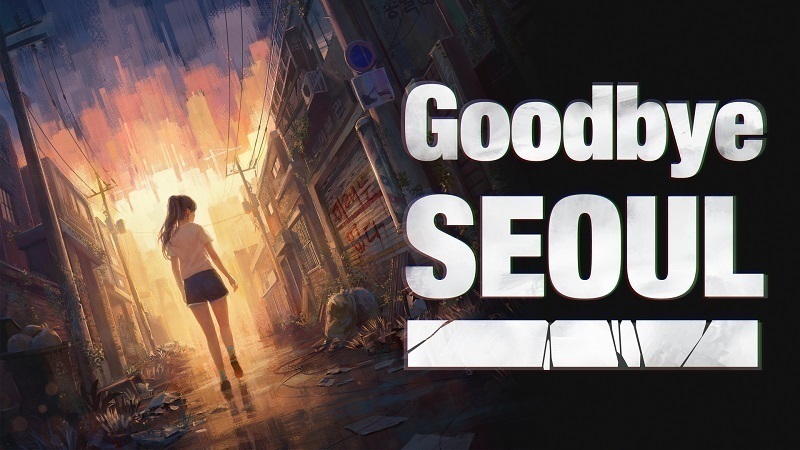
Hello! This is JINO, the developer of Goodbye Seoul.
What changed
- UI and audio
- Store
- Fixes
- Gameplay
- Events
- Compatibility
Goodbye Seoul changes
I hope everyone is staying well through the summer heat.
In this dev note, I’d like to talk about an area of development that I haven’t had the chance to introduce in much detail before: sound.
🔊 Working Directly on What I Know Least
There are many challenging aspects of making a game, but sound has always been one of the most difficult for me.
The main reason is simple: it is the field I know the least about and have the least experience in. I already had some familiarity with programming and graphics from my time at school and working in the industry, but when it came to sound, I had to learn almost everything from scratch—from which software to use to how audio should be managed and played within a game.
Since development began, I have gradually built the game’s audio systems while learning the fundamentals of sound software, how to integrate it with the game, and how to create structures that allow sounds to change dynamically depending on the situation.
However, implementing an audio system through software and creating the actual sounds and resources that go into it are two entirely different challenges.
I am not a sound designer who can create every sound effect the game needs from scratch. As a result, most of the sounds in Goodbye Seoul are either purchased from asset stores or recorded directly from my surroundings.
A sound may pass by in only a second during gameplay, but preparing that single moment is often far more complicated than it seems.
🚦 The Sounds of Seoul
Sound libraries offer an incredible variety of high-quality effects. Doors opening, cars passing by, footsteps—most of the sounds we encounter in everyday life can be found without too much difficulty.
But when I actually placed some of these sounds into the game, they often felt strangely out of place, even though they were sounds I had clearly heard in real life before.
That is because even sounds that serve the same purpose can vary greatly from one country or region to another.
A good example is the audible signal at a pedestrian crossing. The rhythm and tone of the signal familiar to people in Korea are different from those used in Japan and many other countries. If a pedestrian signal recorded overseas is placed directly into a street in Seoul, the visuals may unmistakably look Korean, yet the sound alone can make it feel as though you have suddenly stepped into another country.
The same was true of the old-fashioned trot music that an elderly woman might leave playing in a goshiwon. It is a sound that feels completely natural within the scene, yet this kind of distinctly Korean everyday audio is not easy to find in overseas asset stores.
These sounds are more than simple background ambience. They are important clues that help define a place. Just as Hangul signs and Korean-style buildings establish the visual identity of a location, the sounds heard there also shape its character.
Throughout this process, I also made extensive use of the KSound library.
Players may pass by these small sounds without consciously noticing them. But I believe it is only when details like these accumulate, one by one, that the spaces of Goodbye Seoul begin to feel less like unfamiliar video game environments and more like the Seoul we know.
🎼 Adaptive Music: A Nonlinear Approac
Music in games works differently from music in films or other video media.
In a film, scenes unfold according to a fixed timeline. Because the beginning and end of each moment are predetermined, the music can be composed linearly and timed precisely to match what happens on screen.
In a game, however, there is no way to know how long a player will remain in any given location. One player may stop to take in the scenery and spend a long time in the same area, while another may pass through it almost immediately.
If a single piece of music simply plays from beginning to end, its progression can easily fall out of sync with the gameplay. The music may have already passed its climax just when the tension is supposed to rise, or the entire situation may be over before the music has had time to build.
This is especially true of the cutscenes in Goodbye Seoul, where dialogue progresses through speech bubbles according to the player’s input. Because every player advances through these scenes at a different pace, the dramatic flow of a cutscene and the progression of its music can sometimes drift apart.
To address this, the music in Goodbye Seoul is divided into multiple sections. Depending on what is happening during gameplay, a section can repeat naturally until a particular condition is met, at which point the music moves on to the next section.
The challenge is that music cannot simply be cut off or dissolved into another track at any arbitrary moment.
For environmental sounds such as wind or machinery, gradually lowering one sound while raising another is usually enough to create a relatively natural transition. Music, however, has rhythm, melody, beats, and measures. If it changes at the wrong moment, the rhythm breaks or the measures fall out of alignment, making the transition sound noticeably unnatural.
This means that even when the gameplay situation changes, the music cannot always respond immediately. The system must first keep track of the beat and measure currently being played, then transition to the next section at a point that makes musical sense.
You may not have noticed this while playing, but behind the scenes, a system has been continuously synchronizing the current gameplay situation with the rhythm of the music.
Listening closely to how the music changes as you play may offer another interesting way to experience the game.
🎹 Collaborating with Composer Jaemin Jung
The music of Goodbye Seoul is being created in collaboration with composer Jaemin Jung.
Steam post image View store page Jaemin Jung is a composer, pianist, and conductor whose work explores contemporary Korean cities and modern culture through music. His releases include the EPs CONCRETE FOREST and The World Of Us, as well as the single What Remains. His music brings together the rough, arid textures of the city and deeply lyrical melodies. Even without placing the sounds of traditional Korean instruments at the forefront, it somehow evokes distinctly Korean urban landscapes. I felt that this quality was a perfect match for the atmosphere of Goodbye Seoul and its setting of a city in ruins. I share the game’s story and scenes with him, along with the emotions the characters are experiencing and the role the music needs to play. He then interprets those ideas through music, and we continue exchanging feedback as we shape the direction of each piece together. Goodbye Seoul Main Theme “Crescent Moon” Revealed The main theme, “Crescent Moon,” is written in the form of an art song with Korean lyrics and is based on the familiar children’s song “Butterfly.” By reinterpreting a melody that many people already know through an entirely different emotional lens, the piece connects naturally with the mood and sentiment of the game’s world. Whenever I place Jaemin Jung’s music into the game during development, I often find myself overwhelmed with emotion.
✍️ Closing Thoughts
Goodbye Seoul is now entering the final stretch toward completion.
I am going back through everything we have created so far, carefully reviewing each element and refining the game so that its pacing, direction, visuals, and sound come together as naturally as possible.
Once the polishing process has progressed a little further, we also plan to begin preparing for a beta test.
You have waited a long time for this game, and I will continue working hard until the very end so that we can return with an experience worthy of that patience.
Please take care of yourselves in the summer heat, and I look forward to seeing you again in the next dev note.
As always, thank you for waiting and for your continued support.
— JINO
All contents of this developer note are subject to change depending on development progress.
Source
Changelog.gg summarizes and formats this update. How we read updates.