
In this update4
Full notes
Full Goodbye Seoul update
Read the full published notes in a cleaner layout. The original post stays linked below.
Repeated intro
Hello! This is JINO, the developer of Goodbye Seoul.
What changed
- UI and audio
- Performance
- Maps
- Security
- Balance
Goodbye Seoul changes
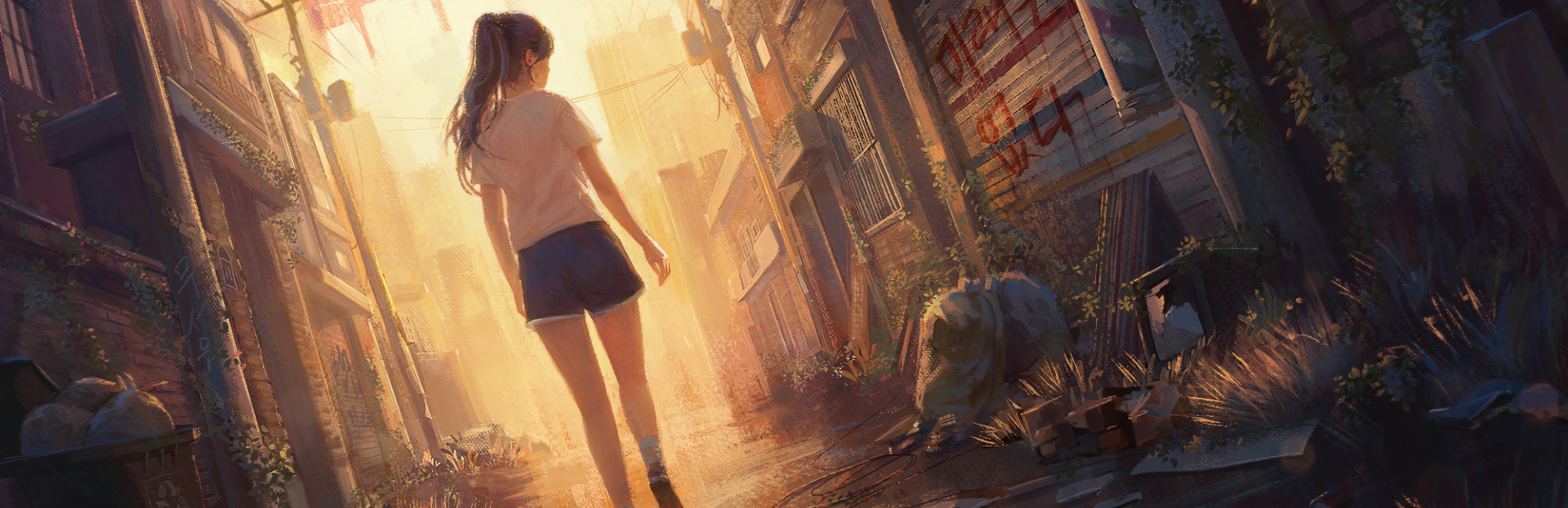
In this month’s dev log, I’d like to talk about something that defines the entire mood of the game: Spatial Design.
I truly believe that even a single ruined alleyway or a torn poster on a wall in Seoul can influence a player’s emotions, so I strive not to overlook even the smallest detail.
📸 Image & Video Archiving
Whenever I come across a striking scene while walking down the street, I immediately pull out my phone to take a photo.
There have been too many moments when I needed reference material but had none to rely on.
Recently, I've also been capturing screenshots from dramas, films, documentaries, and books whenever I come across scenes that resonate with me. These all go into my reference archive folder.
While collecting these materials is hard enough, what's even harder is retrieving the right reference at the right moment. I’ve tried various methods, but I found that using a board format works best—it offers a clear, bird’s-eye view. I organize references by area on one large board so I can easily grasp the overall atmosphere and structure.
Steam post imageSteam post image
Images and videos are great tools for documenting spaces, but they can’t capture everything. That’s why I also write down emotions, moods, and even sound impressions in text. I tag my notes with thematic keywords like “ruins + warmth” or “crowded + loneliness”, which help me recall the feeling of a space later. These written notes are managed as sticky notes in the board app, placed directly next to the corresponding image or video to retain context.
🛠️ From 3D Modeling to Pixel Rendering
Most of the objects used in spatial design are first created in 3D and then rendered in a pixel-art style. This pipeline was originally developed for character rendering, so it’s been thoroughly tested and proved reliable for background asset creation as well.
Steam post imageSteam post image
However, I faced several challenges when creating Korean-style objects. For one, it’s nearly impossible to find 3D resources with a Korean aesthetic on marketplaces. To overcome this, I reused and repurposed existing 3D assets originally made for characters or background elements. This isn’t simple reuse—I adjust the modeling and materials to fit the new spatial context.
Steam post imageSteam post imageSteam post image
By combining normal maps with real-time lighting, I ensure that characters and objects share the same lighting logic. This reduces visual dissonance and creates a unified impression. In actual tests, characters, signs, and structures within the same space reacted consistently to lighting changes, greatly enhancing immersion.
🗺️ Spatial Research & Development Process
Spatial research has been a vital part of the project from the beginning and continues to this day. However, my approach has evolved significantly over time.
🔹 Early Approach
In the beginning, my goal was to recreate real Seoul with high fidelity. I conducted on-site field surveys, studied maps, and analyzed Street View data. I walked through key districts of Seoul, taking photographs and documenting building layouts, signs, and even road textures. But due to security and copyright limitations, I couldn’t export high-resolution 3D spatial data. And physically capturing every detail of real terrain and structures posed serious limitations.
🔹 Current Approach
Now, instead of recreating real locations 1:1, I focus on capturing the feeling and emotional tone of each place. I preserve the symbolism and atmosphere of Seoul while no longer being restricted by real-world coordinates or historical accuracy. I recombine elements from various areas of Seoul to construct new, imaginary spaces.
For example, I might combine the chaos of an underground mall, the gloom under a Han River bridge, and a forest of neon signs into a single fictional environment. I also borrow and reinterpret certain landmarks as needed. This method has allowed for much more flexible development.
Even with limited data and resources, I’ve been able to maintain emotional consistency and create a Seoul that feels unfamiliar yet deeply familiar.
✍️ Final Thoughts✍️
I believe that space is not just about what you see, but also about what you feel.
It’s not enough to simply recreate structure or form—what matters is the emotion that arises when you enter that space. That emotional starting point is where my work begins.
That’s why spatial design is always the area where I invest the most time.
Even if progress is slow, I hope the density of meaning accumulates—and that this month, too, I can keep building steadily and with care.
Your interest and feedback are always a tremendous source of motivation.
Please continue to watch over the journey of Goodbye Seoul.
Thank you.
— JINO
** All contents of this developer note are subject to change depending on development progress.
Source
Changelog.gg summarizes and formats this update. How we read updates.