
In this update8
Full notes
Full Dungeon Flop update
Read the full published notes in a cleaner layout. The original post stays linked below.
What changed
- Maps
- Fixes
- Events
- Gameplay
- Balance
- UI and audio
Dungeon Flop changes
Welcome to Dungeon Flop.
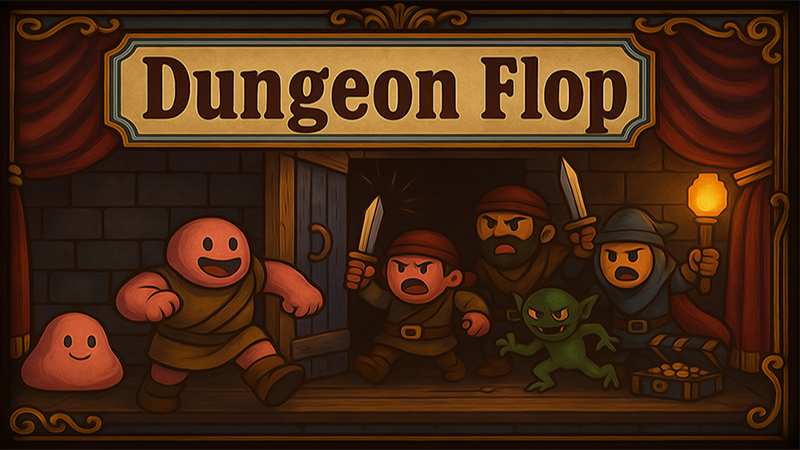
Dungeon Flop is a tactical roguelike about running a dungeon crawl like a doomed stage production.
One stage.
Infinite dungeons.
Zero professionalism.
You command a rotating cast of misfit heroes, manage limited resources, make bad calls under pressure, and watch plans unravel in spectacular, often comedic ways.
This is not about perfect builds or optimal play. It’s about momentum, risk, and keeping the show moving when everything goes wrong. Heroes age, panic, adapt, and occasionally surprise you. Systems collide. Plans fall apart. You improvise and push forward anyway.
Below is a full breakdown of the current systems, mechanics, and features available in Dungeon Flop today, along with what’s actively being expanded as development continues.
Core Features
Real time with pause crawling on grid-based maps with tight positioning, line of sight, and ability timing.
One stage, infinite dungeons — each run generates new layouts, encounters, and problems to solve.
Party-based play with a rotating cast of heroes rather than fixed characters.
Permissive, systems-driven design where mechanics interact in unexpected (and often disastrous) ways.
Heroes & Party Management
Multiple playable classes with distinct abilities, roles, and progression paths.
Aging, stress, and attrition — heroes aren’t immortal tools; they wear down, panic, and make mistakes.
Dynamic ability loadouts influenced by class, equipment, and events.
Recruit, lose, replace — party composition is fluid, not precious.
Abilities & Combat Systems
Layered ability system supporting melee, ranged, area effects, movement, utility, and passive behaviors.
Cooldown-based abilities with clear risk/reward timing.
Environmental interaction — doors, chokepoints, hazards, and positioning matter.
Readable combat feedback with directional effects, hit reactions, and clear state changes.
Dungeon Systems
Procedural dungeon generation with room logic and connectivity rules.
Auto-explore and manual control — let the party push forward or intervene when things get risky.
Fallback navigation and path correction when routes collapse or become blocked.
Resource & Risk Management
Limited supplies (gold, food, time) that constantly pressure decision-making.
Trade-offs everywhere — safety vs speed, preparation vs greed.
Failure is expected and often more interesting than success.
Presentation & Tone
Theatrical stage-show aesthetic inspired by vaudeville, tabletop props, and dungeon kits.
Dark comedy tone — slapstick failure, bad luck, and heroic nonsense.
Philosophy
No optimal path — the game is built around improvisation, not perfect play.
Systems over scripting — outcomes emerge from mechanics, not canned events.
Runs tell stories — often stupid ones, occasionally heroic ones.
The user owns the game — give the user the tools to extend/enhance/create more adventures fun!
Dungeon Flop is still actively evolving. Core systems are in place, but the focus moving forward is depth, iteration, and expansion — more abilities, more events, more dungeon variations, and more ways for runs to go wonderfully wrong.
Development is being guided by play, not hype. Features are added when they create interesting decisions, emergent moments, or better failure stories — not just to pad a checklist.
If this sounds like your kind of game, follow the project, wishlist it on Steam, and keep an eye on future updates. The stage is set, the props are fragile, and the cast is already panicking.
The show will go on.
Source
Changelog.gg summarizes and formats this update. How we read updates.