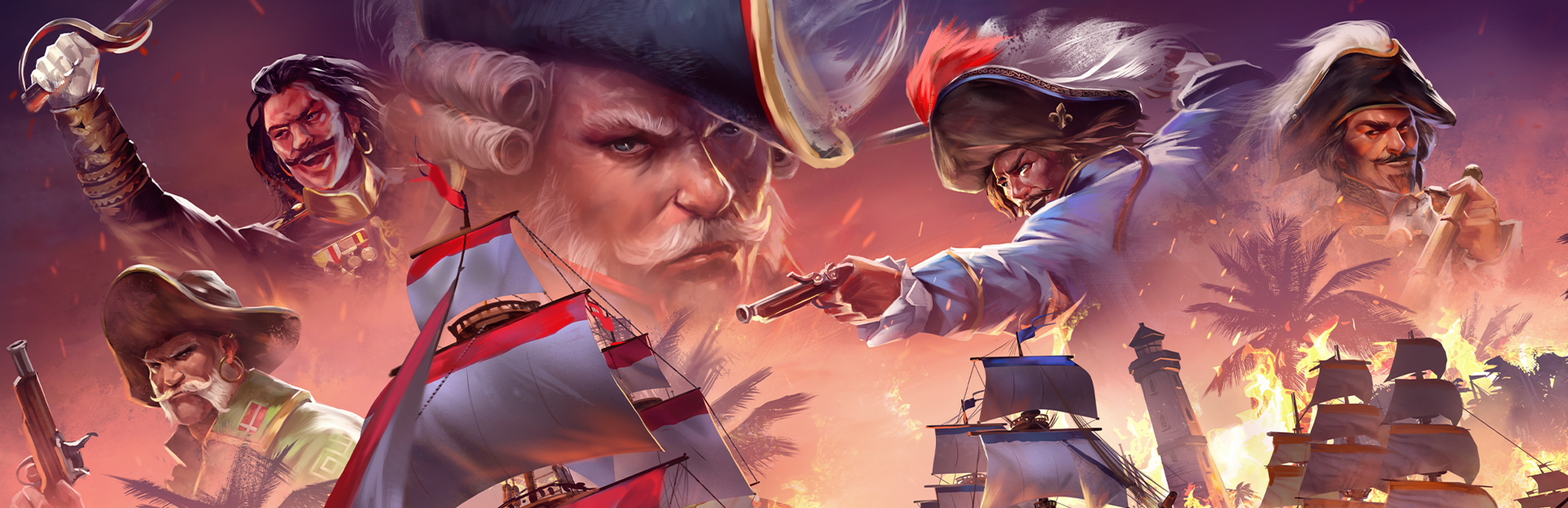
Inspiration and Historical Research In this new update, we wanted to highlight a key aspect of Corsairs’ development: the historical research and diverse sources of inspiration that shaped its world, campaigns and chara
Full notes
Full Corsairs - Battle of the Caribbean update
Read the full published notes in a cleaner layout. The original post stays linked below.
What changed
0 fixes1 addition7 changes0 removals
Gameplay
Maps
Balance
Events
addedInspiration and Historical Research In this new update, we wanted to highlight a key aspect of Corsairs’ development: the historical research and diverse sources of inspiration that shaped its world, campaigns and characters.
changedFrom the very earliest design stages, we conducted in-depth research into the Caribbean of the early to mid 18th century, focusing on diplomatic relations between major powers and the complex interactions between governments, corsairs, pirates, merchants and colonial governors. This era was defined by constant rivalries, opportunistic alliances and a frequently blurred line between legality and piracy – an atmosphere that perfectly fits the spirit of the game.
changedOne of the core narrative pillars of the campaign is directly inspired by a major historical event: the sinking of a treasure-laden Spanish ship in the Caribbean at the beginning of the 18th century. This echoes the many Spanish fleets lost to storms, including the famous 1715 Treasure Fleet, which sank off the coast of Florida during a hurricane, scattering gold, silver and precious artefacts across vast swathes of the ocean. In Corsairs, we reimagined this type of event as a central thread linking all campaigns: relics from a sunken treasure are scattered across the map, drawing the covetous gaze of nations, corsairs, merchants… and, of course, pirates.
changedSpecial attention was also paid to geographical and historical consistency in the game world. Maps were designed with close reference to the actual geography of the Caribbean, keeping island, port and town locations as faithful as possible to historical data. Place names and their strategic importance and economic roles were all carefully chosen to reflect the realities of the era while remaining suitable for gameplay.
changedThe same level of research went into the ships. We studied the types of vessels used by each nation, their roles (combat, transport, escort, boarding) and their overall design, including deck layout, cannon placement and strategic use. Most of the ships in the game are inspired by real historical vessels, enhancing the authenticity of the in-game experience.
changedBeyond military and geopolitical aspects, we also explored social interactions from this period. The divide between nobility, officers, merchants, corsairs and the general population was vast, and this is reflected in dialogues and the way characters address one another. A noble governor speaks very differently from an ennobled corsair, whereas a merchant prioritises profit over loyalty to their nation, and pirates often view corsairs as instruments of the crown rather than independent sailors.
Corsairs - Battle of the Caribbean changes
addedInspiration and Historical Research In this new update, we wanted to highlight a key aspect of Corsairs’ development: the historical research and diverse sources of inspiration that shaped its world, campaigns and characters.
changedFrom the very earliest design stages, we conducted in-depth research into the Caribbean of the early to mid 18th century, focusing on diplomatic relations between major powers and the complex interactions between governments, corsairs, pirates, merchants and colonial governors. This era was defined by constant rivalries, opportunistic alliances and a frequently blurred line between legality and piracy – an atmosphere that perfectly fits the spirit of the game.
changedOne of the core narrative pillars of the campaign is directly inspired by a major historical event: the sinking of a treasure-laden Spanish ship in the Caribbean at the beginning of the 18th century. This echoes the many Spanish fleets lost to storms, including the famous 1715 Treasure Fleet, which sank off the coast of Florida during a hurricane, scattering gold, silver and precious artefacts across vast swathes of the ocean. In Corsairs, we reimagined this type of event as a central thread linking all campaigns: relics from a sunken treasure are scattered across the map, drawing the covetous gaze of nations, corsairs, merchants… and, of course, pirates.
changedSpecial attention was also paid to geographical and historical consistency in the game world. Maps were designed with close reference to the actual geography of the Caribbean, keeping island, port and town locations as faithful as possible to historical data. Place names and their strategic importance and economic roles were all carefully chosen to reflect the realities of the era while remaining suitable for gameplay.
changedThe same level of research went into the ships. We studied the types of vessels used by each nation, their roles (combat, transport, escort, boarding) and their overall design, including deck layout, cannon placement and strategic use. Most of the ships in the game are inspired by real historical vessels, enhancing the authenticity of the in-game experience.
Inspiration and Historical Research In this new update, we wanted to highlight a key aspect of Corsairs’ development: the historical research and diverse sources of inspiration that shaped its world, campaigns and characters.
From the very earliest design stages, we conducted in-depth research into the Caribbean of the early to mid 18th century, focusing on diplomatic relations between major powers and the complex interactions between governments, corsairs, pirates, merchants and colonial governors. This era was defined by constant rivalries, opportunistic alliances and a frequently blurred line between legality and piracy – an atmosphere that perfectly fits the spirit of the game.
One of the core narrative pillars of the campaign is directly inspired by a major historical event: the sinking of a treasure-laden Spanish ship in the Caribbean at the beginning of the 18th century. This echoes the many Spanish fleets lost to storms, including the famous 1715 Treasure Fleet, which sank off the coast of Florida during a hurricane, scattering gold, silver and precious artefacts across vast swathes of the ocean. In Corsairs, we reimagined this type of event as a central thread linking all campaigns: relics from a sunken treasure are scattered across the map, drawing the covetous gaze of nations, corsairs, merchants… and, of course, pirates.
Our research also explored the geopolitical landscape of the time. For instance, Denmark, a latecomer to the Caribbean colonial race, historically had to navigate a world already largely dominated by other powers. This reality influenced our design: in the game, Denmark’s more marginal position naturally pushes it towards opportunistic alliances, often with unconventional actors such as pirates, prioritising strategic survival over direct confrontation.
Special attention was also paid to geographical and historical consistency in the game world. Maps were designed with close reference to the actual geography of the Caribbean, keeping island, port and town locations as faithful as possible to historical data. Place names and their strategic importance and economic roles were all carefully chosen to reflect the realities of the era while remaining suitable for gameplay.
The same level of research went into the ships. We studied the types of vessels used by each nation, their roles (combat, transport, escort, boarding) and their overall design, including deck layout, cannon placement and strategic use. Most of the ships in the game are inspired by real historical vessels, enhancing the authenticity of the in-game experience.
Beyond military and geopolitical aspects, we also explored social interactions from this period. The divide between nobility, officers, merchants, corsairs and the general population was vast, and this is reflected in dialogues and the way characters address one another. A noble governor speaks very differently from an ennobled corsair, whereas a merchant prioritises profit over loyalty to their nation, and pirates often view corsairs as instruments of the crown rather than independent sailors.
Relationships between nationalities were also built on historically credible foundations: longstanding rivalries between certain powers, differing policies towards piracy, the importance of trade for certain nations, and heightened hostility in the most unstable colonies. Even the way characters address the Corsair, the titles they use and the tone adopted by crews, governors and merchants were carefully chosen to reflect social rank, origin and political context.
Finally, recurring characters, quest givers and authority figures were created to fit a coherent timeline, with names, behaviours and motivations influenced by their national origin, social status and the events shaping each campaign.
As with the rest of the game, it is important to note that Corsairs draws heavily on historical events, real figures and the real geopolitical context of the Caribbean, but it is not a strict historical reenactment. Events, characters and situations have been reinterpreted and adapted to serve gameplay, narrative and the overall cohesion of the in-game experience.