Profile of the Dutch Nation – Corsairs: Battle of the Caribbean In Corsairs: Battle of the Caribbean, the Dutch nation establishes its presence not through military conquest, but through mastery of trade, diplomacy and
Full notes
Full Corsairs - Battle of the Caribbean update
Read the full published notes in a cleaner layout. The original post stays linked below.
What changed
0 fixes1 addition3 changes0 removals
Balance
changedProfile of the Dutch Nation – Corsairs: Battle of the Caribbean In Corsairs: Battle of the Caribbean , the Dutch nation establishes its presence not through military conquest, but through mastery of trade, diplomacy and opportunity. Where other powers attempt to assert dominance through force, the Dutch favour economic influence and strategic agreements. They observe, negotiate, invest and insert themselves into existing rivalries rather than confronting them head-on. Their approach is based on the philosophy that control over trade routes, commerce and relationships often outweighs direct territorial ownership.
changedCaptain Van Lubeck is the perfect embodiment of this philosophy. From a mercantile background himself, he presents a calm and approachable image, despite being more calculating than he first appears. He prioritises profitable outcomes and maintains cordial relationships with merchants and governors, readily using persuasion, financial agreements and secret negotiations to strengthen his position. He avoids open conflict where it threatens his interests, but he remains quick to seize any opportunity to expand Dutch economic power, even if that means operating behind the scenes or working around his own allies.
addedOver the years, his decisions reflect a persistent strategy of adaptation. Faced with growing British influence, he explores new alliances rather than direct confrontation. When rumours of a Spanish treasure draw covetous attention, he partners with questionable allies in pursuit of long-term gain, accepting the ensuing diplomatic fallout. After disputes over artefacts, he strengthens ties with Britain to secure his rise, only to reassess his strategy when British expansion begins to upset the regional balance. Conscious that direct conflict is not his nation’s strong suit, he ultimately returns to the driving force of Dutch power: trade, negotiation and strategic alliances, notably with other powers seeking partners, such as Denmark.
changedThis faction offers a playstyle built around economic influence, opportunistic diplomacy and the constant pursuit of profit, providing a compelling alternative to purely military strategies through anticipation, alliances and indirect control of regional assets.
Corsairs - Battle of the Caribbean changes
changedProfile of the Dutch Nation – Corsairs: Battle of the Caribbean In Corsairs: Battle of the Caribbean , the Dutch nation establishes its presence not through military conquest, but through mastery of trade, diplomacy and opportunity. Where other powers attempt to assert dominance through force, the Dutch favour economic influence and strategic agreements. They observe, negotiate, invest and insert themselves into existing rivalries rather than confronting them head-on. Their approach is based on the philosophy that control over trade routes, commerce and relationships often outweighs direct territorial ownership.
changedCaptain Van Lubeck is the perfect embodiment of this philosophy. From a mercantile background himself, he presents a calm and approachable image, despite being more calculating than he first appears. He prioritises profitable outcomes and maintains cordial relationships with merchants and governors, readily using persuasion, financial agreements and secret negotiations to strengthen his position. He avoids open conflict where it threatens his interests, but he remains quick to seize any opportunity to expand Dutch economic power, even if that means operating behind the scenes or working around his own allies.
addedOver the years, his decisions reflect a persistent strategy of adaptation. Faced with growing British influence, he explores new alliances rather than direct confrontation. When rumours of a Spanish treasure draw covetous attention, he partners with questionable allies in pursuit of long-term gain, accepting the ensuing diplomatic fallout. After disputes over artefacts, he strengthens ties with Britain to secure his rise, only to reassess his strategy when British expansion begins to upset the regional balance. Conscious that direct conflict is not his nation’s strong suit, he ultimately returns to the driving force of Dutch power: trade, negotiation and strategic alliances, notably with other powers seeking partners, such as Denmark.
changedThis faction offers a playstyle built around economic influence, opportunistic diplomacy and the constant pursuit of profit, providing a compelling alternative to purely military strategies through anticipation, alliances and indirect control of regional assets.
Profile of the Dutch Nation – Corsairs: Battle of the Caribbean In Corsairs: Battle of the Caribbean, the Dutch nation establishes its presence not through military conquest, but through mastery of trade, diplomacy and opportunity. Where other powers attempt to assert dominance through force, the Dutch favour economic influence and strategic agreements. They observe, negotiate, invest and insert themselves into existing rivalries rather than confronting them head-on. Their approach is based on the philosophy that control over trade routes, commerce and relationships often outweighs direct territorial ownership.
Arriving later in the colonial race with the acquisition of a strategic island, they compensate for their disadvantage through exceptional political adaptability. For them, conflicts between major powers are not threats to be endured, but opportunities to be exploited. As tensions between Britain and France reshape the region, the Dutch focus on forging advantageous alliances – discreetly supporting one side or the other when it strengthens their economic position.
Their strength lies in a carefully maintained façade of neutrality. Insofar as possible, they avoid direct conflict, favouring trade deals, diplomatic arrangements and indirect operations. This doesn’t mean they reject violence entirely – only that they use it sparingly, where it clearly serves their interests. In their view, war is costly. Wealth and influence, on the other hand, are enduring instruments of power.
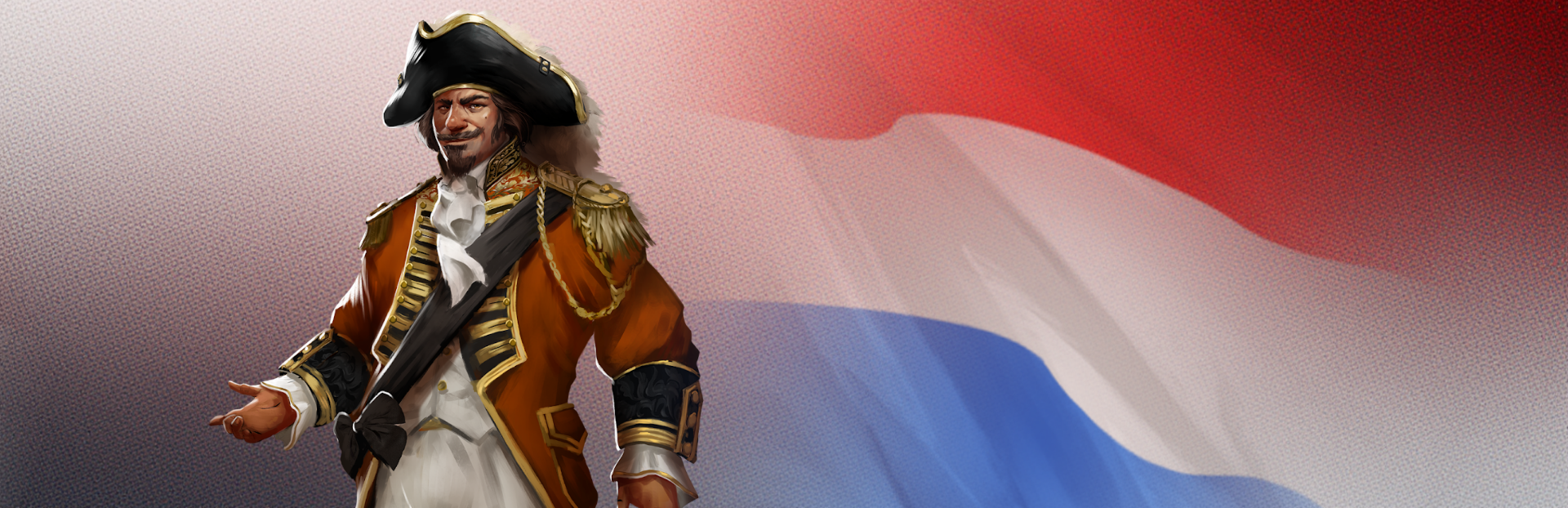
Captain Van Lubeck is the perfect embodiment of this philosophy. From a mercantile background himself, he presents a calm and approachable image, despite being more calculating than he first appears. He prioritises profitable outcomes and maintains cordial relationships with merchants and governors, readily using persuasion, financial agreements and secret negotiations to strengthen his position. He avoids open conflict where it threatens his interests, but he remains quick to seize any opportunity to expand Dutch economic power, even if that means operating behind the scenes or working around his own allies.
Over the years, his decisions reflect a persistent strategy of adaptation. Faced with growing British influence, he explores new alliances rather than direct confrontation. When rumours of a Spanish treasure draw covetous attention, he partners with questionable allies in pursuit of long-term gain, accepting the ensuing diplomatic fallout. After disputes over artefacts, he strengthens ties with Britain to secure his rise, only to reassess his strategy when British expansion begins to upset the regional balance. Conscious that direct conflict is not his nation’s strong suit, he ultimately returns to the driving force of Dutch power: trade, negotiation and strategic alliances, notably with other powers seeking partners, such as Denmark.
This faction offers a playstyle built around economic influence, opportunistic diplomacy and the constant pursuit of profit, providing a compelling alternative to purely military strategies through anticipation, alliances and indirect control of regional assets.