
Full notes
Full 命运游戏2:百年之约 update
Read the full published notes in a cleaner layout. The original post stays linked below.
Repeated intro
Hello everyone,
What changed
- Gameplay
- Events
- Balance
- Maps
- Performance
- Server
命运游戏2:百年之约 changes
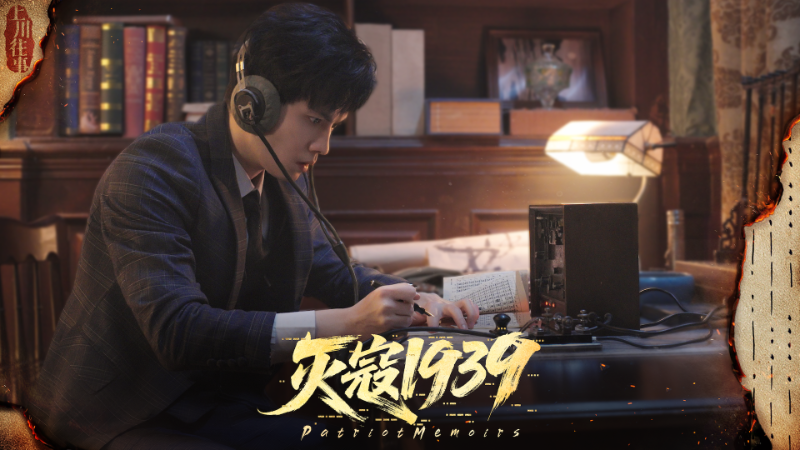
As July 7th approaches, our anti-Japanese espionage drama game PatriotMemoirs – Today, We Also Work Hard to Kill Traitors is being polished with full effort. We are striving to refine the work to a sufficiently good level in these final days, to present it to the veteran players and new players who have been eagerly awaiting our work.
As a work with a mainstream, positive energy theme, although our plot and characters are fictional interpretations, many of the deeds and historical figures are based on real historical prototypes – which is a common creative technique for this type of work. We hope the work fits the aesthetic tastes of contemporary users, while also staying true to the core of history. Through this work, we want to help people understand that era, those people, and even personally participate in completing those events! The Tokyo Trial ultimately missed some key culprits.
During the past year of developing Kamikawa Past, we have consulted a vast amount of historical materials, newspapers, and documents, striving to improve the level of detail and authenticity in the creation of many stories. In the coming period, this official account will periodically serialize true historical accounts and information from around 1939 in the occupied areas. These articles are collected from enthusiastic players. Although the content may not be strongly directly related to our work, understanding these background events will greatly help players better appreciate PatriotMemoirs.
We also welcome other players to submit their own writings. If we find them suitable and well-written, we will republish them.Email:
First installment: [Den of Spies No. 76: The Cancer of Traitors in Shanghai during the War of Resistance] – Author: Anonymous Submission
second installment: [Pushing Open the Gate of History – Marking the 80th Anniversary of the Tokyo ] Author: Doki
view Third installment: [Why Shanghai Became the Key Battlefield Behind Enemy Lines During the War of Resistance Against Japan] Author: LiuN_刘念
Main Text:
Preface: Gunshots and Choices — Shanghai Memories Across Two Generations of Players
If you open any video platform and search for keywords such as “spy war,” “Anti-Japanese War,” or “agents,” you’ll find that seven out of ten works are set in Shanghai. From the Ming brothers maneuvering between the French Concession and No.76 in The Disguiser, to the interrogation chambers of Qiu Manor in The Message, and more recently interactive movie games like Spy: Alarm and The Invisible Guardian, Shanghai has almost become the “center of the universe” for Chinese spy-war stories. So why is it that whenever a masterpiece of Anti-Japanese espionage fiction appears, its setting is inseparable from this city?
The answer is not merely because Shanghai was the largest metropolis in the Far East or because it possessed glamorous foreign concessions. More importantly, after the Battle of Shanghai in 1937, the city entered a uniquely extraordinary “Isolated Island” period. This land was divided into three fragmented zones: the Japanese-occupied districts, the International Settlement, and the French Concession. Every street could become a frontline, every shikumen house might conceal more than one secret radio station, and every gentleman in a suit and tie could turn around to reveal himself as an agent armed with a Colt pistol. That is precisely why Shanghai became the most dramatic “stage” in the enemy-occupied rear battlefield during the War of Resistance. This was not a coincidental creative preference, but history’s own choice.
Chapter One: One City, Three Realms — A Fragmented Metropolis
1.1 The Divided Chessboard: Japanese-Occupied Areas, the International Settlement, and the French Concession
To understand Shanghai in 1939, one must first understand its administrative divisions — one city divided into three jurisdictions.
International Settlement: Bordered by the Huangpu River to the east, Suzhou Creek and the border of Shanghai and Baoshan counties to the north, Jing’an Temple to the west, and the French Concession to the south. It contained Nanjing Road, the Bund, and the Racecourse, serving as Shanghai’s commercial heart.
At the time, the Municipal Council of the International Settlement was controlled by British and American expatriates. Though officially neutral, it steadily compromised with Japan. In 1938, the Japanese military demanded “cooperation” from the Council. Britain, weakened in the Far East, could only yield. For example, the Council dismissed all senior Chinese police inspectors while allowing Japanese advisers into the police department. Newspapers and magazines within the Settlement faced threats of closure if they published anti-Japanese articles.
The police system itself reflected infiltration from every side. The police stations of the International Settlement included Chinese officers, British officers, Indian Sikh policemen (nicknamed “Red-Headed Ah-San”), and later, increasing numbers of Japanese officers after 1939. On the intelligence front, the Military Statistics Bureau, the Central Statistics Bureau, Communist underground organizations, and even the Japanese Tokkō all planted informants inside the police force.
French Concession: Stretching from Yangjingbang in the east to Xujiahui in the west, and southward to MinGuo Road (today’s Renmin Road). Avenue Joffre (today’s Huaihai Middle Road) was the Champs-Élysées of the French Concession, lined with cafés, Western restaurants, and dance halls.
Compared with the International Settlement, the French Concession was relatively more “lenient.” While French authorities exercised less strict political control, corruption was rampant. The French Municipal Council colluded extensively with the Green Gang, and the influence of Huang Jinrong and Du Yuesheng ran deep within the Concession. By 1939, although Du Yuesheng had relocated to Hong Kong, his followers continued operating casinos, opium dens, and brothels in the French Concession, even cooperating with intelligence agencies.
The French Concession also became a refuge for left-wing intellectuals. In 1939, the Complete Works of Lu Xun was secretly published by the “Fushe” publishing house within the Concession. Many anti-Japanese relief organizations disguised themselves as “refugee shelters” or “tutorial schools.” Yet for this very reason, the French Concession became a hotspot for Japanese military police conducting cross-border arrests — often storming into schools under the pretext of pursuing fugitives.
Japanese-Occupied Areas: Zhabei and Nanshi had already become ruins, while Hongkou and Yangshupu were centers of Japanese expatriate communities and headquarters of the Japanese military police and intelligence agencies. Hongkou was therefore known as “Little Tokyo,” with Japanese signboards, restaurants, pawnshops, and comfort stations lining its streets. North of Suzhou Creek, Zhabei had been nearly leveled during the 1937 bombings. Refugees with nowhere else to go built endless shantytowns, forming a stark contrast with the skyscrapers of the concessions.
In occupied territories, the Japanese military implemented the policy of “using Chinese to govern Chinese.” Puppet administrations were established alongside the Baojia system, which enforced strict household registration controls. Every ten households formed one Jia, and every ten Jia formed one Bao. Baojia leaders closely monitored the speech and actions of local residents. Anyone discovered harboring anti-Japanese elements or suspicious individuals had to report them immediately, otherwise they would be charged with “collaborating with the enemy” and punished collectively.
The concession environment also gave rise to countless opportunistic “middlemen”: compradores, translators, detectives, police officers, informants, dance hostesses, and brokers. They might deliver intelligence to the Japanese in the morning and help Communist underground agents smuggle radio parts in the afternoon. Everyone performed for survival. Shanghai residents even coined phrases like “Chi Jiang Cha” — settling disputes through gang mediation in teahouses — and “Chao Bazi,” meaning random stop-and-searches by police. In such cracks between powers, survival itself became the greatest faith.
Chapter Two: A Battlefield of Six Competing Forces
It was precisely because Shanghai in 1939 possessed such an unusual political structure that it became a historically unique “power vacuum.” Although the Japanese occupied the Chinese-administered districts, they could not fully control the foreign concessions. Meanwhile, concession authorities claimed neutrality while constantly compromising with Japan. This allowed various Chinese political forces to secretly gather in Shanghai and wage a covert intelligence war.
Within the city known as the “Paris of the East,” at least six major forces competed for dominance. At times they cooperated, at times they fought, infiltrated, and slaughtered one another. Anyone could possess multiple identities, and behind every smile might lurk a blade. As legendary multi-identity agent Yuan Shu once remarked: “In Shanghai, you are either acting, watching a performance, or both actor and audience.”
2.1 Japanese Occupation Forces and the Tokkō: Absolute Masters of the City
In 1939, the highest Japanese military authority in Shanghai was the China Expeditionary Army’s Central China Area Army. Its commanders successively included Hata Shunroku (1938–1939) and Nishio Toshizō (who became commander-in-chief of the China Expeditionary Army in December 1939, though not solely for Shanghai).
The Tokkō, subordinate to the Japanese military police, was a terror organization specializing in suppressing anti-Japanese resistance. Although Kagesa Yoshiaki was an important Japanese strategist in Shanghai — notably involved in engineering Wang Jingwei’s defection — he was not the actual Tokkō chief. The true leaders were shadowy professional operatives working closely with the Kempeitai, responsible for countless atrocities.
2.2 The Wang Jingwei Regime and the No.76 Special Agent Headquarters: The Most Brutal Traitor Organization
In September 1939, with Japanese support, Wang Jingwei’s faction officially established the “Special Agent Headquarters of the Central Committee of the Chinese Nationalist Party” at 76 Jessfield Road (today’s 435 Wanhangdu Road), commonly known simply as “No.76.”
Internally, No.76 maintained a highly organized structure, including intelligence, operations, interrogation, and administration departments. It employed thousands of agents and possessed heavy weaponry such as machine guns, grenades, and even armored vehicles. Its interrogation department used horrifying torture methods, and countless resistance fighters perished there.
2.3 Shanghai District of the Kuomintang Military Statistics Bureau: The Assassination Machine
The Shanghai District of the Military Statistics Bureau was the Kuomintang’s largest intelligence and operations organization in Shanghai. By 1939, it had around 300 agents divided into several operational brigades and intelligence groups. Known for decisive action despite internal factionalism, the organization excelled at assassinations.
For example, on February 19, 1939, Military Statistics Bureau agents assassinated Chen Lu, foreign minister of the puppet Reformed Government, on Yuyuan Road in the International Settlement. Chen Lu was the highest-ranking collaborator assassinated during the War of Resistance, and the operation greatly boosted anti-Japanese morale nationwide.
2.4 Shanghai District of the Kuomintang Central Statistics Bureau: Masters of Infiltration
Unlike the Military Statistics Bureau, the Central Statistics Bureau specialized more in infiltration and persuasion than direct assassinations. In 1939, its Shanghai District had around 200 agents mainly embedded within government offices, schools, factories, and social organizations. Their main tasks included gathering intelligence, persuading collaborators to defect, and sabotaging Japanese puppet political activities.
For instance, in March 1939, the organization attempted to contact and potentially turn officials within the puppet government.
2.5 The Chinese Communist Underground Organization in Shanghai: Backbone of the Hidden Front
The Communist underground organization in Shanghai formed the core of anti-Japanese resistance within the city and was led under the unified command of Pan Hannian. One of the CCP’s most outstanding intelligence operatives, Pan built an intelligence network spanning Shanghai and much of East China. By 1939, the organization had approximately 900 members distributed across factories, schools, shops, and even Japanese puppet institutions. Their duties included gathering intelligence, organizing labor movements, transporting supplies and personnel to resistance bases, and conducting anti-Japanese propaganda.
In 1940, the Communist underground organized a major strike at Japanese-owned textile mills in Shanghai involving approximately 20,000 workers. The strike lasted more than a month and dealt a heavy blow to Japan’s war industry.
2.6 The Green Gang and Other Local Forces: Walking the Line Between Light and Darkness
The Green Gang was Shanghai’s largest criminal organization during the war years, but it split into three factions:
(1) Du Yuesheng’s faction: Supported resistance against Japan and cooperated with the Kuomintang. After the war broke out, Du moved to Hong Kong while retaining strong influence in Shanghai.
(2) Huang Jinrong’s faction: Maintained a “neutral” stance, remaining in Shanghai without openly resisting or collaborating.
(3) Zhang Xiaolin’s faction: Publicly collaborated with Japan and became traitors.
Beyond the Green Gang, Shanghai also hosted other local organizations such as the Hongmen and various regional associations. Though smaller in scale, they possessed broad grassroots connections and lacked clear political loyalties, acting primarily based on利益, which made them targets for recruitment by all sides.
Shanghai in 1939 was precisely such a labyrinth of power. Six major forces competed, infiltrated, and killed one another there. Today’s friend might become tomorrow’s enemy, while today’s enemy could become tomorrow’s ally.
Chapter Three: Everyday Life — While the Rich Feast, the Poor Starve
Life for ordinary people in Shanghai during 1939 was equally complicated. The division between concessions and occupied areas disrupted the flow of goods and sent living costs soaring. The struggle between the Nationalist government and Communist underground organizations inspired patriotism but also intensified security risks. Ultimately, Shanghai became a terrifying era in which “everything except human life was expensive.” After occupying Shanghai, the Japanese military imposed strict wartime economic controls to support its invasion of China. Essential goods such as rice, cotton, salt, and medicine were tightly regulated and could no longer be freely traded, worsening civilian suffering.
Before the fall of Shanghai, the city’s population stood at roughly three million. After the war erupted, refugees from southern Jiangsu and Zhejiang flooded into the concessions, pushing the population to nearly four million by 1939. Yet Shanghai itself produced no grain and relied heavily on imports. The Japanese military controlled Yangtze River shipping and major grain-producing regions while blockading the concessions to prevent rice imports.
To achieve its policy of “using war to sustain war,” the Japanese occupation authorities imposed strict material rationing throughout Chinese-administered districts. Rice, flour, coal briquettes, cloth, and Western medicine were all rationed. Each person received only around 1.5 to 2 kilograms per month, often mixed with sand and pebbles — nicknamed “Japanese rice.” On April 17, 1939, Shen Bao reported: “Citizens queue for hours to purchase rationed rice, often clashing with Baojia leaders over shortages and underweight measures. Unscrupulous merchants even sell moldy rice disguised as ration grain, causing dozens of food poisoning cases daily.”
Thus, for underground operatives of that era, obtaining a “rice coupon” and a stable job was often more important than acquiring a gun. Many intelligence exchanges took place outside rice shops, since people of every social class were forced to gather there.
Although conditions in the concessions were comparatively looser, inflation remained suffocating. In 1939, the price of a bowl of plain noodles in the French Concession rose from 0.2 yuan before the war to 1.2 yuan — a 500% increase — while workers’ wages rose only from 15 yuan to 18 yuan, an increase of merely 20%. According to the Shanghai Workers’ Living Index Report (1937–1940) preserved by the Shanghai Academy of Social Sciences, food expenses for a family of four workers rose from 45% of monthly spending before the war to 72% in 1939, reaching catastrophic Engel coefficient levels.
Disease was yet another invisible “man-eating beast.” The influx of refugees caused sanitation conditions within the concessions to deteriorate sharply. During the summer of 1939, Shanghai suffered a severe cholera outbreak. The French Concession alone reported more than 5,000 cases and nearly 2,000 deaths. In its 1939 Annual Report, the Public Health Department of the International Settlement acknowledged: “Cholera, typhoid, dysentery, and tuberculosis within the slums are beyond control. Funeral trucks move through the alleys daily carrying away corpses.”
Epilogue: Revisiting History to Move Forward
Looking back at Shanghai under Japanese occupation in 1939, whether the bloody repression and social collapse in Chinese-administered districts or the false peace and distorted prosperity of the concessions, all profoundly reveal the immense suffering inflicted upon the Chinese people by Japan’s invasion.
Shanghai in 1939 was defined by oppression, fear, and hardship. Countless civilians struggled to survive beneath the boots of the Japanese military. Countless underground operatives upheld their beliefs and resisted in the darkness. Countless patriotic intellectuals protected national culture and preserved hope amid adversity.
Shanghai in 1939 was both hell and battlefield; paradise and abyss. From every alleyway might emerge an unsung hero, and every transfer of intelligence could alter history itself. This city witnessed both the greatest humiliation and the greatest resilience of modern China.
Source
Changelog.gg summarizes and formats this update. How we read updates.