
Full notes
Full 命运游戏2:百年之约 update
Read the full published notes in a cleaner layout. The original post stays linked below.
Repeated intro
Hello everyone,
What changed
- Gameplay
- Events
- Balance
- Security
- Maps
- Performance
命运游戏2:百年之约 changes
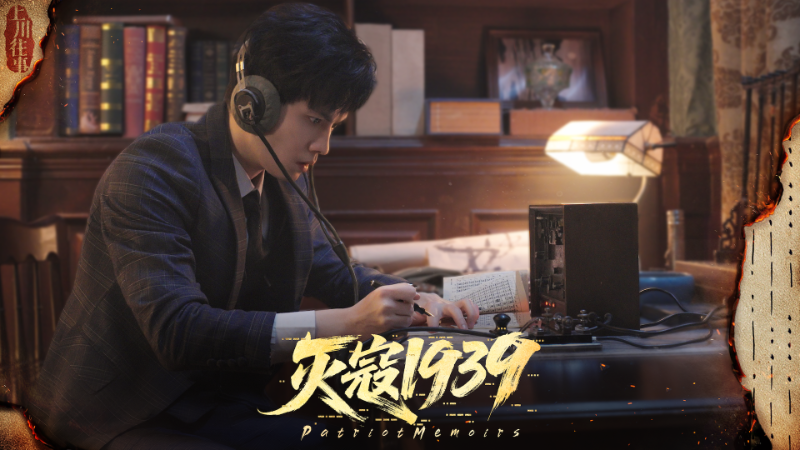
As July 7th approaches, our anti-Japanese espionage drama game Kamikawa Past – Today, We Also Work Hard to Kill Traitors is being polished with full effort. We are striving to refine the work to a sufficiently good level in these final days, to present it to the veteran players and new players who have been eagerly awaiting our work.
As a work with a mainstream, positive energy theme, although our plot and characters are fictional interpretations, many of the deeds and historical figures are based on real historical prototypes – which is a common creative technique for this type of work. We hope the work fits the aesthetic tastes of contemporary users, while also staying true to the core of history. Through this work, we want to help people understand that era, those people, and even personally participate in completing those events! The Tokyo Trial ultimately missed some key culprits.
During the past year of developing Kamikawa Past, we have consulted a vast amount of historical materials, newspapers, and documents, striving to improve the level of detail and authenticity in the creation of many stories. In the coming period, this official account will periodically serialize true historical accounts and information from around 1939 in the occupied areas. These articles are collected from enthusiastic players. Although the content may not be strongly directly related to our work, understanding these background events will greatly help players better appreciate Kamikawa Past.
We also welcome other players to submit their own writings. If we find them suitable and well-written, we will republish them.
Email:
First installment: [Den of Spies No. 76: The Cancer of Traitors in Shanghai during the War of Resistance] – Author: Anonymous Submission
Second installment
[Pushing Open the Gate of History – Marking the 80th Anniversary of the Tokyo Trials] – Author: Doki Submission.
The following is the main text
I. The Trial of the Century: Looking Back at Justice after 80 Years
Once upon a time, humanity believed war was a tool of politics. It was not until the Tokyo Trial that the world, for the first time, used the yardstick of law to nail “aggression” onto the pillar of shame in human civilization. This trial of the century, which lasted two and a half years and held 818 sessions, was not only a legal reckoning by the Allied powers against Japanese militarism, but also a great attempt by humanity to replace revenge with justice. 2026 marks the 80th anniversary of the opening of the International Military Tribunal for the Far East (the Tokyo Trial). Looking back and pushing open the gate of history, we must remember history, never forget our national humiliation, be grateful to our martyrs, and cherish the present.
II. Trial Preparations: The Charter Takes Shape and Two Major Difficult Issues
On August 15, 1945, the Japanese Emperor announced unconditional surrender, and the War of Resistance Against Japan was won. Naturally, the initiators and aggressors of the war had to be tried. On January 19, 1946, the Supreme Commander for the Allied Powers in the Far East, pursuant to the provisions of the Moscow Conference held from December 16 to 26, 1945, issued a special proclamation establishing the International Military Tribunal for the Far East and simultaneously promulgated the Charter of the International Military Tribunal for the Far East. Its content was largely similar to the Charter of the International Military Tribunal for Europe signed by the four nations of Britain, the United States, the Soviet Union, and France in London. Based mainly on Anglo‑American law and influenced by the fact that the Potsdam Declaration and the subsequent Allied agreements were largely drafted and led by the United States and Britain, the Nationalist Government of China sent a team of jurists well‑versed in Anglo‑American law, with Mei Ju‑ao as the judge and Hsiang Che‑chun (Xiang Zhejun) as the prosecutor, to Tokyo to participate in the trial work.
(梅汝璈)
(向哲濬)
The preparation time for the trial was tight. The Chinese prosecution personnel who arrived first in Tokyo, together with their colleagues at the International Prosecution Section, faced two major urgent issues: first, how to determine the starting point for the prosecution of war criminals; second, how to define the scope of the accused for this trial. Thanks to the strenuous efforts of the Chinese prosecutors, the starting point for the prosecution was finally set at 1928 – the year of the Huanggutun Incident, when the Japanese military conspired to assassinate Zhang Zuolin, the supreme administrator of Northeast China, marking a significant beginning of Japan’s ambition to invade China.
Second, who were the main figures to be tried? We all know there were 28 Class‑A war criminals, but that list did not include the crucial figure – the Japanese Imperial Family headed by Emperor Hirohito. The Imperial Family was not limited to Hirohito; many other members, represented by Prince Asaka Yasuhiko, were also involved in the war of aggression. So why were they not placed in the defendant’s dock?
III. Political Dark Deals: The Truth Behind the Imperial Family’s Escape from Justice
Before explaining this, let us first consider one person – Prince Asaka Yasuhiko. He was the uncle‑by‑marriage of Emperor Hirohito and one of the perpetrators of the Nanjing Massacre. He was a rare career military officer among the imperial family. On December 2, 1937, he succeeded Matsui Iwane (also a perpetrator of the Nanjing Massacre), who was too ill to command, as the frontline commander of the battle for Nanjing. After Nanjing fell, Prince Asaka Yasuhiko instructed his staff to issue orders to “kill all captives and raze the city,” even directly ordering “kill them all.” Subsequently, due to international outcry over the massacre, the Shanghai Expeditionary Force was disbanded, and Prince Asaka Yasuhiko returned to Japan, where he continued to oversee part of the war effort. After the war, in an effort to evade responsibility, Emperor Hirohito personally met with General MacArthur. While we do not know the details of that meeting, it can be assumed that Hirohito agreed to many conditions that served American interests. Coupled with the need to maintain the United States’ strategic posture in the world, the U.S. government, which dominated the entire trial, decided not to “prosecute, indict, or arrest” the Emperor and other imperial family members who had participated in the war, even though other countries repeatedly requested that Hirohito be included in the trial. Even later, when Matsui Iwane explicitly stated during interrogations that Prince Asaka Yasuhiko’s Shanghai Expeditionary Force bore undeniable responsibility for the “Nanjing Incident,” the U.S. government quietly covered this up.
(朝香鸠彦(中)跟松井石根(左)、柳川平助(右)的合影)
We must first understand that by 1946, the prelude to the Cold War between the United States and the Soviet Union had already quietly begun. To protect its interests in the Far East and build a forward position against the Soviet Union, the United States saw Japan as a very suitable option from various angles. As a victorious power seeking to control Japan, the United States believed it necessary to preserve Japan’s “spiritual pillar” – that is, to effectively occupy Japan, it had to exploit the Japanese people’s reverence for the Emperor. Trying Emperor Hirohito and the imperial family might provoke fierce resistance throughout Japan, raising the cost and risk of occupation. Moreover, Emperor Hirohito was adept at reading the situation; he took the initiative to meet with MacArthur and reached a secret political deal with the U.S. government. Consequently, the U.S. government, at any cost, shielded those war criminals it could use, no matter how heinous their crimes. This resulted in an irreparable flaw in the Tokyo Trial.
IV. Overwhelming Evidence: Collecting Evidence and Court Testimony of Japanese Atrocities
After clarifying the starting point of the crimes and the scope of the accused, gathering solid evidence and restoring the truth became the core of the trial. Let us briefly shift our perspective to Qiu Shaoheng, a Chinese assistant prosecutor who participated in the entire trial in Japan. Because he left no detailed written records, the author here, based on his oral recollections, tries to recreate some real historical scenes from his viewpoint, presented as diary entries for easier understanding.
“Diary of Qiu Shaoheng – No. 1 (Hypothetical)” *
February 6, 1946 Prosecutor Hsiang Che‑chun and I have been ordered to fly to Tokyo, Japan, tomorrow ahead of schedule. The scope of this trial is vast and complex. We must prepare the direction of the prosecution, as well as evidence, witnesses, and testimonies, before the judges convene. Carrying the blood debt of our humiliated nation, we must bring all criminals to justice and put a fitting end to the struggle of our soldiers and civilians.
March 12, 1946 It feels like a different world. I have finally set foot on my homeland again. After reviewing some of the Japanese military’s wartime records, I am chilled to the bone. The more I see, the less confident I become – do I have the ability to assist my colleagues in bringing these devils’ crimes to light? I have returned this time to gather evidence about the Nanjing Incident, an incontrovertible fact. They slaughtered my compatriots, killed innocent civilians, and committed countless crimes on Chinese soil. Several American colleagues have come back with me. I believe we will find sufficient evidence to expose the ugly deeds of the Japanese to the world.
Now let us turn to the actual circumstances at the time. The International Military Tribunal for the Far East was then in its preparatory stage. For the crimes of aggressive war, ordinary war crimes, and crimes against humanity committed by Japan between 1931 and 1945 in its occupied territories in China, East Asia, and Southeast Asia, prosecutors and their assistants from various countries travelled to all areas that had been occupied or affected by the war to collect evidence on the ground. These areas covered all of China (including Taiwan Province), the Korean Peninsula, all of Southeast Asia, and the occupied Pacific islands. All wartime atrocities – including massacres, the “Three Alls” policy (kill all, burn all, loot all), bacteriological warfare, chemical warfare, indiscriminate bombing, forced labor, the “comfort women” system, the killing of prisoners of war, and colonial economic plunder – were systematically investigated, and relevant evidence and testimonies were compiled. During the subsequent Tokyo Trial, the prosecution submitted 4,336 pieces of evidence, called 419 witnesses to testify, and admitted 779 sworn affidavits.
From the collected evidence, the Japanese military committed unimaginable atrocities on the entire World War II battlefield: within China’s occupied areas – including Liaoning, Jilin, Heilongjiang, Hebei, Shandong, Henan, Chahar, Suiyuan, Jiangsu, Zhejiang, Anhui, Hubei, Hunan, Jiangxi, Fujian, Guangdong, Guangxi, Yunnan and more – the Japanese military committed acts including but not limited to mass killings, “Three Alls” mopping‑up operations, indiscriminate bombing, forced labor, narcotics poisoning, and the burning of villages. Outside China, Japan invaded seven countries in Southeast Asia, including Malaya (then a British colony), Singapore, the Philippines, Indonesia, Burma, Thailand, and Vietnam, and committed atrocities such as the Sook Ching massacre in Singapore, the Manila Massacre, the Bataan Death March, the Thailand‑Burma Death Railway, the massacre on the Panjang Islands in Indonesia, and the enforced recruitment of “comfort women.”
In June 1942, in order to connect Bangkok, Thailand, with Rangoon, Burma, and facilitate the transport of strategic supplies, Japan mobilized 12,000 of its own soldiers and forcibly conscripted 62,000 Allied prisoners of war and about 350,000 Southeast Asian laborers to build a railway about 415 kilometers long. The original planned construction period was six years, but the Japanese forcibly compressed it to just 16 months. More than 150,000 people died during construction, an average of 415 deaths per kilometer. This atrocity is known as the “Thailand‑Burma Death Railway.”
(死亡铁路修建中)
Similar to the Nanjing Massacre, systematic massacres of civilians also occurred in Manila, the Philippines. The Philippines lies on the strategic route from Japan to Southeast Asia and was a key point in Japan’s “Southward Advance Policy.” Manila was regarded by the Japanese military as the last barrier of their defense line in Southeast Asia. On December 8, 1941, after the attack on Pearl Harbor, Japan launched a fierce assault on the then‑U.S.-controlled Philippines. One month later, the Japanese successfully occupied Manila, and about 70,000 people became POWs. The Japanese forced these POWs to march more than 100 kilometers to a prison camp – a horrific episode known as the “Bataan Death March.” During the entire march, the POWs were given only one rice ball at the start and were then forbidden to drink water or eat. Anyone who tried to find water or food was bayoneted or shot dead by the Japanese. More than 10,000 POWs died from hunger, thirst, or were executed by the Japanese, the vast majority of them Filipinos. In the two months following arrival at the camp, another 26,000 POWs were tortured to death by the Japanese.
In February 1945, MacArthur led forces to besiege Manila, which was occupied by the Japanese. The senior Japanese commander there, Lieutenant General Yamashita Tomoyuki, commander of the 14th Area Army, ordered a withdrawal. However, Rear Admiral Sanji Iwabuchi, in command of the naval landing force, along with some army troops, refused to obey the withdrawal order and decided to stay and fight, totaling about 10,000 Japanese soldiers remaining in Manila. From February 3 to March 3, 1945, the Japanese carried out mass executions of civilians in areas such as the south bank of the Pasig River. Among the atrocities were the killing of 994 children at St. Paul University and the burning to death of 3,000 refugees in a shelter. Documents captured by the U.S. military showed that the Japanese had adopted a policy of “mass execution and cremation to destroy evidence.” In this battle, about 12,000 Japanese soldiers were killed, and U.S. casualties exceeded 6,500. Seventy‑five percent of buildings in Manila were destroyed, and approximately 125,000 Filipinos lost their lives.
(马尼拉大屠杀)
Regarding the Nanjing Massacre, the International Prosecution Section sent personnel to Nanjing three times to conduct on‑site investigations and collect evidence. On March 12, 1946, Chinese Prosecutor Hsiang Che‑chun, Advisor Qiu Shaoheng, and American Assistant Prosecutors Morrow and Sutton flew to Shanghai, beginning more than three months of field investigation. Among the evidence gathered, three key documents were particularly remarkable and became crucial for determining the Japanese military’s atrocities in Nanjing: telegrams exchanged by the U.S. Embassy about conditions in Nanjing after the Japanese occupation, the top‑secret telegram sent by German Ambassador to China Trautmann to the German Foreign Office along with its attachments, and the archives of the Nanjing Safety Zone.
(日军攻陷南京后举行“入城式”)
In September 1946, in order to clarify the truth of the Nanjing Massacre, the International Military Tribunal for the Far East established a separate unit to conduct court investigations. In this unit, the prosecution team interrogated all living senior Japanese officers who had participated in the attack on Nanjing, including Matsui Iwane (commander of the Central China Area Army, concurrently commander of the Shanghai Expeditionary Force during the attack on Nanjing), Prince Asaka Yasuhiko (who succeeded Matsui due to illness – though he did not appear in court and was only informally questioned), Lieutenant General Tada Shun (deputy chief of staff), Lieutenant General Wachi Takaji (deputy chief of staff of the Central China Area Army), and five others – nine individuals in total.
In October 1946, Pastor John Magee appeared as a witness in the Tokyo courtroom.
Prosecutor: “Were you in Nanjing from December 1937 to February 1938?” John Magee: “Yes.” Prosecutor: “How did the Japanese troops treat the Chinese civilians after occupying Nanjing on December 13, 1937?” John Magee: “They immediately began killing in various ways. At first it was individual Japanese soldiers doing it, but soon large‑scale massacres occurred. Hundreds were bayoneted. One woman told me that Japanese soldiers tied up her husband and drowned him in a pond right in front of her. She could do nothing; he drowned before her eyes.”
(约翰·马基牧师出庭作证)
Japanese journalists of the time used words like “miserable, miserable, miserable” and “at that moment, one shuddered” to describe their feelings in the courtroom.
In an article written in 1963 recalling the Tokyo Trial, Chinese Judge Mei Ju‑ao mentioned that due to time constraints, the International Military Tribunal for the Far East had overlooked the largest mass execution in Nanjing. That massacre occurred on the fifth day after the Japanese occupied Nanjing, i.e., December 18, 1937. That night, the Japanese drove a total of 57,400 men, women, and children who had been surrounded at Mufu Mountain to Caoxie Gorge in Xiaguan, Nanjing, and mowed them down with concentrated machine‑gun fire. Afterwards, to cover up the crime, the Japanese poured gasoline on the bones and set them on fire to destroy the evidence.
This was only a small part of the atrocities committed by the Japanese in Nanjing. As the court investigation deepened, more and more criminal facts were exposed. The war criminals sitting on the defendant’s bench, especially Matsui Iwane, looked extremely pained. In the final judgment rendered by the International Military Tribunal for the Far East, the massacre in Nanjing, China, was determined as follows: “During the first six weeks of the Japanese occupation of Nanjing, the total number of civilians and prisoners of war murdered exceeded 200,000.” The court’s estimate was undoubtedly cautious, even conservative. Those burned or thrown into the Yangtze River to destroy evidence were not fully included in this number. According to survey statistics released by the Nanjing Massacre Memorial Hall of China in 2003, the total number of Chinese soldiers and civilians who died in Nanjing was more than 300,000.
While the International Military Tribunal for the Far East was proceeding, the Chinese government also conducted its own trials of the Japanese military’s atrocities in Nanjing. On April 26, 1947, Matsui Iwane’s subordinate, Iwane Matsui’s subordinate Iwane Matsui? Actually, correction: the text says: “On April 26, 1947, Matsui Iwane’s subordinate, the commander of the 6th Division (the first to enter Nanjing and perpetrate the massacre), Tani Hisao, was executed by firing squad in Nanjing.” On January 28, 1948, the Chinese military tribunal tried and sentenced Toshiaki Mukai and Noda Tsuyoshi to death, and they were executed by firing squad in Nanjing. The principal war criminal Matsui Iwane was sentenced to death by hanging as a Class‑A war criminal by the International Military Tribunal for the Far East on November 12, 1948, and was executed at Sugamo Prison in Tokyo at midnight on December 23.
V. Puppet Testimony: Puyi Takes the Stand – Frontstage and Backstage
“Diary of Qiu Shaoheng – No. 2 (Hypothetical)” *
August 16, 1946 I knew before the court session that Puyi would come to testify today. The whole courtroom was packed; many people crowded in just to see what Puyi would say. When he appeared, I deliberately looked at the faces of the others, especially Itagaki Seishiro and Tōjō? Actually, the text says Itagaki Seishiro and Doihara Kenji. Sure enough, they looked terrified and incredulous. Haha, their days of talking tough are numbered. I also looked at Puyi, wearing round glasses, his hair meticulously combed, with two military policemen behind him. After being captured by the Soviet Red Army, he had been terrified of being sent back to China for trial. It took several visits by Gao Wenbin and me to put him at ease, to make him believe that the purpose was not for him to appear as a traitor to be tried, but as a witness to testify how the Japanese had used him to split China.
Now let us return to the actual court proceedings. For eight days, Puyi did his utmost to prove that he had been coerced, that he had no choice but to become the emperor of Manchukuo, and that he had no real power whatsoever – that he was entirely a Japanese puppet.
(溥仪出庭作证时宣誓)
Puyi was not satisfied with his “performance” on his first day of testimony. In subsequent sessions, he added some gestures to try to make people believe he was a “victim.” After his second appearance, the direct examination ended, and he seemed very pleased with himself. The World Times described Puyi’s expression when court adjourned that day: “The Manchu emperor appeared very satisfied with his performance in court. When he finished his statement, he looked so proud, like a knight coming off the dueling ground.”
In the court session of August 26, 1946, Puyi said that in his next appearance he would talk about his dealings with the Emperor of Japan. We all know that the United States, in order to protect its “strategic bridgehead” in East Asia, had secretly promised that the Japanese Emperor and the imperial family would not be tried. Consequently, Puyi’s testimony concerning the Japanese Emperor was naturally not allowed to be given. Moreover, with the Soviet Union growing stronger after the war and the Iron Curtain of the Cold War gradually descending, Japan had become an important weight for the United States in containing the Soviet Union. At that time, the Americans would certainly not allow testimony intended to expose the Emperor’s crimes. And so, Puyi boarded a plane again and returned to the Soviet Union.
After that, the International Military Tribunal for the Far East never contacted Puyi again. On December 23, 1948, seven Class‑A war criminals were executed at Sugamo Prison. Itagaki Seishiro, who had forced Puyi to become the “chief executive,” Doihara Kenji, who had tricked him into leaving Tianjin, and Umezu Yoshijirō, who had instructed him to go to Japan to “invite the gods” – all were sent to the gallows for their conspiracies and aggression.
Puyi was held for another four years in the Soviet Union. After the founding of New China, China and the Soviet Union quickly reached an agreement on the extradition of Japanese and puppet war criminals. On August 3, 1950, Puyi nervously boarded a train bound for China. However, the Chinese government did not send him to the execution ground. Instead, along with dozens of Chinese and Japanese “officials” of Manchukuo, he was sent to the Fushun War Criminals Management Center for reformation. On December 4, 1959, Puyi was released as one of the first batch of war criminals granted amnesty.
VI. Final Justice: War Criminals Pay the Price and the Trial’s Imperfections
There are many aspects not covered in this article, such as the trial process of Tōjō Hideki, Chinese prosecutor Ni Zhengyu’s verbal duels with the “wolves” in court, Mei Ju‑ao’s fight for the death penalty, and the presentation of key evidence. Like most things in the world, the Tokyo Trial was not perfect. Distorted by political factors outside the law, there remained large blank areas in the picture of justice: the Emperor and part of the imperial family escaped trial; Unit 731 obtained “immunity” by trading bacteriological warfare data; the “comfort women” system was not listed as a separate crime among war atrocities; many core figures of the Japanese military establishment and organizers of militarist organizations went unpunished. All these allowed Japan’s reflection on its wartime responsibility to remain ambiguous, and laid the seeds for the resurgence of “neo‑militarism.”
(倪征燠在庭审上的舌战群“狼”)
Yet the historical significance of the Tokyo Trial cannot be denied. It was the legal reckoning of Allied nations against Japanese aggression, a great victory of civilization over barbarism and justice over evil. It upheld the achievements of the World War II victory and safeguarded international fairness and justice.
Many media outlets at the time commented on the Tokyo Trial. An editorial in Shen Bao on May 3, 1946, titled “The Opening of the Tokyo Trial: The Beginning of Justice,” stated, “This is not revenge, but the judgment of civilization over barbarism.” Ta Kung Pao published two editorials, “Severely Punish the Crimes of the Enemy” and “Tripartite Joint Declaration on Japan,” calling for harsh punishment of Japan’s war crimes. On August 14 of the same year, Xinhua Daily published an article, “The Chief Architects of Aggressive War: Japan’s War Criminals,” dividing Japanese war criminals into three categories – military officers, bureaucrats, and plutocrats – and listed and introduced a number of war criminals, indicating the Chinese Communist Party’s active stance in demanding a strict trial of Japanese war criminals.
As for the verdict, Chinese and foreign media expressed both affirmation and criticism. Central Daily News reported on November 13, 1948: “The relevant officials of our side in the International Tribunal and General Shang Zhen, head of the Chinese Mission in Japan, expressed satisfaction with the court’s verdict.” The Soviet Izvestia considered the verdict “unquestionably positive.” The American New York Herald Tribune believed the verdict was “justified and beyond reproach,” and The New York Times said that through the court trial, the American people came to realize that Japan’s aggression in launching the Pacific War was planned. These notorious war criminals received a judgment that won the support of people worldwide, and justice was finally done.
At the same time, Ta Kung Pao believed that sentencing seven to death was only “of selective and symbolic significance,” and that many important war criminals remained at large. The Soviet Red Star newspaper commented: “It is a great misfortune that the main Japanese war criminals have not all received the punishments they deserved.”
On November 13, 1948, Yomiuri Shimbun, under a huge black headline on its front page reading “Tokyo Tribunal Finds 25 Defendants Guilty,” devoted a full page to detailed coverage of the verdict. In addition to reporting the convictions and executions, the background of the surrender, and the post‑war arrangements of the Allied powers, the newspaper also published an editorial entitled “The Meaning of the Tokyo Trial.” The editorial contained this thought‑provoking passage: “Punishing Class‑A war criminals is the immediate objective, but through a thorough exposure of their criminal acts and an appeal to the world’s conscience and intellect to prevent humanity from suffering another war because of ambitious men – that is the historic significance. If this trial does not serve as an occasion for the Japanese people to engage in deep self‑reflection, then the trouble Japan caused to the nations of the world and the profound harm the Japanese people themselves suffered will have been meaningless.”
The Japanese militarists were nailed to the pillory of history, showing that justice will always be done. As Hsiang Che‑chun said, “If the specter of Japanese militarism insists on making a comeback, it will surely be brought to the tribunal of history again.”
(1948年11月13日的《读卖新闻》)
Back then, Chinese and foreign media either praised the Tokyo Trial as a just judgment of civilization over barbarism, or cried out for harsh punishment of war crimes and urged the Japanese people to reflect deeply. Some media directly pointed out the verdict’s limitations and that some war criminals remained at large. These true echoes of public opinion freeze‑framed the era’s commitment to justice and longing for peace.
Today, eighty years later, we commemorate the Tokyo Trial not only to comfort the spirits of the martyrs and innocent compatriots who perished in the War of Resistance, but also to warn the present and to remember the heroic contributions of our revolutionary forebears. At a time when the world landscape has undergone profound changes, historical nihilism and “neo‑militarism” are still surging. Only by taking history as a mirror and keeping the alarm ringing can we prevent the recurrence of tragedy and protect humanity’s common peace and dignity.
References:
“The Serious Flaw of the Tokyo Trial: The Emperor’s War Responsibility Not Pursued” – People’s Daily Online
“Foreign Ministry Spokesperson Answers Reporter’s Question on the 80th Anniversary of the Tokyo Trial” – Xinhua Net
“The Course of the International Military Tribunal for the Far East in Hearing the Nanjing Massacre” – China Military Online
“Restoring the Real Tokyo Trial” – Democracy and Legal System Magazine
“Manila Massacre Special Archive” – National Archives of the Philippines
“Thailand‑Burma Railway Death Records” – National Archives of Thailand
“Selected Press Materials on the Post‑WWII Trial of Japanese War Criminals” – National Library of China
“The Tokyo Trial” – 1983 documentary directed by Kobayashi Masaki
Collections of the Shanghai Songhu Resistance Memorial Hall, etc.
Note: The bolded text in the article, i.e., “Diary of Qiu Shaoheng” and its contents, are hypothetical diary entries created by the editor to facilitate understanding. Please do not treat them as real.
Source
Changelog.gg summarizes and formats this update. How we read updates.