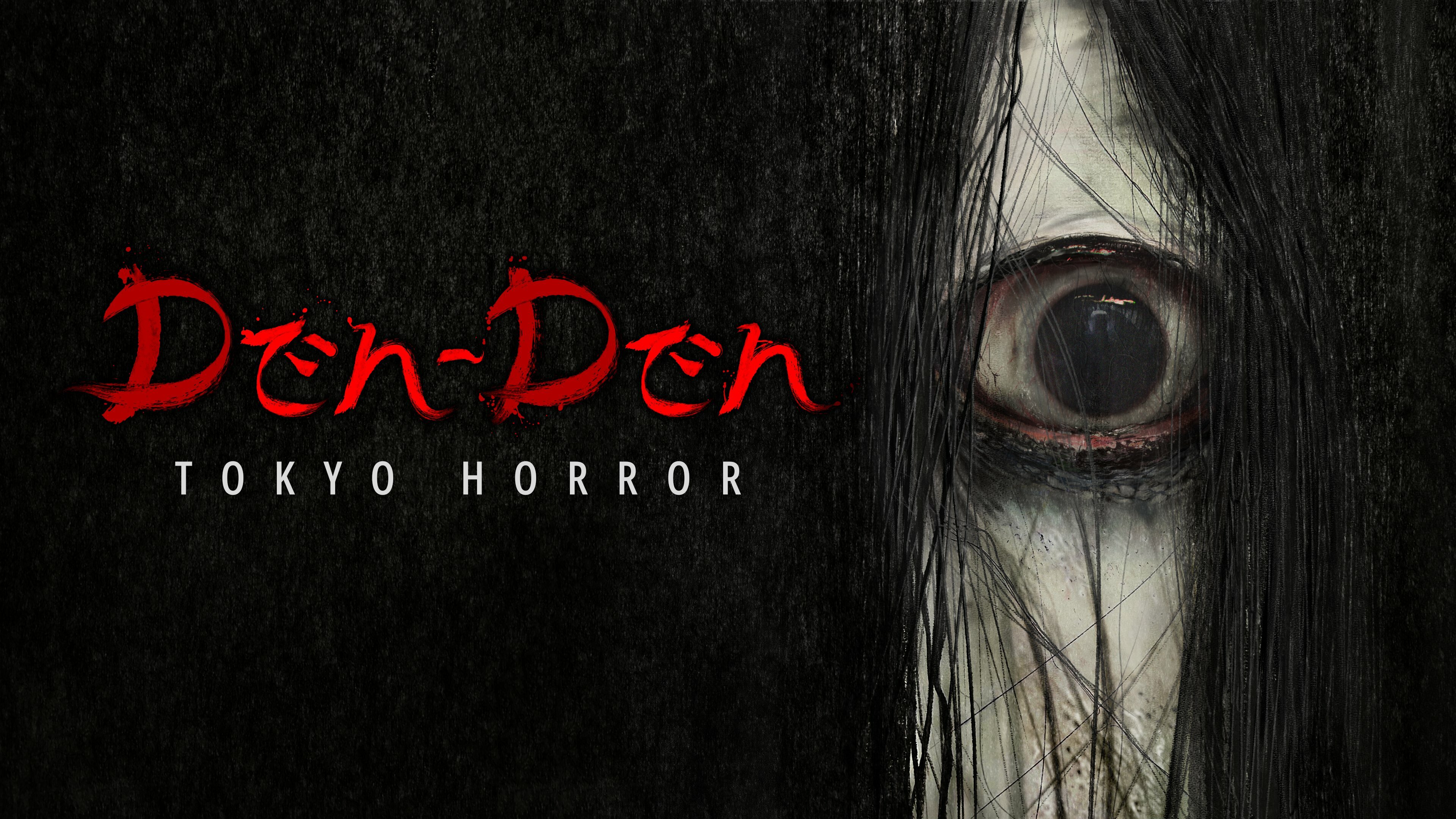
Greetings! While the temperature may be hot in Cebu right now, fret not, for our hearts are as cold as the frozen throne which intombs them.
Full notes
Full Water Delivery update
Read the full published notes in a cleaner layout. The original post stays linked below.
What changed
0 fixes1 addition6 changes0 removals
Store
Gameplay
Balance
Events
changedGreetings! While the temperature may be hot in Cebu right now, fret not, for our hearts are as cold as the frozen throne which intombs them. Rainbows and butterflies don't make for good inspiration in the highly respected field of "Horror Game Development", or so they say. Today, I’d like to dive deeper and share more details with everyone regarding our upcoming game, Den-Den: Tokyo Horror. https://store.steampowered.com/app/3301010/DenDen_Tokyo_Horror/
addedWhat is Den-Den: Tokyo Horror?If we were to remove the generalized “Horror” tag from our game, what would be left? The answer boils down into two specific (and equal) parts, Survival Horror and Immersive Sim. The term 'Immersive Sim' can mean a lot of different things to different types of gamers. Images conjured up in the mind can range from games such as Ultima Underworld to Bioshock. But there are also games such as Pathologic, which to many can be considered an Immersive Sim. Our goal with Den-Den: Tokyo Horror is more akin to Pathologic. This will be explained more over the course of our "Dev Log" series. Overtime, a picture will be painted that showcases how immersive sim game design philosophy is manifested in Den-Den: Tokyo Horror. In this game, you take on the role of an employee at an elderly care service provider in a dystopic version of Tokyo, Japan. In this world, society is breaking down as the number of senior citizens vastly outnumbers the rest of the population. There are not enough working-aged people to take care of all the senior citizens, and resources are stretched to the breaking point. To help meet the overwhelming demand, your employer is now offering caretaking services 24/7. Unfortunately for you, you’ve recently been assigned to the new graveyard shift in an area of the city that is unfamiliar to you. In addition to that, one of your colleagues has not reported to the office in several days and has been reported missing. This means you’ll also be responsible for your missing coworkers’ clients in addition to your own. The game begins with you stepping out of the train station and beginning the first night of your newly assigned graveyard shift.
changedPeople:The elderly people who you are responsible for are the main driver of the entire game loop. Their survival will determine the outcome of your playthrough. If all your clients die, the game will end prematurely, and you will receive the “bad ending”. Each day, every person will be randomly assigned 3 ‘needs’. Needs are requirements that must be satisfied by the player in order to maintain the health of an individual person. Every need that has not had its condition met by the end of the day, will result in that person’s health dropping. If a person’s health drops to 0, they will die. Sometimes though, other things can happen to the person that are far worse a fate than death. That’s a subject for a different day. There are two categories of needs: resource needs and task-based needs. Examples of resource-based needs would be:
changedThe City:The world of Den-Den: Tokyo Horror is broken up into two main sections, interior and exterior gameplay. For this section, we will focus on the exterior gameplay and explain how it plays a crucial role in the overall game loop. The city is where a majority of time during the course of gameplay will be spent. Players will walk around the city to reach the homes of their elderly clients. The city is an open world, and players are free to navigate around it however they want. The only limitation, as in life, is time. When a player is in the open world section of our game (the city), time is always moving forward. However, when a player enters into an interior space from the open world, such as a client's home or store, time will pause and only resume once they exit the interior space. So, players will be able to spend as much time as they want inside houses or stores, with no pressure from the game clock. Only when outside will the burden of time weigh heavily on their shoulders. In the outside world, players will eventually stumble across many different things. Here are some examples of what you can expect:
changedThe City:Vending Machines are located all around the city, providing players with a convenient way to purchase different types of beverages.
changedThe City:Stores and vendors are located in specific locations around the city, with each store or vendor serving a different purpose. There are Pharmacies, Convenience Stores, and even a black-market vendor.
Water Delivery changes
changedGreetings! While the temperature may be hot in Cebu right now, fret not, for our hearts are as cold as the frozen throne which intombs them. Rainbows and butterflies don't make for good inspiration in the highly respected field of "Horror Game Development", or so they say. Today, I’d like to dive deeper and share more details with everyone regarding our upcoming game, Den-Den: Tokyo Horror. https://store.steampowered.com/app/3301010/DenDen_Tokyo_Horror/
addedIf we were to remove the generalized “Horror” tag from our game, what would be left? The answer boils down into two specific (and equal) parts, Survival Horror and Immersive Sim. The term 'Immersive Sim' can mean a lot of different things to different types of gamers. Images conjured up in the mind can range from games such as Ultima Underworld to Bioshock. But there are also games such as Pathologic, which to many can be considered an Immersive Sim. Our goal with Den-Den: Tokyo Horror is more akin to Pathologic. This will be explained more over the course of our "Dev Log" series. Overtime, a picture will be painted that showcases how immersive sim game design philosophy is manifested in Den-Den: Tokyo Horror. In this game, you take on the role of an employee at an elderly care service provider in a dystopic version of Tokyo, Japan. In this world, society is breaking down as the number of senior citizens vastly outnumbers the rest of the population. There are not enough working-aged people to take care of all the senior citizens, and resources are stretched to the breaking point. To help meet the overwhelming demand, your employer is now offering caretaking services 24/7. Unfortunately for you, you’ve recently been assigned to the new graveyard shift in an area of the city that is unfamiliar to you. In addition to that, one of your colleagues has not reported to the office in several days and has been reported missing. This means you’ll also be responsible for your missing coworkers’ clients in addition to your own. The game begins with you stepping out of the train station and beginning the first night of your newly assigned graveyard shift.
changedThe elderly people who you are responsible for are the main driver of the entire game loop. Their survival will determine the outcome of your playthrough. If all your clients die, the game will end prematurely, and you will receive the “bad ending”. Each day, every person will be randomly assigned 3 ‘needs’. Needs are requirements that must be satisfied by the player in order to maintain the health of an individual person. Every need that has not had its condition met by the end of the day, will result in that person’s health dropping. If a person’s health drops to 0, they will die. Sometimes though, other things can happen to the person that are far worse a fate than death. That’s a subject for a different day. There are two categories of needs: resource needs and task-based needs. Examples of resource-based needs would be:
changedThe world of Den-Den: Tokyo Horror is broken up into two main sections, interior and exterior gameplay. For this section, we will focus on the exterior gameplay and explain how it plays a crucial role in the overall game loop. The city is where a majority of time during the course of gameplay will be spent. Players will walk around the city to reach the homes of their elderly clients. The city is an open world, and players are free to navigate around it however they want. The only limitation, as in life, is time. When a player is in the open world section of our game (the city), time is always moving forward. However, when a player enters into an interior space from the open world, such as a client's home or store, time will pause and only resume once they exit the interior space. So, players will be able to spend as much time as they want inside houses or stores, with no pressure from the game clock. Only when outside will the burden of time weigh heavily on their shoulders. In the outside world, players will eventually stumble across many different things. Here are some examples of what you can expect:
changedVending Machines are located all around the city, providing players with a convenient way to purchase different types of beverages.
Greetings! While the temperature may be hot in Cebu right now, fret not, for our hearts are as cold as the frozen throne which intombs them. Rainbows and butterflies don't make for good inspiration in the highly respected field of "Horror Game Development", or so they say. Today, I’d like to dive deeper and share more details with everyone regarding our upcoming game, Den-Den: Tokyo Horror. https://store.steampowered.com/app/3301010/DenDen_Tokyo_Horror/
What is Den-Den: Tokyo Horror?
If we were to remove the generalized “Horror” tag from our game, what would be left? The answer boils down into two specific (and equal) parts, Survival Horror and Immersive Sim. The term 'Immersive Sim' can mean a lot of different things to different types of gamers. Images conjured up in the mind can range from games such as Ultima Underworld to Bioshock. But there are also games such as Pathologic, which to many can be considered an Immersive Sim. Our goal with Den-Den: Tokyo Horror is more akin to Pathologic. This will be explained more over the course of our "Dev Log" series. Overtime, a picture will be painted that showcases how immersive sim game design philosophy is manifested in Den-Den: Tokyo Horror. In this game, you take on the role of an employee at an elderly care service provider in a dystopic version of Tokyo, Japan. In this world, society is breaking down as the number of senior citizens vastly outnumbers the rest of the population. There are not enough working-aged people to take care of all the senior citizens, and resources are stretched to the breaking point. To help meet the overwhelming demand, your employer is now offering caretaking services 24/7. Unfortunately for you, you’ve recently been assigned to the new graveyard shift in an area of the city that is unfamiliar to you. In addition to that, one of your colleagues has not reported to the office in several days and has been reported missing. This means you’ll also be responsible for your missing coworkers’ clients in addition to your own. The game begins with you stepping out of the train station and beginning the first night of your newly assigned graveyard shift.
Time Loop:
The game takes place over the course of seven days, with each day being its own separate chapter. Each day, the clock starts at 8:00 P.M. and ticks forward until it reaches 4:00 A.M. the next morning. While playing the game, in general, time is always moving forward with some exceptions. When 4:00 A.M. comes around and regardless of what your character is doing, the chapter will end, and you are automatically transitioned to the next day. It's important to mention that time in our game does not represent time in the real world. Time moves at an accelerated rate in our game, so 8 hours in our game is not actually 8 hours of playtime. The exact rate that time progresses is still to be determined. Time as a constant variable is crucial to the overall design philosophy of our experience. We want players to feel pressured by the clock, and we want every choice the player makes to have weight. Each day the player is given a set amount of time in the sandbox, and they will need to use that time wisely.
People:
The elderly people who you are responsible for are the main driver of the entire game loop. Their survival will determine the outcome of your playthrough. If all your clients die, the game will end prematurely, and you will receive the “bad ending”. Each day, every person will be randomly assigned 3 ‘needs’. Needs are requirements that must be satisfied by the player in order to maintain the health of an individual person. Every need that has not had its condition met by the end of the day, will result in that person’s health dropping. If a person’s health drops to 0, they will die. Sometimes though, other things can happen to the person that are far worse a fate than death. That’s a subject for a different day.
There are two categories of needs
resource needs and task-based needs.
Examples of resource-based needs would be
Needs something to eat.
Needs something to drink.
Needs something to drink with alcohol.
Needs something to eat with meat.
Examples of task-based needs would be:
Needs the bathroom cleaned.
Needs their prescription medication filled at the pharmacy.
Needs their kitchen cleaned.
Some tasks, such as prescriptions are multi-step needs that are both resource-based and task-based. In this example, the player would need to go to the person who needs the prescription filled and collect the prescription form from them. Then, the player will need to find a pharmacy to get the prescription filled. After the prescription has been filled and the player has the medication, they will need to bring it back to the original person who needed it. Players though, will have the choice of filling the prescription and keeping it for themselves instead of giving it to the person who originally needed it. Prescription medications, along with many other item types, can be consumed by the player and provide them with powerful bonuses and effects.
The City:
The world of Den-Den: Tokyo Horror is broken up into two main sections, interior and exterior gameplay. For this section, we will focus on the exterior gameplay and explain how it plays a crucial role in the overall game loop. The city is where a majority of time during the course of gameplay will be spent. Players will walk around the city to reach the homes of their elderly clients. The city is an open world, and players are free to navigate around it however they want. The only limitation, as in life, is time. When a player is in the open world section of our game (the city), time is always moving forward. However, when a player enters into an interior space from the open world, such as a client's home or store, time will pause and only resume once they exit the interior space. So, players will be able to spend as much time as they want inside houses or stores, with no pressure from the game clock. Only when outside will the burden of time weigh heavily on their shoulders. In the outside world, players will eventually stumble across many different things. Here are some examples of what you can expect:
Trash cans and other containers found in the open world can be looted for items.
Residents of the city who go about their daily lives. You'll be able to talk with them and sometimes gather important information and clues. You'll also be able to kill them and steal all their stuff. Just remember, every action in the game has a consequence.
Stalkers are one of the enemy types in our game. These stalkers are insane individuals who are obsessed with the player character. They will react violently if they can't have what they want. Players will need to be careful when walking around the city at night, because you never know who may be lurking behind you in the shadows.
Vending Machines are located all around the city, providing players with a convenient way to purchase different types of beverages.
Stores and vendors are located in specific locations around the city, with each store or vendor serving a different purpose. There are Pharmacies, Convenience Stores, and even a black-market vendor.
There are also events that will take place on certain days and at certain times around the city. These various events are triggered based upon actions taken and choices made by the player. It's important to remember that every action and choice the player makes in the game, will have some sort of reactive consequence. It's not always immediately apparent if something you did as a player will lead to something else happening in the game.
Conclusion:
We hope you enjoyed learning more details about our upcoming game, Den-Den: Tokyo Horror. Obviously, there is still so much more to discuss and reveal to everyone in the future. Next Dev Log, we'll dive deeper into combat mechanics and the various enemy types. In addition, we'll talk about "The Curse", which is the primary antagonist in our game. For now, we'll leave you with a final screenshot of the player character tasing a (innocent?) salaryman. Enjoy!