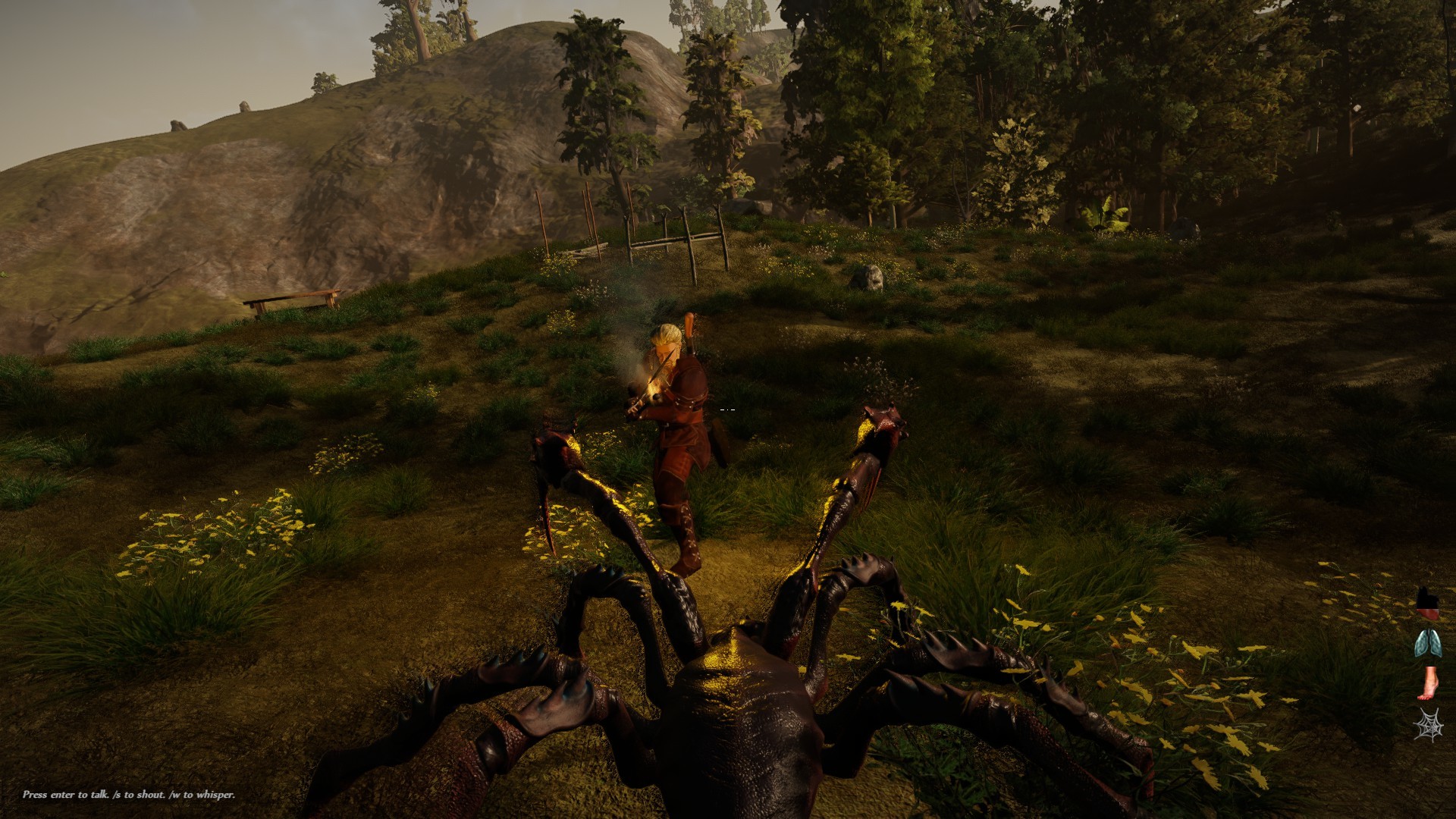
When it comes to combat in Trials of Ascension: Exile, we’ve aimed for a realistic feel and pacing, so that most fights will not end within just a few seconds.
Full notes
Full Trials of Ascension: Exile update
Read the full published notes in a cleaner layout. The original post stays linked below.
What changed
0 fixes0 additions3 changes0 removals
Balance
changedWhen it comes to combat in Trials of Ascension: Exile, we’ve aimed for a realistic feel and pacing, so that most fights will not end within just a few seconds. We do not have hit-chance, auto-attack, or auto-avoidance variables in the game. Instead, we use real-time on-demand attacks that the player controls with their mouse-buttons. Attack success requires the weapon hit box to collide with the character’s hit box.
changedWhere the weapon strikes also matters, as the character's body is made up of several parts, each with their own armor rating based on the equipment of the character. Feet are protected by boots, legs are protected with pants, hands with gloves, and the arms and torso guarded by the shirt or chestpiece. Players also need to protect the heads of their characters, as critical hits are more likely to occur here than anywhere else on the body. Just as attacking is completely in the control of the player, avoidance as well. To dodge an incoming attack, the player must move the character out of the arch of the attack swing. Blocking and parrying an attack means holding your weapon or shield out in intercept an incoming attack. This also means that your weapon takes the damage instead of your character, decreasing its durability. In the case of the raknar, blocking is best used for protecting their heads, but damage is still dealt to them. Dragons do not have a means to block. There are three resources that players need to monitor during combat, and they are all represented on the HUD. The heart represents the player's hit points. Hit points represent the amount of damage the character can tolerate before falling unconscious or dying. The lungs represent the character's stamina, which is spent with each attack, jump, sprint, and slowly drains when blocking. If there is not enough stamina remaining to perform an action, it will not occur. Stamina slowly recovers over time, provided the character is not currently blocking. Its function is to limit the amount of action that the character can perform in a short amount of time.
changedFinally there is balance, represented by the foot. Balance represents the stance or footing the character has, and is quickly spent and rapidly recovered. Low balance will not prevent action the way low stamina can, but it does impact both the amount of damage received and the amount of damage dealt. Spamming attacks will keep your balance low and ensure that they remain weak, while carefully timing your attacks will allow you to maximize their impact and prevent unnecessary HP loss. In addition to resources and collision detection, there are other factors in combat to consider. All races can perform a heavy version of their attacks at a higher stamina and balance cost. There are also skills and abilities to take into consideration, and of course, there are the special racial abilities. With all these different aspects to combat, we hope that players will explore the full depth of our combat system. What aspect of combat interests you the most? Share with us in the comments below.
Trials of Ascension: Exile changes
changedWhen it comes to combat in Trials of Ascension: Exile, we’ve aimed for a realistic feel and pacing, so that most fights will not end within just a few seconds. We do not have hit-chance, auto-attack, or auto-avoidance variables in the game. Instead, we use real-time on-demand attacks that the player controls with their mouse-buttons. Attack success requires the weapon hit box to collide with the character’s hit box.
changedWhere the weapon strikes also matters, as the character's body is made up of several parts, each with their own armor rating based on the equipment of the character. Feet are protected by boots, legs are protected with pants, hands with gloves, and the arms and torso guarded by the shirt or chestpiece. Players also need to protect the heads of their characters, as critical hits are more likely to occur here than anywhere else on the body. Just as attacking is completely in the control of the player, avoidance as well. To dodge an incoming attack, the player must move the character out of the arch of the attack swing. Blocking and parrying an attack means holding your weapon or shield out in intercept an incoming attack. This also means that your weapon takes the damage instead of your character, decreasing its durability. In the case of the raknar, blocking is best used for protecting their heads, but damage is still dealt to them. Dragons do not have a means to block. There are three resources that players need to monitor during combat, and they are all represented on the HUD. The heart represents the player's hit points. Hit points represent the amount of damage the character can tolerate before falling unconscious or dying. The lungs represent the character's stamina, which is spent with each attack, jump, sprint, and slowly drains when blocking. If there is not enough stamina remaining to perform an action, it will not occur. Stamina slowly recovers over time, provided the character is not currently blocking. Its function is to limit the amount of action that the character can perform in a short amount of time.
changedFinally there is balance, represented by the foot. Balance represents the stance or footing the character has, and is quickly spent and rapidly recovered. Low balance will not prevent action the way low stamina can, but it does impact both the amount of damage received and the amount of damage dealt. Spamming attacks will keep your balance low and ensure that they remain weak, while carefully timing your attacks will allow you to maximize their impact and prevent unnecessary HP loss. In addition to resources and collision detection, there are other factors in combat to consider. All races can perform a heavy version of their attacks at a higher stamina and balance cost. There are also skills and abilities to take into consideration, and of course, there are the special racial abilities. With all these different aspects to combat, we hope that players will explore the full depth of our combat system. What aspect of combat interests you the most? Share with us in the comments below.
When it comes to combat in Trials of Ascension: Exile, we’ve aimed for a realistic feel and pacing, so that most fights will not end within just a few seconds. We do not have hit-chance, auto-attack, or auto-avoidance variables in the game. Instead, we use real-time on-demand attacks that the player controls with their mouse-buttons. Attack success requires the weapon hit box to collide with the character’s hit box.
Where the weapon strikes also matters, as the character's body is made up of several parts, each with their own armor rating based on the equipment of the character. Feet are protected by boots, legs are protected with pants, hands with gloves, and the arms and torso guarded by the shirt or chestpiece. Players also need to protect the heads of their characters, as critical hits are more likely to occur here than anywhere else on the body. Just as attacking is completely in the control of the player, avoidance as well. To dodge an incoming attack, the player must move the character out of the arch of the attack swing. Blocking and parrying an attack means holding your weapon or shield out in intercept an incoming attack. This also means that your weapon takes the damage instead of your character, decreasing its durability. In the case of the raknar, blocking is best used for protecting their heads, but damage is still dealt to them. Dragons do not have a means to block. There are three resources that players need to monitor during combat, and they are all represented on the HUD. The heart represents the player's hit points. Hit points represent the amount of damage the character can tolerate before falling unconscious or dying. The lungs represent the character's stamina, which is spent with each attack, jump, sprint, and slowly drains when blocking. If there is not enough stamina remaining to perform an action, it will not occur. Stamina slowly recovers over time, provided the character is not currently blocking. Its function is to limit the amount of action that the character can perform in a short amount of time.
Finally there is balance, represented by the foot. Balance represents the stance or footing the character has, and is quickly spent and rapidly recovered. Low balance will not prevent action the way low stamina can, but it does impact both the amount of damage received and the amount of damage dealt. Spamming attacks will keep your balance low and ensure that they remain weak, while carefully timing your attacks will allow you to maximize their impact and prevent unnecessary HP loss. In addition to resources and collision detection, there are other factors in combat to consider. All races can perform a heavy version of their attacks at a higher stamina and balance cost. There are also skills and abilities to take into consideration, and of course, there are the special racial abilities. With all these different aspects to combat, we hope that players will explore the full depth of our combat system. What aspect of combat interests you the most? Share with us in the comments below.