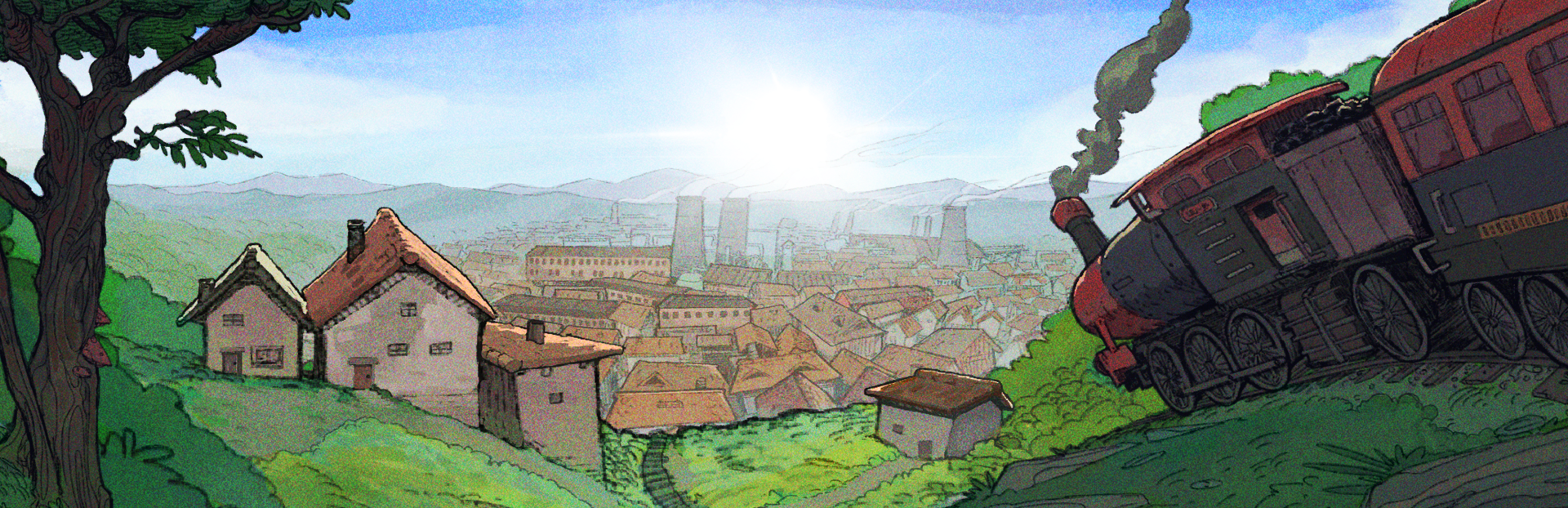
Let's dive a bit into the Laws mechanic and the City Hall building. They are the administrative equivalent of Research upgrades and the Research Institute building. I talked about those in a previous newsletter issue.
Full notes
Full Times of Progress update
Read the full published notes in a cleaner layout. The original post stays linked below.
What changed
0 fixes2 additions4 changes0 removals
Store
Gameplay
Balance
changedThey are the administrative equivalent of Research upgrades and the Research Institute building. I talked about those in a previous newsletter issue. If you missed it, you can read up about it here: https://store.steampowered.com/news/app/2628450/view/5997186379223382084?l=english
addedThe City Hall is a building that allows you to start signing Laws for your citizens that unlock new buildings, change stats and affect the needs of the population.
changedSigning Laws requires Political Points , which are obtained by completing Goals (like Research Points ) or passively via various buildings.
addedPublic Health → Disease Prevention and Anatomy Act . Public Health increases the efficiency of Infirmaries and makes available a few new possible laws. Disease Prevention unlocks laws that reduce Health risks (having good Health is one of the citizen's Needs ). Anatomy Act (donating corpses to science) allows Infirmaries and Hospitals to passively produce Research Points .
changedCitizen Assemblies → Trade Unions → Safety Regulations in Mines . Citizen Assemblies allow to produce Political Points at Pubs (a building used for Entertainment Need ). Trade Unions allow workers to unionize, giving a permanent efficiency boost, but making them more expensive. They also play a role with worker strikes, one of the possible events in the game. Safety Regulations in Mines decrease efficiency in mines, but reduce the negative Health effects for their workers.
changedPolice Act → Prison Reform → Law & Order . Police Act unlocks the Police Station building, needed to prevent crime and address the Safety Need . Prison Reform increases the Police Station number of workers needed and its efficiency. Law & Order allows Police Stations to passively produce Political Points , but decreases Safety and Health of citizens in range.
Times of Progress changes
changedThey are the administrative equivalent of Research upgrades and the Research Institute building. I talked about those in a previous newsletter issue. If you missed it, you can read up about it here: https://store.steampowered.com/news/app/2628450/view/5997186379223382084?l=english
addedThe City Hall is a building that allows you to start signing Laws for your citizens that unlock new buildings, change stats and affect the needs of the population.
changedSigning Laws requires Political Points , which are obtained by completing Goals (like Research Points ) or passively via various buildings.
addedPublic Health → Disease Prevention and Anatomy Act . Public Health increases the efficiency of Infirmaries and makes available a few new possible laws. Disease Prevention unlocks laws that reduce Health risks (having good Health is one of the citizen's Needs ). Anatomy Act (donating corpses to science) allows Infirmaries and Hospitals to passively produce Research Points .
changedCitizen Assemblies → Trade Unions → Safety Regulations in Mines . Citizen Assemblies allow to produce Political Points at Pubs (a building used for Entertainment Need ). Trade Unions allow workers to unionize, giving a permanent efficiency boost, but making them more expensive. They also play a role with worker strikes, one of the possible events in the game. Safety Regulations in Mines decrease efficiency in mines, but reduce the negative Health effects for their workers.
Let's dive a bit into the Laws mechanic and the City Hall building.
The City Hall is a building that allows you to start signing Laws for your citizens that unlock new buildings, change stats and affect the needs of the population.
Signing Laws requires Political Points, which are obtained by completing Goals (like Research Points) or passively via various buildings.
Here are some examples of Laws that you can decide to sign in Times of Progress, with their implications and the chain of laws that are made available:
Public Health → Disease Prevention and Anatomy Act.
Public Health increases the efficiency of Infirmaries and makes available a few new possible laws.
Disease Prevention unlocks laws that reduce Health risks (having good Health is one of the citizen's Needs).
Anatomy Act (donating corpses to science) allows Infirmaries and Hospitals to passively produce Research Points.
Citizen Assemblies → Trade Unions → Safety Regulations in Mines.
Citizen Assemblies allow to produce Political Points at Pubs (a building used for Entertainment Need).
Trade Unions allow workers to unionize, giving a permanent efficiency boost, but making them more expensive. They also play a role with worker strikes, one of the possible events in the game.
Safety Regulations in Mines decrease efficiency in mines, but reduce the negative Health effects for their workers.
Police Act → Prison Reform → Law & Order.
Police Act unlocks the Police Station building, needed to prevent crime and address the Safety Need.
Prison Reform increases the Police Station number of workers needed and its efficiency.
Law & Order allows Police Stations to passively produce Political Points, but decreases Safety and Health of citizens in range.
Hope you find this mechanic interesting! As you see from the examples, it's very interconnected with other systems in the game, contributing to its sandbox nature.
If you want to stay in touch or have questions you can find me here: