
Full notes
Full The Tram update
Read the full published notes in a cleaner layout. The original post stays linked below.
What changed
- Gameplay
- Performance
The Tram changes
Tram physics in The TRAM is one of the key features of our game.
Most games use splines to simulate the movement of rail vehicles. The model is rigidly attached to a smooth line and moves along it. At best, you may see a simulation of the tram car and the driver swaying inside the cab.
The TRAM offers a completely different experience. Every movement, jolt, and sway of the tram car is determined by the track itself. The tram's wheels run along two actual rails, transferring every irregularity to the body and then to the player's camera.
To recreate the experience of real tram drivers as closely as possible, The TRAM will let you drive both on modern high-speed sections and on old, worn-out tracks where common sense will impose a strict speed limit.
Driving too fast on such sections or through curves can easily cause the tram to derail.
But even if you drive with extreme care, many challenges will still await you. One of them is slipping. Under certain conditions, adhesion between the rails and the tram's wheels can decrease significantly. You will need to take this into account both when accelerating and when braking: with passengers on board, the tram can weigh almost 25 tonnes, and stopping it on slippery rails can be very difficult!
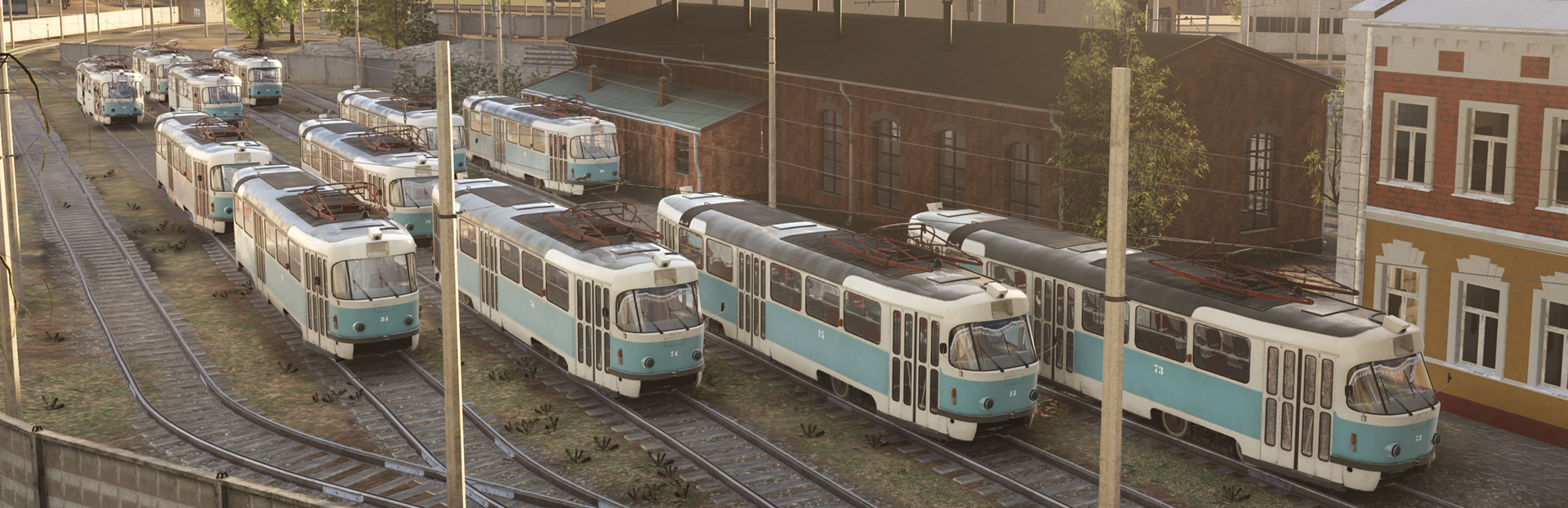
And most importantly, all physics calculations in The TRAM are multithreaded and distributed across multiple CPU cores. This means their impact on performance is extremely low. Every tram you can see in the screenshot below is a fully functional in-game vehicle: you can enter and drive any of them. The impact of the physics simulation on FPS is so small that it is practically within the margin of error compared with the resources consumed by the visual effects.
Source
Changelog.gg summarizes and formats this update. How we read updates.