
Full notes
Full The Sworn update
Read the full published notes in a cleaner layout. The original post stays linked below.
What changed
- Gameplay
- Balance
- Maps
The Sworn changes
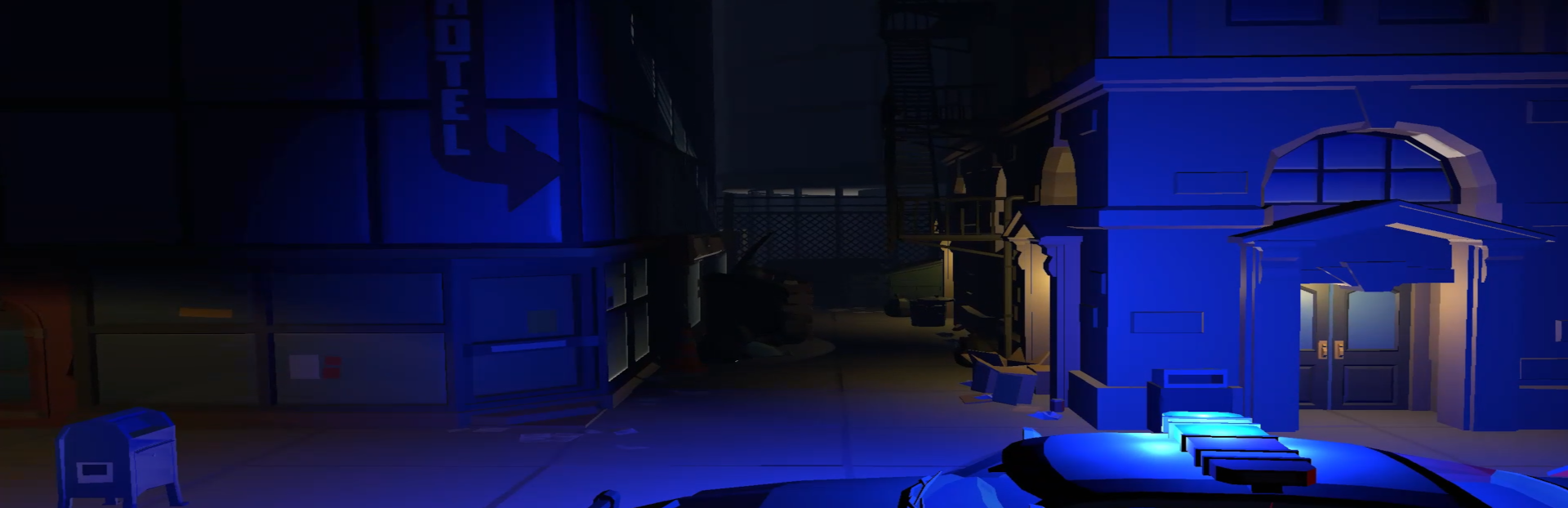
Anchorpoint is starting to feel like a place rather than a layout — people on the streets, officers walking out of the station to their cars, the dispatch loop working end-to-end, and the lighting finally doing what I want it to do.
Here's what's landed since last devlog.
--- ## The CAD - Full Dispatch Lifecycle Now Working - Last devlog the Computer-Aided Dispatch terminal had its first implementation. It's now wired end-to-end though its physical appearance is still very basic.
The full lifecycle is now functional: calls come into dispatch and wait for the player to review and assess. The player triages it, sets a priority (P1 Immediate, P2 Priority, P3 Scheduled, or P4 Non-Attendance), assigns a crime category and a response code (Code 1, 2, or 3), picks a unit from the available roster and dispatches. The unit physically rolls. If you want to defer a call instead of dispatching, you can push it to a pending list where it sits until you're ready. In the future officers will have 'job' queues where the player can allocate incidents to officers to deal with as and when they are able depending on priority level. But beware — heavy workloads will affect stress!
--- ## Code 3 Emergency Response Code 3 is the full hot run - lights, sirens, ignore traffic rules. Getting it to behave was surprisingly one of the harder bits of work this past month, but it's in and it works, though still needs some tinkering. When you dispatch a unit on Code 3: - The vehicle activates its emergency lights and ignores traffic rules - Civilian traffic in front of it clears to make a path, only if they can! Heavy traffic will affect response times, create your shift times and resources to accommodate this.
--- ## The City Has People - Basic background civilians are in, pedestrians now walk the streets of Anchorpoint — reacting to their environment, and giving the world the human density a city needs. Civilian density changes across the precinct depending on the time of day. The streets are busy during the day, especially during the usual rush hour, but quietest in the dead of night, the way you'd expect. It's a basic implementation right now - the civilians don't yet have routines, jobs or destinations, just wandering behaviour with the right animations. But the city feels populated, and that's been a huge step forward for the look of the game. Criminals are a separate system entirely. They're already simulated in the background but will be individual entities with physical lives and aims that affect their offending and behaviour.
--- ## Officer AI - First Steps Out of the Station. Officer behaviour implementation has started. When dispatched the assigned officer walks from wherever they are to their assigned vehicle. They then travel to the incident location. This is the first piece of officer behaviour in the game. The next piece of work is implementing basic crime scenes for officers to interact with - walking the scene, examining evidence, taking statements, etc. This requires some specific animation assets to be in place before I can code the behaviour. More on that in Devlog #03.
--- ## Day/Night Lighting Overhaul Devlog #01 covered the day/night cycle going in. The first version was technically working but was basic - daytime was too clean, night was too bright with dawn and dusk not looking as they should. The whole lighting stack has been reworked. It still needs plenty of work but it's at a point it isn't bugging me so much!
--- ## Buildings & Addresses LOD (Level of Detail) implementation is in the late stages across the city's buildings. Alongside that I am in the process of creating an address system for incident allocation.
--- ## Crime Scene Infrastructure The framework for crime scenes has been wired in and is the next big stage. This isn't 'visible' yet, but it's the spine of the detective and forensics gameplay that follows. Patrol officers will investigate crime to the best of their abilities, however for more specialist investigation you will need to allocate crimes to detectives. They will attend an incident and begin their own investigations, setting up crime scenes, requesting CSI, more in-depth investigative techniques such as interviewing witnesses and obtaining more in-depth information. Potentially locating evidence that regular officers may miss. Detectives will return to the station and conduct their crime enquiries, request reports such as coroners or digital and build files. During the process the player can intervene and instruct the detective to obtain other types of evidence or even simply close the case to move onto a more serious crime. Each crime will be managed through the crime system where the investigation is documented. The investigation design - skill-gated evidence discovery, false leads from low-skill officers, branching lines of enquiry, detective handoff — is all designed and locked in. The implementation comes alongside the officer crime-scene behaviour work.
--- ## Interior Building View System A piece of architecture I'm particularly happy with is that the player will be able to view the crime scene and watch officers in action. This is still in its very basic implementation.
--- ## Next Up
Finishing the LOD pass across the last buildings
Crime/incident scenes
Officer crime-scene behaviour — walking the scene, examining evidence, taking statements
Basic computer crime system implementation
Street lights and headlights
Placing the city's address markers
--- *More soon.*
— Mike, Ironkeel Studios
TheSwornGame.com
Source
Changelog.gg summarizes and formats this update. How we read updates.