
In this update4
Full notes
Full Red Dust Colony update
Read the full published notes in a cleaner layout. The original post stays linked below.
What changed
- UI and audio
- Gameplay
- Fixes
Red Dust Colony changes
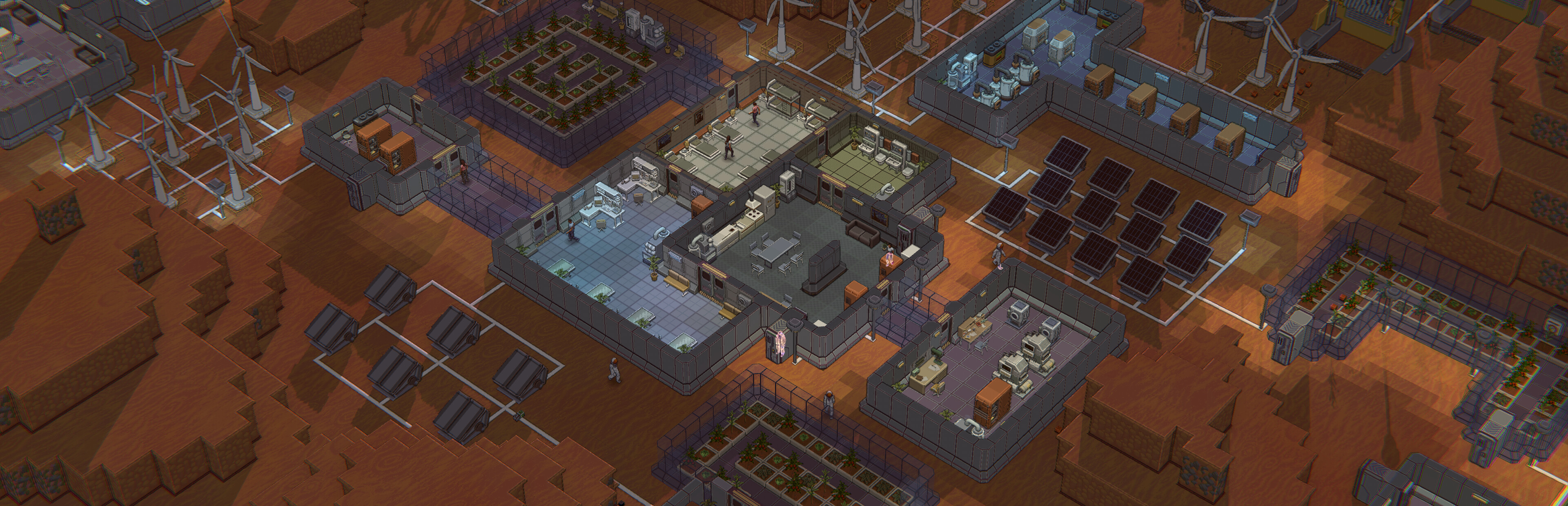
Hello and welcome to our very first development log for Red Dust Colony.
Meet the crew
Currently there are 2 developers working on RDC, myself (Lorin) and Cristina.
I'm responsible for programming, game design, sound and tooling. I've been experimenting with game programming ever since I was a child and have been working in the industry for the past 14 years. When not coding, I enjoy technical games such as colony simulators or factory automation games.
Cristina is responsible for the artistic side of the game, handling, modelling, texturing, animations, ui/ux. Having spent a significant chunk of her life with a paint brush in her hand she's a natural when it comes to esthetics and can adapt to any style and work. When not contributing to the game she works as a Product designer.
There are 2 other members of our team, Rocky and Maya and their primary roles are creative chewpervisors, and chief barketing officers.
How it started
About 3 and a half years ago, development of the game started organically, with me trying to figure out how the tiles for a wall in 2D would need to look like to function correctly in a game similar to Rimworld. This lead to the creation of some other testing assets and a bunch of code with the pawn moving around and carrying some items from one place to another.
Shortly after it seemed more fun to switch everything to 3d which led to the first construction tool placing walls around. From there, the game kept evolving naturally, converging into a colony simulator, mainly because I enjoyed implementing the systems and thoroughly enjoy the genre. At this point I was still working on it by myself and it was nothing more than an experimental project. Initially, I used a CAD program for model creation, drawn by its non-destructive workflow while experimenting with a 3D printer. However, I soon switched to Blender for superior efficiency, which we continue to use.
How it evolved
Up until this point, the colonists of the games were simple capsules that knew how to walk through doors, had a prematurely sophisticated navigation system and could perform some crafting. Around this time I asked Cristina if she would like to join in the fun and create some human models. When seeing the 3D model was when the project became real. I rushed to integrate them into the game and a few weeks later the game had a fully customizable character system.
From then on, came a long process of adding and iterating over systems. Almost every part of the game was rewritten several times to account for new requirements that came up along the way slowly converging into something that works together.
During this process an automated testing framework emerged that makes sure new changes don't break existing stuff. There are over 300 tests that run before a change is cleared. This is how we make sure that the game is as bug free as we can. Every time a new issue is discovered, first a new test is written to make sure it's always going to be tested for, and then fixed.
Art has evolved a fair bit along the way as we slowly found the style we were looking for. While the game was always set on Mars and had a notion of a more vintage look, the era in which the game is set only emerged later. With every new piece of art, we got closer to the current look, often
Source
Changelog.gg summarizes and formats this update. How we read updates.