
In this update5
Full notes
Full Penance update
Read the full published notes in a cleaner layout. The original post stays linked below.
What changed
- Gameplay
- UI and audio
Penance changes
Bringing a tormented monk to life: the rotoscoping behind Penance
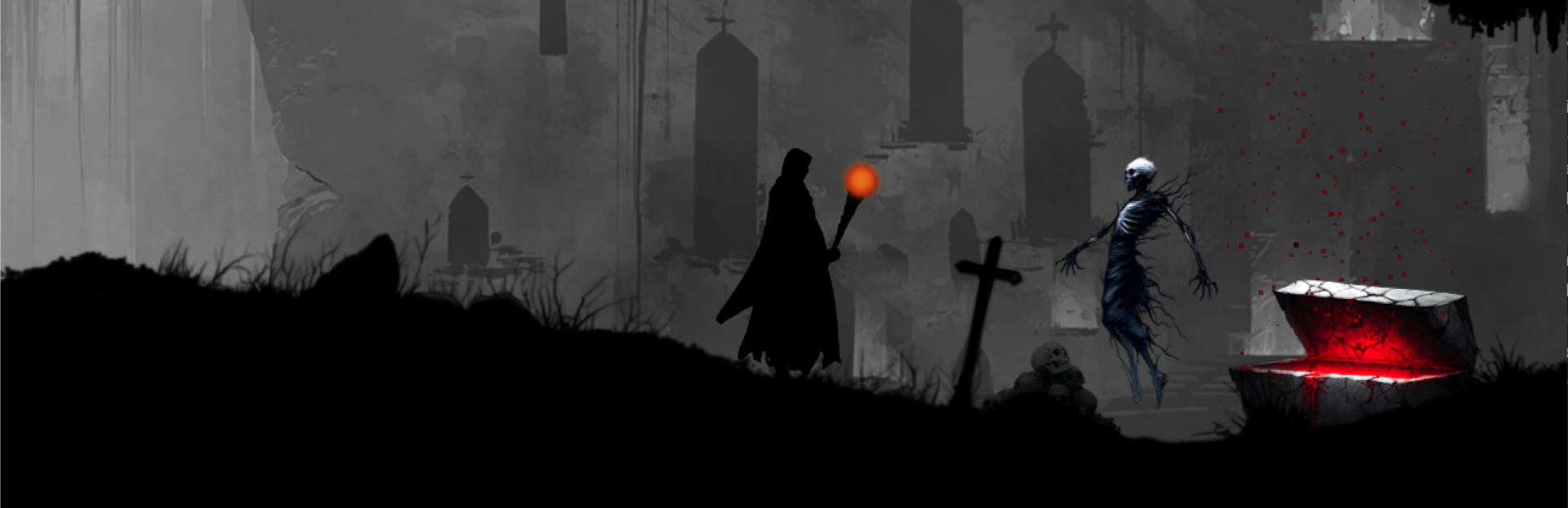
When I decided that Elías, the protagonist of Penance, was going to be a pure silhouette absolute black, no face, no texture I immediately faced a problem: how do you get a player to connect emotionally with a black shape?
The answer was in the movement.
If the character has no face to express, no clothes to detail, no colour to nuance then every gesture, every step, every fall has to carry all the expressiveness that the visual design has stripped away. The movement couldn't be generic. It had to be truly human.
That's where rotoscoping became the obvious technique.
What is rotoscoping and why does it work here?
Rotoscoping consists of animating by tracing over recordings of real movement, frame by frame. It has been used in film and animation since the early twentieth century and remains one of the most effective ways of transferring the weight and truth of the human body to an animated character.
For Penance I recorded every movement I needed: walking, praying, collapsing. Then I traced the silhouettes frame by frame in Photoshop and Procreate, keeping only the pure black shapes.
The result is fluid, organic animations that work precisely because they start from real movement. Within a silhouette with no detail, that fluidity is what makes Elías feel alive.
Rhythm as part of the narrative
Each animation has its own character. The idle, the walk, the pray, the death all of them reflect the inner state of the character through the body. You don't need to see his face to understand how he feels. The movement says it all.
That rhythm is then integrated in Godot through a hybrid system of AnimationPlayer and AnimationTree, which controls the transitions between states according to what happens in the game.
But the foundation of everything is that movement captured by hand, frame by frame.
Coherence between technique and aesthetic
Penance works in black, white and red. Everything is hard contrast, with almost no gradients or half-tones. Rotoscoping, by reducing movement to pure silhouettes, fits perfectly with that visual language — because it reinforces the idea that Elías is not quite a man. He is a presence. A shadow that carries his sins.
That coherence between technical decision and visual identity is one of the things I am most satisfied with in the development of Penance.
What I learned from the process
Rotoscoping is slow. Very slow. But there is something in that manual process, frame by frame, that forces you to think about every moment of the movement. Where is the weight? How does the body fall? How long does it take a man to kneel when his knees feel heavy?
Those are questions I would never have asked with another technique. And the answers are in every animation of Elías.
Source
Changelog.gg summarizes and formats this update. How we read updates.