
In this update14
Full notes
Full One Song, One Life update
Read the full published notes in a cleaner layout. The original post stays linked below.
What changed
- Performance
- Store
- UI and audio
- Gameplay
- Balance
- Maps
One Song, One Life changes
The Design Secrets Behind a “Life You Perform”
Interview with Chamaji, Illustrator of One Song, One Life
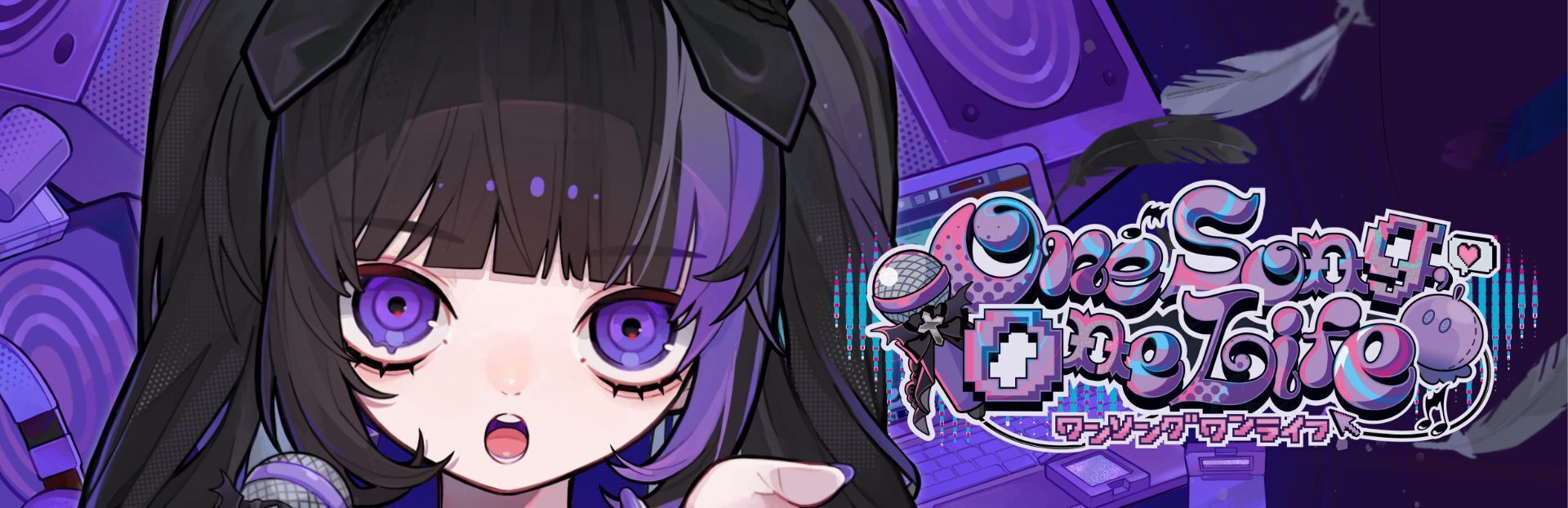
One Song, One Life is a new kind of rhythm adventure game where both the story and music branch based on the player’s performance.
(If you’re not yet familiar with the game’s concept or appeal, be sure to check out our previous articles as well.)
[dynamiclink href="https://store.steampowered.com/news/app/4101830/view/533251748621451945?l=english"]
One of the most important elements of this title is its design.
In particular, the still illustrations and character animations do more than simply express the game’s world—they serve as a direct emotional bridge to the player through visual storytelling.
For this article, we spoke with Chamaji, the illustrator responsible for the game’s still illustrations and character animations.
Chamaji
Illustrator and manga artist. Active across a wide range of genres centered around character design and manga illustration. Especially skilled at creating illustrations that feel full of story and friendly, charming chibi-style characters, Chamaji’s art is both catchy and artistic.
Official Website:
X (formerly Twitter):
In this interview, we dive into the thoughts and secrets Chamaji poured into the visuals of One Song, One Life.
The Color Chamaji Brought to One Song, One Life
First, we asked Chamaji about their role in the project and the behind-the-scenes process of creating the game’s artwork.
◆ What was your role in One Song, One Life?
Chamaji: I was in charge of creating the still illustrations for each ending, the character animations and background art during gameplay, as well as UI assets.
◆ What was your honest first impression when you saw the game system and world where both story and music branch?
Chamaji: My honest reaction was that a “branching rhythm game” felt like something that should have existed already, yet somehow didn’t. It struck me as both exciting and fresh.
When I also heard that the mood of the music changes depending on the route, I could really feel the composer’s dedication as well.
◆ What was the most important thing you focused on when drawing the main character, Sumire?
Chamaji: From an art perspective, it was definitely her eyes, which are both distinctive and appealing.
I think some players may be drawn to the game through the key visual alone, so I personally wanted to recreate that charm carefully across every still illustration and animation.
From a character portrayal perspective, I also focused strongly on how Sumire would react in each ending. I worked closely with the team and refined that repeatedly throughout production.
◆ How do you think your own art style contributed to this game?
Chamaji: A pop-style aesthetic is something I often use in my own illustrations. However, for this project, I challenged myself to express the game’s world using a new style while incorporating the visual taste established by Tira, who handled the main key visual.
◆ There are not only cute illustrations, but also serious and darker ones. How did you approach that balance?
Chamaji: Since the character design leans toward a cute style, I was careful not to stray too far from the main visual image even when creating serious illustrations.
At the same time, for the more dramatic stills, I tried to create something that feels cute, yet somehow eerie and unsettling.
◆ Do you have a personal favorite illustration?
Chamaji: This one.
I really like the expression, composition, and atmosphere. There are many small props in the background, so it was a fun piece to work on.
How Does Sumire Move?
Animation Design Beyond “Just a Standing Sprite”
From here, we moved on to discussing not only illustration, but also the intent behind the game’s expressive animations and the tools used to create them.
◆ What tools did you mainly use for production? Could you also tell us the rough workflow for creating one animation?
Chamaji: I create both illustrations and animations using Clip Studio.
As for the animation workflow, I first create a rough GIF animation to check the motion.
Next, I make a clean line-art animation, and at that stage I also create a near-finished color version of the first frame.
After that, I refine the line work while coloring all frames, and finally make detailed adjustments such as eye positioning frame by frame before finishing it.
◆ Were there any challenges unique to making characters “move” compared to creating still images?
Chamaji: When drawing a sequence of animated frames, there are inevitably moments where your own style comes out too strongly.
I often received feedback like, “This frame alone gives a different impression in the eyes,” which made me realize I still have much to improve.
Especially because the singing character is what players see most during gameplay, I paid extremely close attention to not drifting too far from the original character impression.
◆ Are there any subtle details hidden in the animations that players may not consciously notice?
Chamaji: When creating “Sumire singing while swaying side to side,” I actually put on headphones myself and moved the same way to study the motion.
At that time, I realized headphones slip off much more easily than I expected.
So I added a natural gesture where Sumire occasionally adjusts or holds her headphones in the animation.
◆ Do you have a personal favorite animation?
Chamaji: It’s the animation where she jumps up in excitement.
I enjoyed being able to make the movement more exaggerated than the other motions—things like sparkling effects, and the hoodie strings and headphones lagging slightly when she lands.
Illustrations and Animations That Elevate the Experience Into Emotion
At first glance, the visuals of One Song, One Life may seem pop and cute.
And of course, that is one side of them.
But behind that charm lies Chamaji’s meticulous design sense and careful balance.
When you play the game, we hope you’ll also enjoy discovering the feelings and intentions hidden within the artwork.
One Song, One Life is scheduled for release in June 2026. Please look forward to it.
[Event Information] Exhibiting at Tokyo Game Dungeon 12!
We will be exhibiting at Tokyo Game Dungeon 12, held on Sunday, May 3rd.
You’ll be able to experience firsthand many of the elements introduced in this article.
If you’re attending the event, be sure to stop by and check out One Song, One Life.
■ Exhibition Details
Date: Sunday, May 3, 2026 Time: 11:00 AM – 5:00 PM
Exhibitor Name: C-Route
Booth Location: 4ケ-3
https://gamedungeon.jp/events/tokyo12/exhibit_informations?day=1&floor=%EF%BC%94%E9%9A%8E#197
※ Streaming / Let’s Play videos are very welcome! Monetization is also allowed.
We’d appreciate it if you could include the Steam URL for One Song, One Life in your video description. If that’s difficult, simply mentioning the game during your stream would also be greatly appreciated.
Source
Changelog.gg summarizes and formats this update. How we read updates.