
In this update14
Full notes
Full One Song, One Life update
Read the full published notes in a cleaner layout. The original post stays linked below.
What changed
- Performance
- Gameplay
- Events
- UI and audio
- Balance
One Song, One Life changes
The Feelings of Just Two Creators Behind a Game Where You “Perform a Life” — Interview with the Developers of One Song, One Life
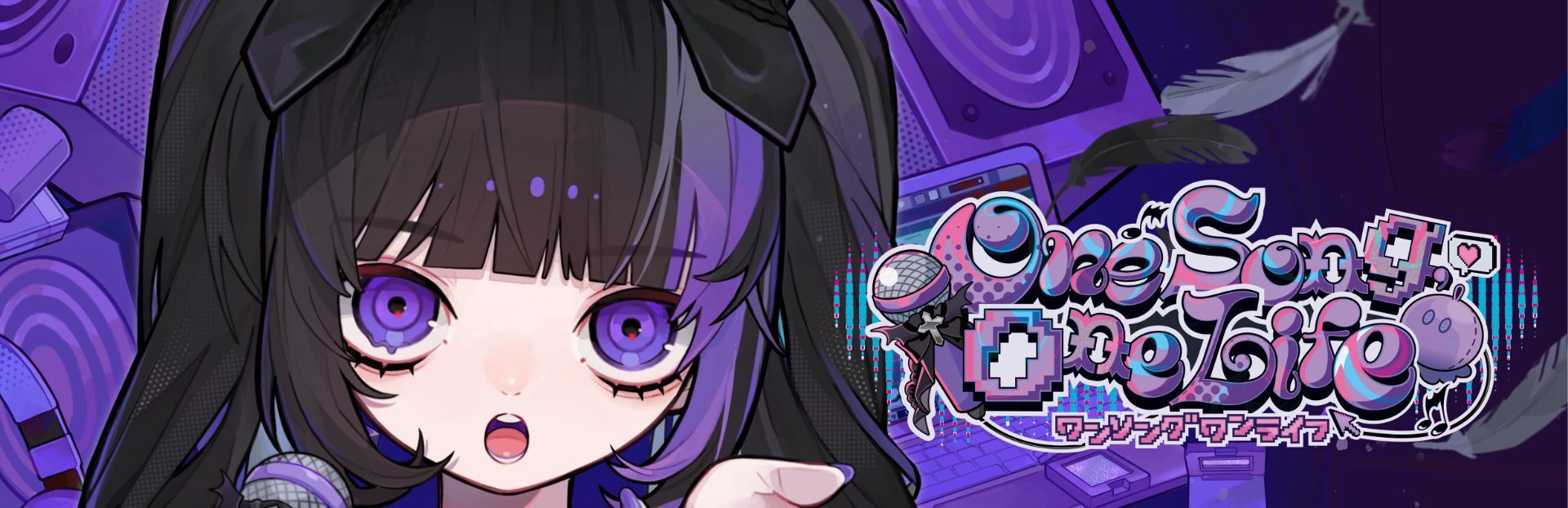
One Song, One Life, scheduled for release in June 2026, is built around the concept of “a game where you perform a life.”
(If you’re not yet familiar with the game’s appeal or premise, be sure to check out our previous article as well.)
In this article, we focus on the two key figures behind the project and explore the question:
How was the idea of “a story that branches through performance” born?
A composer who connected music with gameplay
A producer who shaped the life of a character
From these two very different perspectives, we’ll introduce the unique charm of this title.
“Turning the Irreversibility of Life into a Musical Experience”
Yudai Ota on His Commitment to the Music
At the core of One Song, One Life is a system where the music itself changes depending on your performance choices.
The person responsible for every track in the game is music producer, composer, and arranger Yudai Ota.
Steam post image Yudai Ota
Born in Nagano Prefecture. Since his student years, he has performed in numerous bands as a guitarist, bassist, and drummer, appearing on many music programs and large-scale events. Later, he expanded into lyric writing, composition, and arrangement, providing songs for many artists and projects. Today, he has gone beyond the role of composer and arranger, also working as a game director overseeing the structure and presentation of entire works, continuing to broaden his creative scope through music.
https://love-annex.jp/creators/%E5%A4%AA%E7%94%B0%E9%9B%84%E5%A4%A7/
Rather than functioning as simple background music, the music in this game acts as the player’s choices themselves. Here, Ota shares his thoughts as the composer behind it all.
◆ How did the idea of “music that branches” in this game come about?
Ota: The origin comes from my own love of live performances. Whenever I see a show where the transitions from one song to the next are especially creative, I get really excited.
I started thinking that the experience of music transforming seamlessly while you don’t know what’s coming next could be recreated in a game.
This title is also about “life.” Rather than selecting a completed song and simply playing through it, I wanted to express the irreversibility of life —how a single choice can completely change the scenery around you—as a musical experience.
◆ Unlike traditional rhythm games, what was difficult about designing a system where songs change based on player choices?
Ota: The hardest part was managing the length and structure of each song.
The main route progresses along with the scenario, and choices appear at section breaks such as verse A or verse B. If the time between choices varies too much, the game tempo suffers, so each section has to be kept fairly even in length.
Working within those structural limitations while maintaining quality and keeping the music engaging was a major challenge.
◆ What did you focus on when linking Sumire’s life to the music?
Ota: At first, I tried to explain the story directly through lyrics. But if you chase the situation too closely, it becomes overly explanatory and loses emotional depth.
So I decided to leave story supplementation to other systems and focus the lyrics on what a 19-year-old girl in that situation would be feeling internally.
Her emotional instability is expressed directly through words and through shifts in musical genre.
◆ What were some challenges or points of dedication when creating songs that change mid-track depending on choices?
Ota: In addition to the structural constraints I mentioned earlier, another challenge was differentiating forms of negative emotion through genre.
This game has many dark endings, so it would have been easy to fall into making several similar “sad songs.” Instead, I wanted each route to have its own emotional identity.
For one route, loneliness is expressed through cold, detached electronic music. For another, despair is expressed through passionate rock music filled with intensity.
I was very particular about separating psychological processes through the language of genre.
◆ What part of the experience do you think will make players feel “this is something new”?
Ota: You choose the story yourself, and in response the music transforms. Rather than consuming pre-made songs, it feels like you are composing the ultimate medley with your own hands.
It’s something only a game can do, and I’m convinced it will be a completely new kind of musical experience unique to this title.
“I Want Players to See the Cuteness Hidden in Her Danger”
Mizugaki on Designing a Girl’s Choices and Life
The player’s performance doesn’t just change the music. It changes Sumire’s words, emotions, and life itself.
The person producing the overall experience of this project and breathing life into the character is Mizugaki.
Mizugaki
Producer of this title. In addition to experience working at a game company, Mizugaki has also produced influencers in the corporate world, and now develops game projects where the individuality of streamers and players themselves can shine.
Here, Mizugaki shares the charm and background of Sumire as a character.
◆ How was Sumire created as a character?
Mizugaki: This project began with the concept of “portraying a life through a rhythm game,” so naturally the central axis became the life of a singer.
But if we made it the story of an already glamorous star, it would be harder for players to emotionally relate to her. At the same time, there are already many works about idols or influencers.
That led us to the idea of a utaite / internet artist.
Fortunately, Ota has deep connections with many online singers, and I myself have experience producing internet artists. It was a subject where we could use our own knowledge and strengths, while also creating a character who could resonate with people living in today’s world. That’s how Sumire was born.
◆ What did you especially focus on in designing a branching story based on player choices?
Mizugaki: I designed every choice so that it would lead to a completely different ending.
What I want players to experience is the irreversible weight of realizing that a casual choice of your own has completely ruined one girl’s life. And I wanted players to enjoy that in a deliberately “casual,” game-like way.
In real life, decisions require caution. But in a game, you can make them with a single button press. That contrast between the lightness of the action and the heaviness of the result is something I hope players experience again and again through Sumire’s many possible lives.
◆ Players may come away with different impressions of Sumire. What side of her do you especially want them to see?
Mizugaki: What I most want players to notice is Sumire’s naivety.
She has dreams, someone she loves, and the ability to work hard with sincerity. But at major turning points in life, she cannot decide alone. Even if she does choose, she lacks the knowledge or literacy to know whether it is the right path.
Even when presented with a clearly disastrous option, she may choose it herself with an innocent smile.
I want people to see both that dangerous fragility—and the cuteness contained within it.
◆ What emotions do you hope players take home after playing this game?
Mizugaki: To be honest, I hope they cry.
Depending on the player’s choices, Sumire will live many different lives and meet many cruel endings. But beneath all of her actions is always a single-minded love.
I want players to sometimes enjoy her story, sometimes feel fear or discomfort while watching over her, and in the end be able to cry freely with overflowing emotions.
After finishing the game, if they feel the bittersweet yet refreshing afterglow of having just listened to a truly wonderful song, there would be nothing that would make me happier as a producer.
“Life Is a Song”
Sumire’s Story Born from Two Different Views of Life
One Song, One Life is a new form of expression created through the perspectives and philosophies of a composer and a producer.
You’ll be emotionally shaken by Sumire’s actions and words, and captivated by music that changes its face through your performance. It is a new experience only possible in a game.
The life philosophy of these two creators is reflected in the game, and through that chemical reaction, a new life named Sumire was born.
We hope you’ll experience her story for yourself.
One Song, One Life is scheduled for release in June 2026. Please look forward to it.
※ Streaming / Let’s Play videos are very welcome! Monetization is also allowed.
If possible, we’d appreciate it if you could include the Steam URL for One Song, One Life in your video description. If that’s difficult, simply mentioning the game during your stream would also mean a lot to us.
Source
Changelog.gg summarizes and formats this update. How we read updates.