
Update log
Full Nocturne update
The complete published notes, normalized for clean reading and source attribution.
Extracted changes
- Gameplay
- Balance
- Events
- Performance
Before I jump into the details, and backstory, with how I settled on the combat mechanics for Nocturne, I want to give you the heads up there are some game mechanics mentioned here that only appear later in the game, but there are no story spoilers. That being said, if you don’t want to know about ANYTHING that will be featured later in the game, do not read this post. If you’re okay with learning about some combat mechanics that appear in later chapters, then this blog is safe to read.
Starting from Scratch
From the beginning, Nocturne was always meant to blend RPG and Rhythm, but I didn't want to compromise the core rhythm elements by distilling them down to musically timed attacks or quick time events. I needed something that felt both like a traditional RPG and a complete rhythm game.
So I started with pure rhythm first. I made playing cool songs the absolute forefront of the gameplay, DDR / Guitar Hero style. Then I focused on the RPG elements to make it feel like both sides of the gameplay were deeply connected.
In my previous demo, Nocturne: Prelude, I took this to the extreme. There was no attacking at all. No way to deal damage. Everything was automatic, passive items, passive effects. You just played the song and that was it.
And players told me something felt like it was missing. It felt disconnected. They wanted to feel like they were actually fighting. To me, what they were asking for was more player agency. More meaningful choices in combat besides just hitting notes.
Turning Rhythm into Combat
So the challenge became, how do you add attacking without it feeling like a completely separate system just slapped on top?
The answer I landed on is that attacking in Nocturne needs to feel timed, yet fully player controlled. You always have a choice when to attack, and that choice should always feel meaningful.
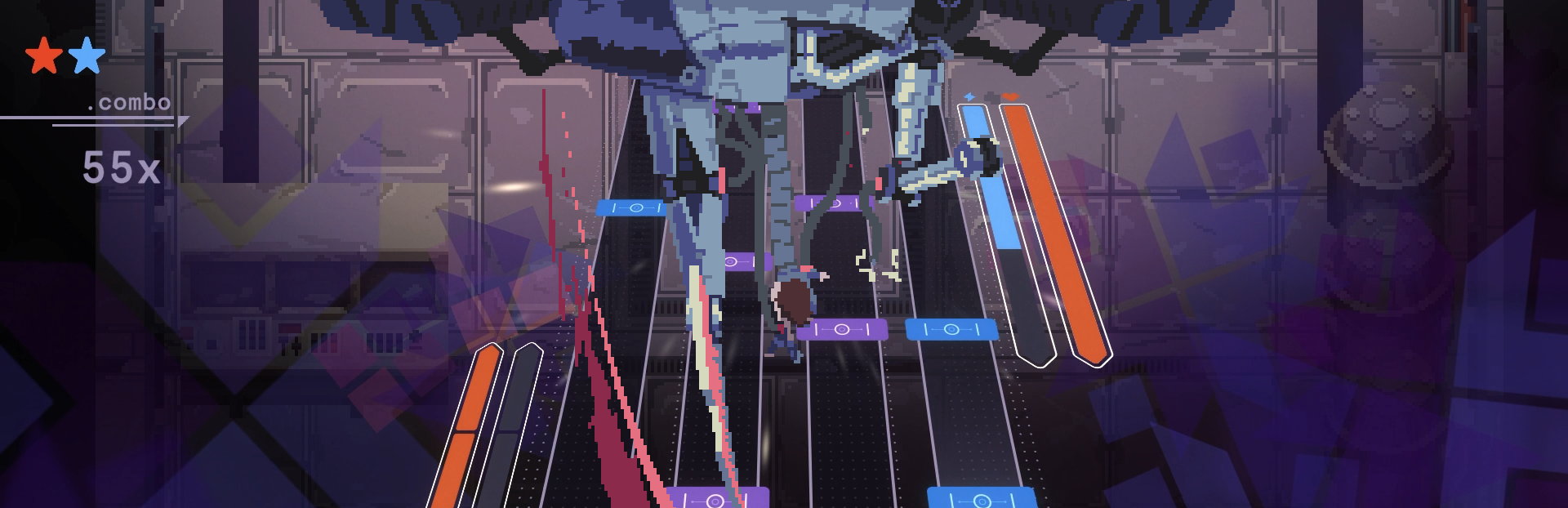
So here's the basics: if you miss a note, the enemy charges energy. That energy bar directly ties your performance in the rhythm game to the combat. If you play badly, the enemy attacks more, but the key piece of the attack is the windup phase.
When the enemy's energy bar fills completely, they enter a 0.75 second windup. The bar turns yellow, the columns light up, and sound effect fires. That's your window of opportunity. Attack during the windup and you land a critical hit for bonus damage. So while you can attack anytime, only this window will land a critical hit.
It makes timing your attacks more intentional and gives players more agency over their actions. You're not just mashing an attack button thoughtlessly throughout each encounter, at least not if you want to do well. That energy bar is almost like a fifth column you're watching, timing when to strike vs when to hold back.
Stagger: How Fights End (and why they don't just stop)
Here's a design problem that's pretty unique to rhythm RPGs: in a normal RPG, you kill the enemy when their HP hits zero. Pretty simple. But in a rhythm game, you want to play the whole song. Fights have a fixed duration, especially boss fights with story beats and cutscenes woven in. It would feel counter intuitive to end a song early if you're doing well in combat, especially if you're going for highscores.
So what happens when you reduce an enemy to zero health in combat?
The answer is Stagger. A phase where the enemy can't charge
Source