
In this update5
Full notes
Full No Clean Start update
Read the full published notes in a cleaner layout. The original post stays linked below.
What changed
- Gameplay
- Events
- Maps
No Clean Start changes
So far we’ve talked about space, doors and movement — the foundations of how the player experiences the world.
But a world without encounters is just architecture.
Over the past weeks, a large part of development has shifted toward building the systems that actually bring these spaces to life. The focus has been on how encounters appear, evolve and interact with the environment rather than simply placing enemies in rooms.
In many games, encounters are either fully scripted or completely random. Both approaches have advantages, but they also come with limitations. Fully scripted encounters lose their tension once they are learned, while fully random encounters often feel chaotic and disconnected from the space they happen in.
For NO CLEAN START, we are building something in between.
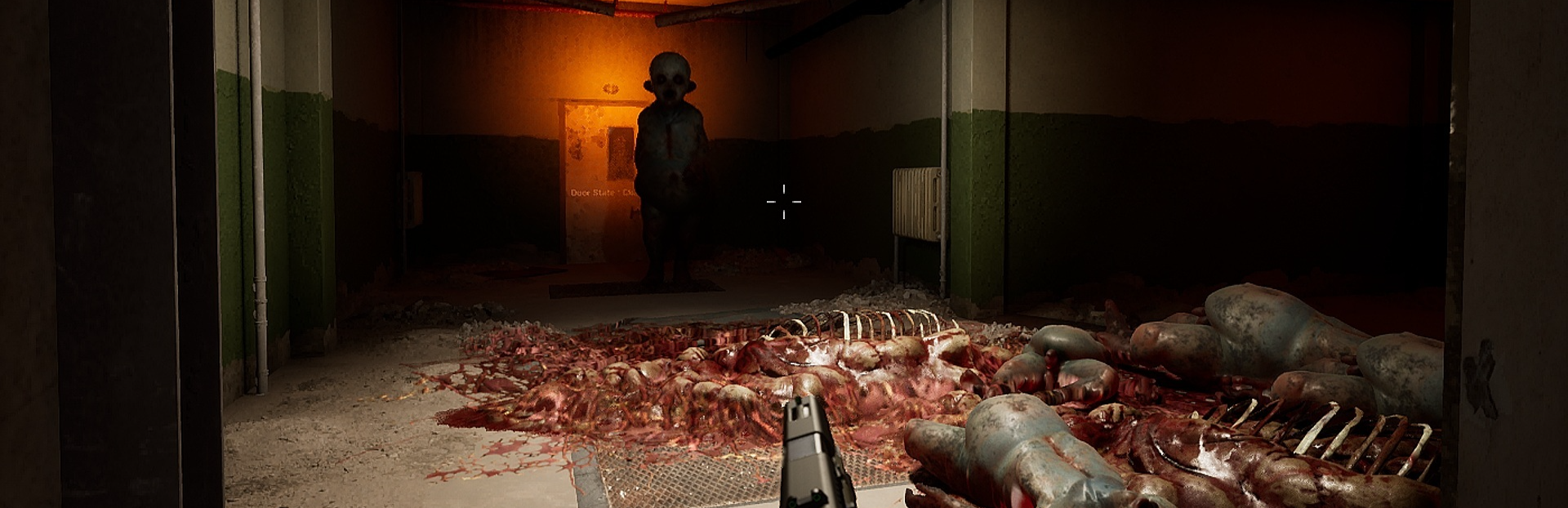
Steam post imageEncounters as Systems
Instead of placing enemies manually across the level, the game relies on a structure we internally call encounter scenes and power zones.
You can think of these as invisible layers placed on top of the level layout. They don’t change the geometry of the space, but they define how that space can behave over time.
Each area can support multiple potential situations depending on context, player behaviour and progression. Some rooms are safer than others. Some areas can become dangerous later. Some paths may feel quiet at first and slowly turn into high-risk routes.
The goal is to make encounters feel natural while still being controlled and readable.
Steam post imageWhy not pure randomness?
Pure randomness creates noise. Encounters start to feel disconnected from the world and from the player’s decisions.
By structuring encounters through zones and scenes, we can keep the unpredictability while maintaining coherence.
This means that when something happens, it should feel like it belongs to that space.
Not because the player triggered a hidden script, and not because a dice roll decided it — but because the situation made sense within the structure of the level.
Building tension gradually
One of the key goals is to let tension grow over time instead of relying on constant pressure.
Some spaces are meant to feel quiet. Some feel unsafe. Some change as the player learns and moves through the level.
This gradual escalation is coordinated by a set of spawn managers that control when and how encounters can happen. Their job is not to overwhelm the player, but to maintain a coherent rhythm between calm and danger.
Encounters are not isolated events. They are part of the overall pacing of a run.
Steam post imageConnecting space, movement and behavior
Everything we’ve talked about in previous posts feeds into this system.
Space defines where encounters can happen. Doors define how spaces connect and how safe a route feels. Movement defines how the player commits to entering a situation.
Encounters sit on top of all of this and tie the systems together into something that actively pushes back against the player.
This is the stage where the game starts to move from “environment” to “experience”.
What comes next
In the next updates, we’ll start taking a closer look at the characters that inhabit these spaces and how they navigate them.
Encounters are only half of the equation. The other half is behaviour.
Source
Changelog.gg summarizes and formats this update. How we read updates.