
In this update10
Full notes
Full No Clean Start update
Read the full published notes in a cleaner layout. The original post stays linked below.
What changed
- Balance
- Gameplay
- Events
- Store
No Clean Start changes
Classes Are Not Just Loadouts
Up to this point, we’ve talked about space, encounters, and the systems that shape them.
This week, we’re introducing something that directly affects how players approach all of those systems: classes.
At a glance, classes might look like simple loadout variations. In practice, they define how a run feels from the very first minute.
More Than a Starting Kit
Each class begins with a different loadout, but that’s only one part of the system.
Under the hood, classes are built around a set of core character attributes that influence how the player moves, survives, and interacts with the world.
Some of these are already active in the current build, while others are being integrated progressively.
The current set includes:
Health
Stamina
Movement speed
Stealth (how much noise the player produces)
Agility (affecting reload and handling speed)
Resistance to bleeding
Resistance to infection
Luck
Intelligence (affecting how many credits are gained)
Arrangement ( unlocks loadout points, more on this later on )
Most of them are directly tied to existing gameplay variables.
The goal is not to turn the game into a stat-driven experience, but to subtly shift how each class behaves in the same environment.
Three Ways to Approach the Same Space
All classes share the same world, the same encounters, and the same threats.
What changes is how they deal with them.
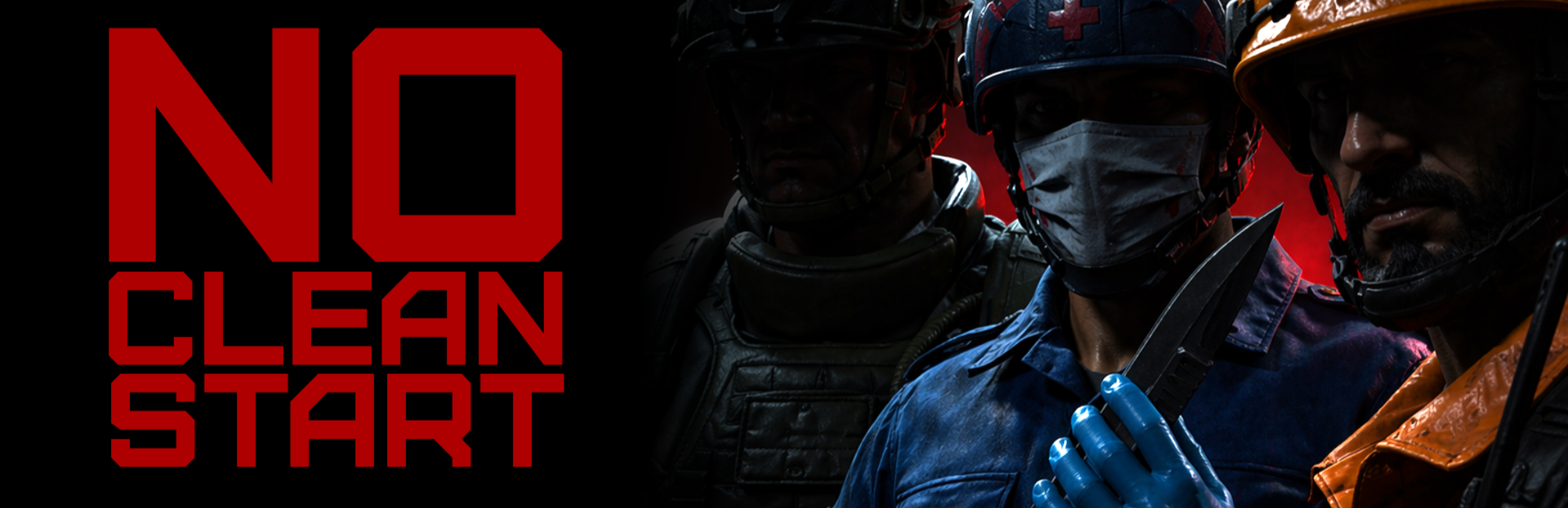
📷 (Screenshot – Class 1) Steam post image
Soldier
The most direct approach.
Higher survivability and stronger combat presence make the Soldier more effective when situations escalate. starting already with a ranged weapon. However, this comes with trade-offs: less subtlety, more noise, and a higher chance of triggering unwanted encounters.
Medic
A more controlled, adaptive approach.
The Medic is not necessarily stronger, but more efficient at staying alive over time. Better interaction with healing systems and status effects allows for recovery and sustained exploration.
This class rewards caution and long-term thinking rather than immediate dominance.
Technician
Precision and control.
The Technician focuses on utility and environmental interaction. This includes improved tools — for example, a more advanced flashlight — and better handling in situations that require awareness rather than brute force. Is the only class that can unlock keycard doors with a special tool.
Loadouts and Equipment
Each class starts with a predefined loadout defined through data assets, but these are not just cosmetic differences.
Some items are shared across all classes — like the flashlight — but not always in the same form. For example, the Technician has access to a more advanced flashlight version, which directly impacts how space is read and navigated. Technician also has Keycard cloner tool, while medic has unique equipment that can craft antidote.
Equipment is fully integrated into the inventory system, meaning that class identity is not hardcoded — it’s built on top of the same systems used throughout the game.
Progression Across Runs
Classes are only part of the equation.
NO CLEAN START also introduces a progression layer based on cryptofiles collected during runs.
Think to cryptofiles as credits can be invested into PowerUps — permanent upgrades that apply across all characters.
PowerUps:
affect core stats
have multiple levels
can be upgraded over time
Importantly, players can refund all PowerUps at any time and reassign their credits freely.
This allows continuous experimentation and adaptation without punishment.
The goal is to let players refine their approach as they learn the game, rather than locking them into early decisions.
Why This Matters
Classes are not meant to define playstyles rigidly.
They are meant to shift perspective.
The same corridor, the same encounter, the same situation can feel completely different depending on how the player is equipped to handle it.
This is where the systems we’ve been building start to intersect:
space
encounters
behavior
and now, player identity
What’s Next
In the coming updates, we’ll start looking at how these systems come together. Also we are very happy how our build is shaping up day by day and we look forward to show it to you.
Source
Changelog.gg summarizes and formats this update. How we read updates.