
HomeGamesUpdatesPricingMethodology
Steam News22 September 20259mo ago

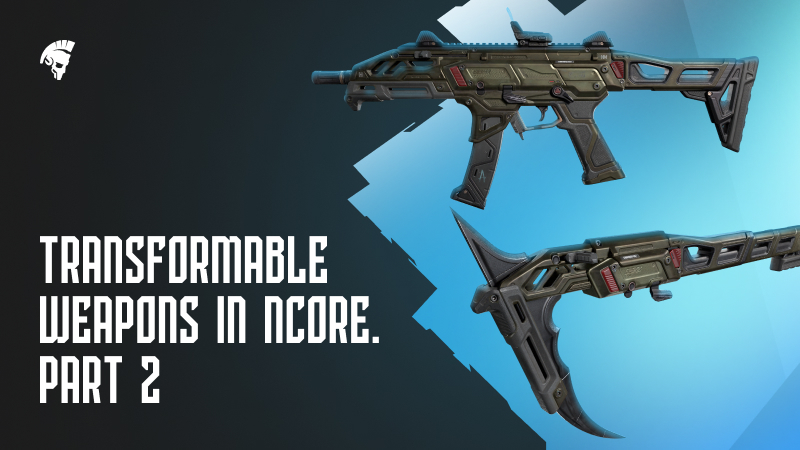
Transformable weapons in NCORE. Part 2

Read part 1 to learn about the reasoning and inspirations for the weapon transformations. What transforms into what, and why?

In this update3

Full notes

Full NCORE update

Read the full published notes in a cleaner layout. The original post stays linked below.

What changed

0 fixes1 addition10 changes0 removals
  • Gameplay
  • Balance
  • Maps
  • Compatibility
  • UI and audio
changedRead part 1 to learn about the reasoning and inspirations for the weapon transformations.
changedWhat transforms into what, and why?When designing transformations, the team adhered to the law of conservation of mass: you can’t turn a bulky AK into a tiny knife or get a two-handed sword from a pistol. Additionally, we wanted variety in melee weapon types to ensure each one offered a unique gameplay experience — and it seems we succeeded. There’s a pistol that transforms into Wolverine-style claws, a Desert Eagle that becomes a karambit, a revolver that morphs into a butcher’s cleaver, a sniper rifle that turns into a spear, and a shotgun that shifts into a macuahuitl — a Mesoamerican weapon lined with shark teeth (comment below if this is the first time you’ve heard that word too). This means every weapon a player encounters will provide a distinct experience not just in ranged combat but in melee as well — after all, claws and a spear have different reach, damage, and swing speeds.
changedWhat’s the development process for each gun?First, the creative team brainstorms what kind of weapon the game needs and what it could transform into. This isn’t always quick or easy — finding a gun that isn’t already in the project, influences unique gameplay, and morphs into a melee weapon without repeating previous designs is tough.
changedWhat’s the development process for each gun?Next, initial concepts and models are created based on descriptions. Then comes technical art development, which integrates the weapon into the game and determines how player interaction will work. At this stage, animators and motion capture specialists join the process — each gun requires 40-50 animations.
changedWhat’s the development process for each gun?Once a weapon is designed, the team 3D-prints both models (ranged and melee) to check their compatibility. This helps catch flaws and rough edges that weren’t obvious on-screen and also allows the models to be used in motion capture.
changedWhat’s the development process for each gun?If a weapon has an unconventional firing style — like a grenade launcher — the gameplay programming team steps in to develop the mechanics almost from scratch.
entire process takes the team26mentire process takes the team increased, buff

NCORE changes

changedRead part 1 to learn about the reasoning and inspirations for the weapon transformations.
changedWhen designing transformations, the team adhered to the law of conservation of mass: you can’t turn a bulky AK into a tiny knife or get a two-handed sword from a pistol. Additionally, we wanted variety in melee weapon types to ensure each one offered a unique gameplay experience — and it seems we succeeded. There’s a pistol that transforms into Wolverine-style claws, a Desert Eagle that becomes a karambit, a revolver that morphs into a butcher’s cleaver, a sniper rifle that turns into a spear, and a shotgun that shifts into a macuahuitl — a Mesoamerican weapon lined with shark teeth (comment below if this is the first time you’ve heard that word too). This means every weapon a player encounters will provide a distinct experience not just in ranged combat but in melee as well — after all, claws and a spear have different reach, damage, and swing speeds.
changedFirst, the creative team brainstorms what kind of weapon the game needs and what it could transform into. This isn’t always quick or easy — finding a gun that isn’t already in the project, influences unique gameplay, and morphs into a melee weapon without repeating previous designs is tough.
changedNext, initial concepts and models are created based on descriptions. Then comes technical art development, which integrates the weapon into the game and determines how player interaction will work. At this stage, animators and motion capture specialists join the process — each gun requires 40-50 animations.
changedOnce a weapon is designed, the team 3D-prints both models (ranged and melee) to check their compatibility. This helps catch flaws and rough edges that weren’t obvious on-screen and also allows the models to be used in motion capture.
  • Read part 1 to learn about the reasoning and inspirations for the weapon transformations.

What transforms into what, and why?

When designing transformations, the team adhered to the law of conservation of mass: you can’t turn a bulky AK into a tiny knife or get a two-handed sword from a pistol. Additionally, we wanted variety in melee weapon types to ensure each one offered a unique gameplay experience — and it seems we succeeded. There’s a pistol that transforms into Wolverine-style claws, a Desert Eagle that becomes a karambit, a revolver that morphs into a butcher’s cleaver, a sniper rifle that turns into a spear, and a shotgun that shifts into a macuahuitl — a Mesoamerican weapon lined with shark teeth (comment below if this is the first time you’ve heard that word too). This means every weapon a player encounters will provide a distinct experience not just in ranged combat but in melee as well — after all, claws and a spear have different reach, damage, and swing speeds.

What’s the development process for each gun?

It might seem like all you need is a concept sketch, a 3D model, and then it’s ready for the game. But that’s not the case.

First, the creative team brainstorms what kind of weapon the game needs and what it could transform into. This isn’t always quick or easy — finding a gun that isn’t already in the project, influences unique gameplay, and morphs into a melee weapon without repeating previous designs is tough.

Next, initial concepts and models are created based on descriptions. Then comes technical art development, which integrates the weapon into the game and determines how player interaction will work. At this stage, animators and motion capture specialists join the process — each gun requires 40-50 animations.

Once a weapon is designed, the team 3D-prints both models (ranged and melee) to check their compatibility. This helps catch flaws and rough edges that weren’t obvious on-screen and also allows the models to be used in motion capture.

[carousel]

[/carousel]

If a weapon has an unconventional firing style — like a grenade launcher — the gameplay programming team steps in to develop the mechanics almost from scratch.

After the artwork is finalized and the gun is added to the test client, the testers take over. Then, the weapon goes to game designers, who conduct numerous playtests and fine-tune various parameters: damage, recoil, firing accuracy, and more. Another round of testing follows before the gun finally appears in the game client. The entire process takes the team 2 to 6 months. Of course, work happens in parallel across multiple areas, but it’s important to remember that even if players really want a specific weapon, it won’t appear in the game instantly.

How do the devs achieve realistic weapon feel?

First, let’s acknowledge that very few players actually want hyper-realistic weapons in games. Most want the weapons to meet their expectations — and that’s a big difference. Take shotguns, for example. We all know they don’t send people flying several meters in real life, but that’s the ingrained image from movies, games, and TV shows — and that’s what players expect. Thus, the dev team uses expressive techniques to ensure the weight, spread, recoil, and size of each weapon feel exactly as players anticipate. NCORE has dozens of parameters adjusted for every gun.

Sometimes, a lot of time is spent fine-tuning a specific weapon — especially since the goal is to make each one feel unique. Making several assault rifles fire differently is challenging, but the team pulls it off.

Sound is another crucial part of weapon feel. The sound design team goes on expeditions to Belarusfilm studio, which houses over 150 types of firearms. The devs fire, reload, and record them to later incorporate real gun sounds into NCORE. Texture artists also take photos of the weapons to create realistic wear-and-tear effects in-game.

Next, we’ll talk about the role of the player feedback in the process of making the weapons.

Source

Steam News / 22 September 2025

Open original post

Changelog.gg summarizes and formats this update. How we read updates.