
In this update9
Full notes
Full Master of Piece update
Read the full published notes in a cleaner layout. The original post stays linked below.
Repeated intro
Hello, Commanders,
What changed
- Gameplay
- Maps
- Balance
- UI and audio
- Events
Master of Piece changes
This is I M GAME.
In Part 1 of our previous Developer’s Note, we looked back on how Master of Piece evolved from its early prototypes and mobile version into a game that eventually shifted toward the PC platform.
In this post, we would like to continue that story by revisiting the period in which Master of Piece came even closer to its current form through offline exhibitions, the release of the demo, and preparations for Early Access.
Looking back, this period was not simply about adding more content. It was also a process of examining the game’s structure through the reactions of real players, and more clearly determining what should remain and what needed to change.
So now, let us begin from the BIC exhibition.
1. BIC Exhibition
(2024년 8월)
After about four months of incorporating feedback gathered through CBT and porting the game to PC, we participated in our first offline exhibition.
We thought we had prepared as thoroughly as we could, but since it was our first exhibition, there were still many areas where we were inexperienced.
Among them, the most critical issue was that the game had no in-game tutorial.
We had to personally explain everything to each visitor who came to try the game: how mercenaries moved and fought, what traits were, and even what the numbers attached to each mercenary meant.
As the exhibition went on, repeating the same explanations over and over became quite exhausting, and at one point we even wondered whether we should at least prepare a simple printed guide.
Still, because of that experience, we were able to clearly identify which explanations were truly necessary and which parts first-time players struggled with the most. As a result, when we later created the tutorial, we were able to extract only the essential information and put it together relatively quickly.
There were also several parts of the game system that were quite different from what players see now.
At the time, bosses were placed directly on the battlefield just like regular mercenaries, and battles progressed while they moved left and right. There was even a mechanic where two bosses would appear in a single battle and switch positions as they fought.
However, this structure came with a number of problems.
Since the player’s mercenaries could not move at the time, it became excessively difficult to deal damage to the boss if it kept shifting left and right. Even if the player had deployed mercenaries with strong trait synergies, there were many cases where the boss would simply move aside, leaving no chance to make proper use of those traits.
There was also an issue with clarity. In normal battles, victory was achieved by destroying the enemy flag, but boss battles changed that condition so that players had to defeat the boss directly. This often caused confusion about the win condition itself.
As a result, the boss was reworked into a form that effectively replaced the role of the enemy flag, which eventually led to the current boss structure: one that performs pattern-based attacks at specific moments.
2. Demo
(March 2025)
Even after BIC, as we continued participating in several more exhibitions, we came to realize that the fastest and most effective way to evaluate the elements we had planned and built internally was, in the end, player feedback.
From the CBT we held in 2024 through BIC, it was the first time we had begun receiving direct feedback from a broad range of players, and each time we could clearly feel the game’s level of polish improving in noticeable ways.
Because of that, we began actively organizing a clearer development and release schedule for the demo, which until then had not been fully locked in, and ultimately released it in March 2025.
The major changes made during this period were as follows.
Title Change: Master Piece → Master of Piece
Steam post image
The original name, Masterpiece, was chosen to carry several meanings inspired by the idea of leading pieces on a journey, such as “master of the pieces,” “the final piece,” and “a masterpiece.”
However, because many other works used the same title, it was disadvantageous in terms of search visibility. In the end, we changed the name to Master of Piece, which felt somewhat familiar to existing players while also being easier to search for.
In fact, even while we were still using the name Masterpiece, some people told us it was hard to search for and felt too common as a word. On the other hand, some found it amusing and said things like, “Calling your own game a masterpiece is pretty bold.”
When we were changing the title, we considered many candidates, and even asked foreigners near our office for their opinions in order to find a name that would not sound grammatically awkward to North American players while still fitting the tone of the game.
Removal of the Casino and Wild Pieces
Previously, players could play a simple minigame in the Casino and receive various rewards depending on the result.
At the highest reward tier, it was even possible to recruit Wild Mercenaries, who were stronger than normal mercenaries.
However, much like the card events, the Casino felt somewhat disconnected from the core gameplay. We felt that if left in place, it could blur the game’s central focus, so we decided to remove it.
Improving Negative RNG Elements
In the past, the Shaman’s Hut had a rather brutal system: if upgrades failed, the mercenary being upgraded would be destroyed.
To be honest, we do not remember exactly why we implemented that structure in the first place, but since the game was heavily inspired by Inscryption at the time, we believe we partially borrowed that kind of upgrade concept from it.
However, Inscryption places heavy emphasis on experiencing its narrative and presentation, so even negative events can feel justified within its context.
Master of Piece, on the other hand, is a game much more focused on strategic decision-making and building up a run, and we had not fully accounted for that difference.
In a game where players are expected to keep growing their core mercenaries throughout an expedition, losing a key unit entirely because of a failed upgrade often caused the run itself to collapse. Unsurprisingly, player frustration with this was very high.
As a result, the Shaman’s House was changed into an upgrade-focused building event that grants either Attack or Health with a 100% success rate.
The Rumor system also used to contain both positive and negative rumors.
When players visited the tavern and applied a rumor, one would be assigned at random, which meant that players sometimes entered hoping to strengthen a mercenary only to end up with a strange negative rumor instead. It almost felt as if the mercenary had gone into the tavern and caused trouble on the way out.
This caused problems similar to those of the Shaman’s House. Players would enter expecting improvement, only to continue their expedition with a weakened unit instead. In the end, all negative rumors were removed, and the system was changed so that players could choose one of three positive rumors instead.
After that, up until the release of Early Access, we continued developing the game while gradually expanding the demo version and preparing for launch.
After releasing the Prologue in July, we also participated in exhibitions such as Gamescom and PAX West, where the game received a great deal of interest and positive responses. Many indie game YouTubers also played our demo during this time.
3. Early Access
If the basic structure and systems of the game were largely established through the demo, then during the period leading up to Early Access, the major task became securing enough content volume.
After most of our exhibition schedule wrapped up in the second half of the year, with Tokyo Game Show serving as the final stop, we focused on developing Regions 3 and 4, along with a new Commander, Livius.
New Regions
Duskwind Plains
Ember Chasm
New Commander: Livius
Like Slay the Spire, Master of Piece was planned around having a total of three Commanders, allowing players to enjoy strategic variety by approaching the same journey with different playstyles.
Because of that, when designing the second Commander, our goal was to create someone who would offer an experience distinct from Sigmund while also appealing to more hardcore players with a higher level of difficulty.
At first, we designed the concept around an ability called “Persona” which allowed players to dynamically lead battles by switching between offensive and defensive modes.
However, through actual development and testing, we found that this structure created too steep a learning curve and far too much complexity.
In the end, in order to preserve the depth we originally intended while establishing a clearer direction, we fully reworked the idea. The result was the current concept for Livius, a Commander who activates mercenary traits using a unique resource called Resolve.
At present, based on feedback and data from each Commander, we are also preparing a new Commander that we hope to introduce by the time of full release.
After securing enough content volume and going through sufficient QA, Master of Piece was released into Early Access on February 4.
Since then, we have continued identifying and improving the game’s problems based on the feedback left by many players, and we are still developing toward full release.
In this post, we looked back on the changes that took place from the BIC exhibition through the demo release and the preparations for Early Access.
Through this process, Master of Piece was able to refine its structure and move in a clearer direction through player feedback.
And that momentum still continues today.
Alongside the teaser video that will be revealed soon, we hope to show you an even more expanded version of Master of Piece through the update scheduled for May 5.
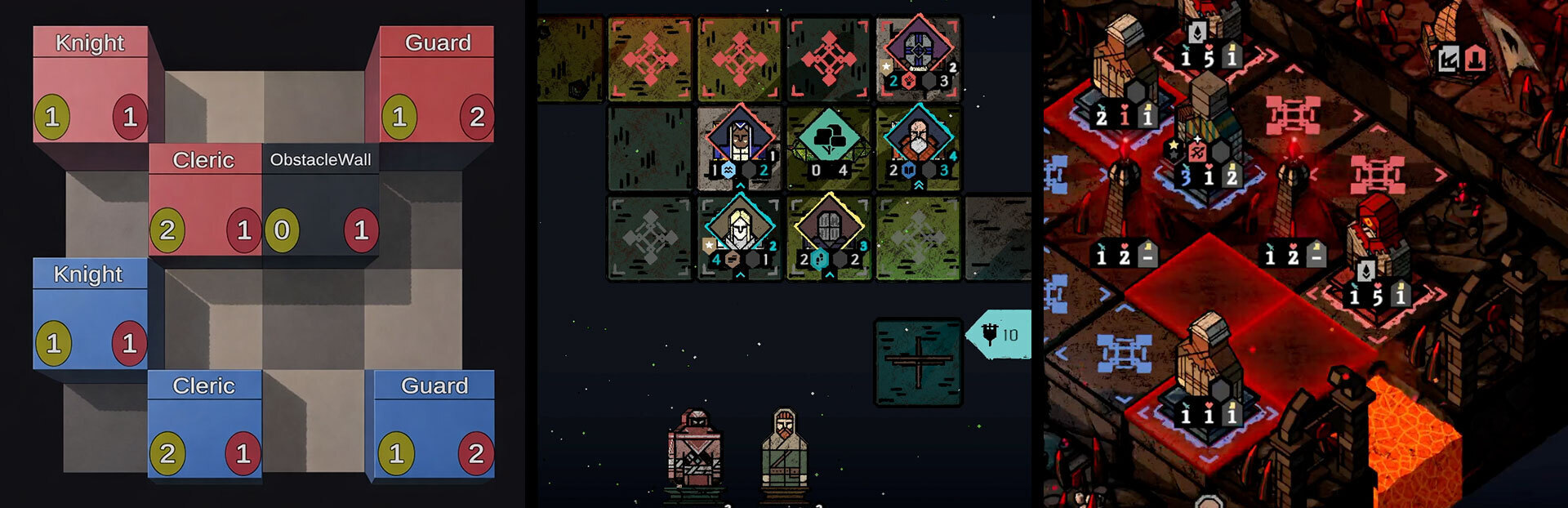
As a small preview, we are sharing a few simple screenshots from the next update. We hope you look forward to it.
Source
Changelog.gg summarizes and formats this update. How we read updates.