
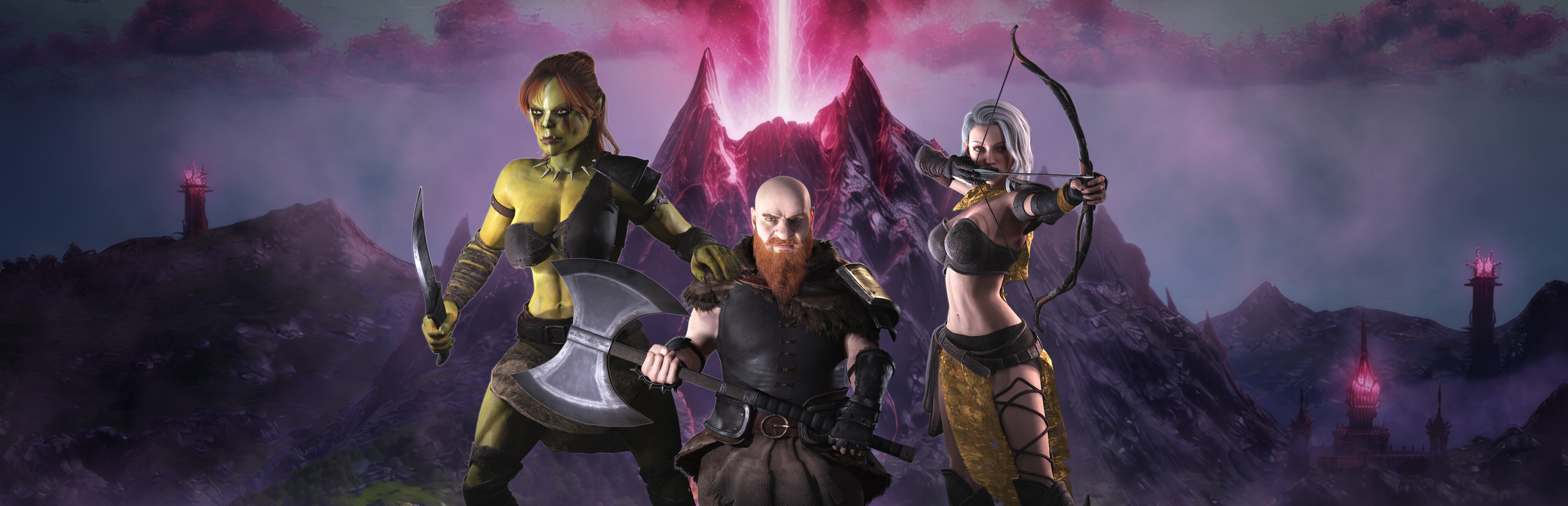
Full notes
Full Luminary update
Read the full published notes in a cleaner layout. The original post stays linked below.
What changed
- UI and audio
- Balance
- Maps
- Gameplay
- Events
- Server
We hit 30,000 Wishlists thanks to this Article
(Sorry for the huge wall of text below, but the diehard fans want a lot of this info) I had a huge in depth interview with GameSpark (a Japanese publication) about Luminary. Since many of our followers here on Steam are only English speakers, I wanted to share with you all the original English answers version, because there's a LOT of Luminary FAQ info in here. (GameSpark Article)
When people hear the term "action RPG," many tend to imagine hardcore gaming elements like challenging combat and deep, intricate build customization. However, Luminary, scheduled for release in Q2 2026, aims to deliver a game that inherits those appealing aspects while avoiding overly complex systems and excessive penalties, making it an action RPG that anyone can easily enjoy. We sat down with the developers to ask: What exactly does a casual, family-friendly action RPG look like?
Could you please introduce yourself and your role in Luminary?
Hi, my name is Keith Kolod, and I am the Owner of Refractive Entertainment. On Luminary I am the Creative Director, but since there is only two of us on the development team, that is a fancy way of saying I’m the designer, artist, animator, etc. Basically most things on the game that aren’t the C++ Code.
Could you also tell us about your background as a developer? What kind of projects or fields were you involved in before founding Refractive Entertainment?
I was initially a Visual Effects Artist and Supervisor in Hollywood on Major Blockbusters, that resume of Films can be seen here.
https://www.imdb.com/name/nm3424780/
I did that for a decade before creating Refractive to focus on other growing artforms like Simulations and VR. We were already making Simulations in Unreal Engine, and got contracts to make a few games for Theme Parks like Sea World. For Fun we entered into an Epic Mega Game Jam while we were in between projects, and our little week development game “Space Claws” won Top 10 among 2000 other game entries. So we learned we had the skills to make Consumer games if we dedicated our focus to that.
As a team, what kind of experience or development philosophy did you bring into this project?
My partner (Matt) and I have worked together for 15 years. I was his Lead back when we were working on Hollywood films, so we have a huge amount of experience together working on a lot of different types of projects, and more importantly hitting those delivery deadline schedules. But our biggest goal in any project that we do is to make the end result look like it was made by a much larger team. We are lean, zero overhead, and move fast.
For readers discovering the game for the first time, how would you describe Luminary?
Luminary should feel like Home. (Ok that was cheezy, but it’s true!!) What I mean by that is Luminary should feel like the Games and Fantasy that you remember as a kid, an Action RPG that’s dialed in for a wide variety of players, to enjoy together. Not to Hard, not to Easy, just Right. We have grand open exploration, dynamic combat, progression, job skills, resource gathering, all the these are the things you want in an ARPG, while leaving out the things you don’t A lot of other games in the ARPG genre are brutally difficult these days, lean too “Dark” fantasy, and have too many mechanics to remember how to play when you put the game down for a month and come back later. This is great for a some gamers, but not for others.
Luminary was designed from the ground up with your enjoyment always at the forefront. Straight forward mechanics, easy to understand skill leveling by your actions, a simple Ui, and a clear objective. We aim to be a bridge into the Action RPG genre to an audience who maybe traditionally stayed away from these types of games. We’ve focus on a traditional Fantasy theme, with a bright and inviting colorful pallet. Our combat is forgiving hack and slash for newer players, but has enough abilities, skills and depth for seasoned ARPG players. And the biggest reason for this is to bring people together
Luminary has drop in, drop out Co-op. What this means is I can start a character and play Solo, then when my friends sign on, I can take that same character, progression, and inventory with me, and jump right into their game. There, I can continue to progress, loot, and have fun. When I’m ready I can jump right back into my Solo game with my same character who grew while playing with my friends. We aim to strip away any impedance on fun. Your time is valuable, and when you are playing Luminary, we don’t want any of that precise time wasted. We’ve even left things out of our game that traditional RPG things have, like being over encumbered, inventory management, weapon and armor degradation, losing equipment on death, etc. as we feel these mechanics just frustrate gamers and take away from the “ Fun ”.
What were your main inspirations when developing Luminary?
Zelda BOTW, Fable, and Monster Hunter. 5 Years ago my Wife, Son and I were sitting on the couch playing Zelda BOTW together. We were having such a great time but there was an obvious single player only problem. Every 30 minutes we passed the controller to the next person to play. We still had a good time but I thought, there must be a game out there like this but that’s Co-op Multiplayer as well, right? There wasn’t, I kept looking, and couldn’t find what I was looking for. So that was it, I needed to make it myself.
On the other hand, what do you believe differentiates Luminary from other open-world ARPGs?
The co-op multiplayer is an obvious big one. There are so few Openworld ARPGs that have co-op. There are some now, but they are more survival games than ARPGs. And that feature of using the same character through multiple different play sessions from solo to co-op is super important and not a widely seen feature in games. I also think the attention we put into the playability across different player skill levels is another big one.
Luminary is described as a “balanced and accessible” open-world ARPG. What does “accessible” mean to you in the context of this genre?
What I mean is “accessible” to players who don’t typically find ARPGs “fun”. We try our best to simplify the experience and game mechanics to allow more players of all ages and backgrounds to have fun. If myself, my wife, and son aren’t all having a good time playing Luminary together, then I didn’t succeed in my design. That’s my benchmark.
Many modern ARPGs tend to lean either toward high difficulty or deep build complexity. How did you approach balancing depth and accessibility in Luminary?
Correct, as I mentioned earlier this is great for a certain kind of hardcore player, me specifically. I love games like Elden Ring, Sekiro, and the Souls Series. But those games are far “too much” for my wife or son to play. I needed a game for us all to be able to play together. However for the hardcore players, our combat is skill based. This means there is nothing holding you back from using those skills to progress through the game quicker while still having a low level character. And when you beat Luminary, you unlock Tier 2, 3, 4 etc. Think of this like a New Game +, but while retaining your progressed character, you also retain certain upgrades you’ve made to your town and the map. But there will be more enemies, who hit harder and take more damage, but also reward higher XP. This allows everyone to have fun at their own skill level.
What kind of player experience are you aiming to deliver in the first few hours of gameplay?
We’ve really built Luminary for all levels of experience. More seasoned ARPG players will progress through the world more quickly, and unlock higher Tiered playthroughs faster, but there are full tutorials and “ease in” gameplay for newer players to the genre to play at their own speed. What's Important is you don't back down. You don’t go backwards, you are always progressing. Every sword strike gains XP, and you lose nothing on death. So even the worst player should grow a strong character with enough time.
The game allows players to freely switch between melee, ranged, and magic combat styles. How did you design this system so that each option feels meaningful rather than superficial?
Really the player decides, and each have very different play styles, Melee is more Hack and Slash timing or brute force, Ranged is for people who enjoy the skill needed of a first person shooter, Magic is more AoE and support. The best players will use a little of everything, dynamically switching for the right scenario. But you don’t “need” to use everything. If you are a purely melee focused player, because that’s the gameplay style that fits you best, then you should have fun just using Melee.
How do you encourage players to experiment with different builds instead of sticking to a single playstyle?
Because we have no locked “class” structure, and every weapon type levels up separately from your own character’s level and unlocks their own unique abilities, this allows players to freely try out other playstyles whenever they want. Maybe when they are playing solo they are sticking with sword and shield, but when they play with their friends they use the same character but use a staff for AoE damage or Support magic instead. Same character, but now they are leveling two different weapon types for two different reasons.
Compared to more punishing action RPGs, how do you position “player skill expression” in Luminary?
I for instance have to spend less money in game on health potions, heavy armor, or a shield for blocking. We have I-Frames with our dodging in Luminary, so you’ll often see me dodging through enemies attacks using proper timing and setting up and ability attack right after followed up by a few slashes and then getting out of the middle of danger again. Other players might spec into Health, and “Tank” their way into the middle of a group of goblins, blocking or taking their hits, using health while slashing (My wife’s playstyle). Neither way is wrong, and just allows the player to play “their” way.
Exploration appears to be a major pillar of the game, with traversal systems such as climbing, swimming, and gliding. What role does movement and exploration play in the overall gameplay loop?
The locomotion and exploration in Luminary is a huge focus for us. I wanted just “getting around” the world to be just as much fun as the combat. Exploration should be a wonder and reward. There are many ways to even Level up your character and town through just exploration, among other secrets and treasures to find. You are not limited in your characters exploration abilities from the beginning, but you will unlock new paths through the world as you play.
How do you design the world to provide a sense of “meaningful reward” for exploration?
Everything Everywhere! If a player goes down a path, they should find something at the end of that path. It doesn’t always have to be a great set of armor or weapon, but something simple to acknowledge their efforts goes a long way. I’m a big Easter Egg person. I love finding something quirky in games that other people didn’t find, and I will bring that joy to others in Luminary throughout our world.
The game combines handcrafted environments with procedural elements. How do you balance these two approaches?
Our “procedural” elements are lite. What I mean by that is lets say I want to hide a scroll in a chest on the map. I will have 20 hand crafted locations for that chest to spawn, and then on player map creation, it will choose one of those 20 spots to hide that chest. This way it’s different for the player each playthrough, but still directed by us. This should keep exploration fresh for the player, while still not letting things get out of hand or “look” procedural. Our world is 100% hand crafted.
Progression is shared between solo and co-op play. What was the reasoning behind this design choice?
I’ve played many games where I have my main character that I play in a solo playthrough, and a separate character that is tied to a group session. What I’ll find is I either won’t get enough time to progress that Co-op character, or I won’t want to because I’ve already spent so much time with my Solo one. This means I subconsciously don’t want to play with my friends? That feeling is completely gotten rid of with our approach in Luminary. Now you can choose to have multiple characters, ones to play with a certain group, or your one character you always play as, across both scenarios. And I personally am a busy guy, I don’t have time to progress multiple characters haha.
How do you ensure that co-op enhances the experience rather than trivializing the game?
Co-op can only enhance your experience, meaning we don’t scale Luminary’s difficulty based on how many people are playing in a group. I’ve played games where maybe my Wife and Son don’t provide a lot of combat help, and the game will increase in difficulty too much, that 3 of us can’t really play together and beat anything. That doesn’t happen in Luminary. We handle this by choice. If you are playing in a seasoned group of 3, then create a Tier 2 or 3 world where there are more enemies and things are more difficult. But a casual group of 3 will never be punished by the game by grouping up.
What kinds of player roles or interactions do you envision in multiplayer?
It definitely helps to have each player contribute in different ways. Maybe one player runs in with a shield and slashes away to gather the Mobs agro into one place, for the Magic dealer to Hit them with an AoE Ice cone, while a ranged player takes out the Goblin Archers from afar with a Bow. This is the ideal type of gameplay multiplayer style, but there’s nothing stopping 3 players from just spamming lightning bolts together.
Why did you choose to support not only online multiplayer, but also local and couch co-op?
Honestly, because I miss sitting on the couch as a family and playing games together. I think a lot of people miss that experience. While we won’t have couch co-op at Early Access launch, it’s still a passion of mine to get that family experience back. It’s not without it’s development hurdles, but we’ll figure it out given enough time.
Town-building and NPC progression are also part of the game. How important is this “home base” element compared to combat and exploration?
There are multiple ways to “level up” and progress in Luminary, and one of those is your town and it’s vendors. Shops will carry equipment to sell, and those equipment options will go up in level and strength the more you provide gathered resources to those vendors. It’s just one more way to play the game. Can you get away with avoiding this feature all together and just finding everything you need with enough exploration and combat? Sure, but for players who want to play Luminary and avoid as much combat as possible, this is another route.
What kind of long-term motivation are you aiming to create through town and character progression?
As your character progresses you unlock new abilities, which brings new gameplay and combat options, and this goes for the town as well. Will we eventually run out of abilities we can create for you to unlock, of course, specially with our small team, but we will find other ways to reward players for their continued hours put into Luminary. We will eventually have a"prestige" system, where you can choose to have your character be reborn back to base level, and doing this will come with its own new cosmetics to show off. Vice versa we plan to make your character look more evil the higher level you go without choosing to be reborn, as this is an important part of our lore, that too much power for too long corrupts your soul. But there will be more information on that later.
The world is built around the theme of “light versus corruption.” How has this theme influenced gameplay systems and level design?
You can see the evil that has corrupted the land, a shroud covers what was once beautiful. Golden Trees that brought life, now emit darkness. The world’s inhabitants have even been corrupted, searching and feeding off this dark energy. It is your task as a new Luminary to push back this Darkness and bring back the Light. Our entire world’s design has this theme baked in. When you “activate a checkpoint”, you are converting a corrupted tree back to a Tree of Life, which now becomes you nearest respawn location. When you destroy evil crystal towers, they now become fast travel locations. And it’s your ultimate job to defeat the “Ebonarchs”. Luminaries who were granted The Light to fight the corruption, but instead gave into it’s power and never gave up their immortality.
How do you balance narrative elements with player-driven exploration?
Everything is player driven in Luminary, even its narrative elements. The player will find out more lore as they talk to NPCs they come in contact with and through items and letters they find throughout their travels. We are definitely a more gameplay heavy focused game than a branching narrative story game.
The game is planned to launch in Early Access. Why did you choose this approach?
We are entirely self funded. No Publisher, no Kickstarter, no crowd funding of any kind. We’ve been 100% full-time and focused on Luminary, while living off our savings for the last year to do that. Launching in Early Access will hopefully start bringing in the much needed revenue to not only continue development, but to grow our team. The more successful our Early Access is, the bigger and better Luminary can become. We are also first time consumer game developers, and we’ve learned so much from our community already. We’ve used our public Demo on Steam to act as a pre early access release, where we’ve gotten much needed feedback and ironed things out. We plan to continue that close community relationship as we develop Luminary, as we are ultimately building this game for them.
What kind of feedback are you hoping to gather from players during this phase?
Stat balance, gameplay sticking points, ease of mechanic understanding, quality of life improvements, really just anything we need to implement or change to make the game more fun for everyone. For instance, when we released our demo, we learned from the community that our Mouse and Keyboard controls were lacking. This makes sense since I personally play with a controller and definitely focused more on that design. But from our player feedback we learned there was a lot more ARPG players that prefer MKB than I anticipated, so we did a hot patch fix on our MKB controls that week for the Demo. This was something we would have overlooked for full release if we hadn’t heard from our community.
How do you expect the game to evolve toward its full release?
On top of the feedback implementations, the game world will grow. There will be more play space, more enemies, more weapons, more outfits, more abilities, more more more. The Early Access has the solid bones of our biggest gameplay loops and mechanics, but the content will grow and expand throughout development.
We understand that Luminary is already gaining strong attention from Japan, with the country currently ranking #2 in wishlists (over 27,000). How do you feel about this level of interest?
This makes me so happy. As someone who grew up playing Japanese games, and watching a lot of Japanese movies and anime, to find out that the Japanese audience in return likes something that “I’m” making… It’s hard to put into words. One day I’d love to visit Japan and show my gratitude.
What aspects of Luminary do you think will resonate most with players in Japan?
Since my biggest design influences (and most of the games I grew up playing) were Japanese RPGs, I’m hoping that the Japanese players feel right at home with Luminary. I’m not sure what aspects will stick out specifically, maybe the Cozy nature of our game? Honestly, I’d love to hear from your audience what specific features they like the most
Have you been influenced by any Japanese games or RPGs in particular?
Final Fantasy will always be near and dear to my heart, I played through them all growing up, as well as most of the Dragon Quest games. Then obviously Luminary has influences from the Zelda franchise and FromSoft games.
Are there any plans to support Japanese language in Luminary? If so, is there a tentative timeline for implementation?
Already implemented! Our Demo has full Japanese translation options to select, and we will for sure continue that into the Early Access release. Our Japanese players have been instrumental in helping us translate our game throughout our development, we have a channel set up in our Discord for it.
When considering Japanese localization, what level of interest or demand from Japan would be necessary to move forward? Are there specific metrics—such as wishlist numbers or player counts—that you use as indicators?
As our second highest country of Wishlisters, Luminary will always be Localized in Japanese for all text. One day I would even love to have Japanese voice overs for the NPCs, I love the Japanese language, but we’ll see how successful the Early Access launch is with the Japanese audience for that. No specific metrics, but if there demand is there, we’ll do it. I’d love to see it happen.
Finally, do you have a message for players who are interested in Luminary?
I want to thank everyone who has supported us this far. As you know, it’s just the two of us making Luminary right now, and I don’t think we would have gotten this far without your encouragement. While we can’t promise Luminary will be the “everything” game, we can promise it’s a game made with passion, that is laser focused on design, mechanics, and an experience we really felt was missing in today’s games. If you are looking for a Fantasy Openworld Action RPG, that strips out a lot of the “fun killing” mechanics from other games, and focuses purely on joy inducing elements; A game you can play Solo, and then multiplayer with your friends and family using the same progressed character; and a game that takes your precise time into account with every design decision, then maybe Luminary is the game for you. OR if you’d just like to see a tiny Indie game succeed big, then please Wishlist, tell your friends to Wishlist, and be ready to join us at our Early Access launch. Together we can push back this world’s Darkness, with Light.
(If you managed to actually read all of this, you are a trooper! Leave a comment and let me know!)
Source
Changelog.gg summarizes and formats this update. How we read updates.