
Update log
Full Lost Legions update
The complete published notes, normalized for clean reading and source attribution.
Repeated intro
Hey everyone!
Extracted changes
- Gameplay
- UI and audio
- Compatibility
I got a break from the pixel mines the last few weeks and got to enjoy the narrative fumes of the plot foundry.
When we first began working on Lost Legions, we always envisioned a strong, emotionally resonant story to accompany our survival mechanics, combat systems, and conquest features. But in the early phases of development, our focus was on building the core systems—narrative had to wait its turn.
Now, with those foundations in place, we finally have the time and structure to give the story the attention it deserves. And we've gone back to the beginning—not just of our game, but of the characters' journey—to build a proper narrative spine: the ambush at Teutoburg.
This moment in history doesn't just set the stage for what follows—it is the wound the entire story bleeds from. That’s where we decided the game must begin.
A New Introduction: The Battle That Broke the World
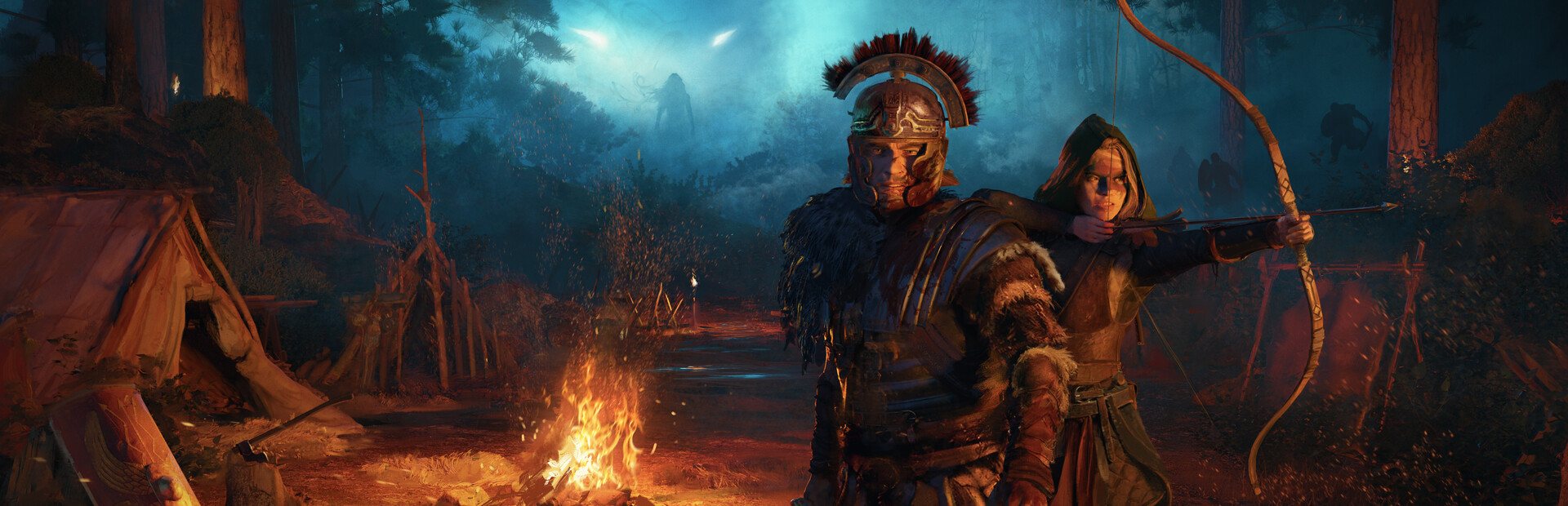
The game will now open in a moment of fire and blood: the battle of Teutoburg Forest.
Instead of waking up behind enemy lines with no memory of what came before, players begin caught in the chaos of a devastating ambush. You and your comrades are exhausted after two days of fighting and warily resting in a makeshift camp, unaware of the trap closing around you. When the ambush hits, it hits hard: chaos, shouting, fire, and death. You are outnumbered, outmaneuvered, and abandoned.
How will you make it out alive?
Super early visual of the ambush location.
Shifting Our Workflow
To make this new structure work, we had to overhaul not just how we write narrative, but how we manage it across the entire game world. At the heart of this new process is our use of Nuclino.
We’ve built a custom knowledge base in Nuclino that tracks every quest, location, character, point of interest, and line of dialogue in the game. Each entry includes ownership, dependencies, and its current implementation status—whether it's in concept, first draft, scripted, voiced, or fully tested. This lets us rapidly assess what’s done, what’s blocked, and where we need to focus next.
Nuclino also allows us to link between entries with ease—so a character's quest chain can be viewed in context with all associated POIs, scene barks, and global story beats. It has become our narrative control room.
And with this structure in place, we've layered in production processes that keep everything moving:
Modular Scene Structure: We build each major narrative moment as a standalone asset, which we can prototype and test without requiring full voice-over or animation. Although I usually personally record what I like to call a TEMU version of the voice-over so we can judge the length… Hearing your badly recorded own voice over and over in the game is super fun and totally not cringe at all.
Playtest-Gated Rewrites: No narrative beat is considered final until it's been tested both internally and externally.
Cutscene Participation Rules: We've clearly defined how narrative moments work in co-op—when players are synced into a scene, when they can observe, and when they must participate.
Looking Ahead
We’re continuing to refine our narrative pipelines as we move toward Beta. The new introduction will anchor everything else in the game: from player motivation, to NPC arcs, to the world itself and the many secrets it holds.
Your story begins in the rain and fire of a forest ambush—what comes next is up to you.
I’m going back to inhale some sweet sweet narrative fumes. Next time it’s my turn to
Source