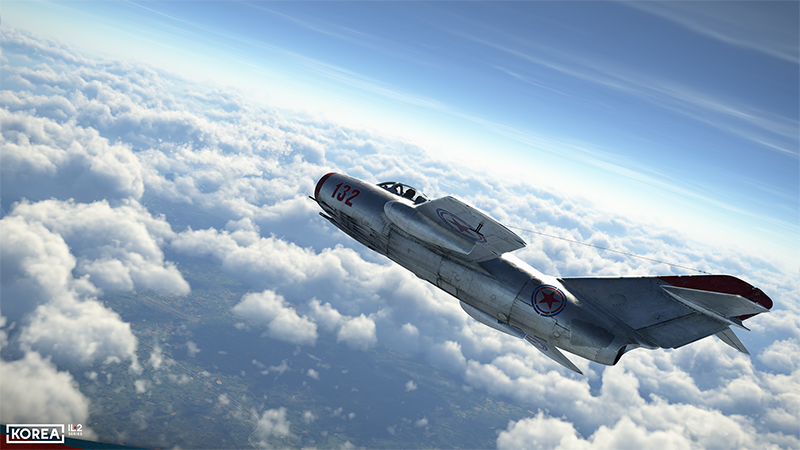
Greetings, comrades! Today, we will continue our discussion of the vast topic of the environment. However, this time we will examine in more detail the most important component for aerial combat.
Full notes
Full Korea. IL-2 Series update
Read the full published notes in a cleaner layout. The original post stays linked below.
Repeated intro
Greetings, comrades!
What changed
0 fixes4 additions3 changes0 removals
Maps
Gameplay
changedToday, we will continue our discussion of the vast topic of the environment. However, this time we will examine in more detail the most important component for aerial combat. Previously, we looked at some background elements that create atmosphere but are not so directly involved in aerial combat. Now, we will dive directly into the essence, into the sky. For military aviation pilots, the sky is the battlefield. Perhaps the most beautiful of all, but still, it is the place where the most intense and critical moments occur, where everything is decided.
addedYes, the ground surface is part of aerial combat, affects visibility, and, in some cases, when the fight descends to the ground, even terrain folds and mountains have an effect, but this is not the main battlefield. The main one is the sky. Where the sun shines from, where the wind blows from, how the cloud cover forms, what precipitation there is, how much — all of this dictates the conditions of combat. Clouds are an important tactical element, especially during the Korean War, when aircraft radar had not yet advanced enough to detect enemy aircraft directly. It’s just you, your eyes, and the sky. By using cloud cover wisely, you can change the course of the battle even against a superior opponent. And if this element is not implemented in the simulator at a modern level, even if everything else is done excellently, the overall impression is certainly diminished. Therefore, we have put considerable effort into improving the visualization of the sky and clouds in our new project, Korea. IL-2 Series.
addedWe have already described in detail the new physical module for rendering the firmament and atmospheric volume in Dev Blog #7 . The rendering system, based on ray tracing and a physical-mathematical model of atmospheric light scattering, has produced truly impressive results. But since then, many of you have noticed that there aren’t many changes compared to Great Battles. Only in the last six months have comments like "Now these clouds are great!" appeared. And this is indeed true, because according to the development plan, the refinement of clouds fell on the final stage of the project. And now, as the release approaches, you can see almost the final results. And they are truly impressive.
addedSpeaking of the volumetric cloud rendering technology, for now, the IT industry hasn’t come up with anything new. This technology, with various variations, is now used by almost all flight simulators and beyond. But details make all the difference: how this technology is applied, what fine-tuning elements are used, etc. Within this technology, it is extremely difficult to balance the requirements for cloud detail and performance with the simulator’s combat aspects, such as target detection against cloud backgrounds, within cloud layers, and others. In civilian flight sims, the latter problem does not exist, so they can afford to increase the level of detail significantly. However, thanks to a significant evolution of our graphics engine, we have also found ways and resources to increase the rendering detail of cloud cover and improve several aspects of its lighting.
changedBut technology is only a foundation: nothing is possible without it, and without its skillful application, there will be no result either. We have spent a lot of time re-evaluating our approaches to the art direction of the simulator’s environmental components, including clouds. The structures of cloud formations, their shapes, and distribution maps have been revised. Now they are, firstly, more realistic, and secondly, much more artistic. There is greater diversity in cloud types and varieties. We are confident that from the many cloud options we have prepared, everyone can find the sky condition they like best.
addedOverall, this creates a much more coherent impression of the simulator’s atmosphere, increases the believability of the image, and the degree of immersion. You want to soar into these clouds in your fighter and twist an energetic maneuver around them. In addition to the general shapes, cloud detailing has been improved; within the framework of the refined technology, new opportunities to increase the detail of small forms have been found. The lighting of the cloud layer has been significantly reconfigured because clouds are illuminated not only by the atmosphere but also by reflected light from the ground, meaning their appearance and hue largely depend on the terrain below and the season in which a particular shot was taken. All of this will be taken into account in our new project, Korea. IL-2 Series.
Korea. IL-2 Series changes
changedToday, we will continue our discussion of the vast topic of the environment. However, this time we will examine in more detail the most important component for aerial combat. Previously, we looked at some background elements that create atmosphere but are not so directly involved in aerial combat. Now, we will dive directly into the essence, into the sky. For military aviation pilots, the sky is the battlefield. Perhaps the most beautiful of all, but still, it is the place where the most intense and critical moments occur, where everything is decided.
addedYes, the ground surface is part of aerial combat, affects visibility, and, in some cases, when the fight descends to the ground, even terrain folds and mountains have an effect, but this is not the main battlefield. The main one is the sky. Where the sun shines from, where the wind blows from, how the cloud cover forms, what precipitation there is, how much — all of this dictates the conditions of combat. Clouds are an important tactical element, especially during the Korean War, when aircraft radar had not yet advanced enough to detect enemy aircraft directly. It’s just you, your eyes, and the sky. By using cloud cover wisely, you can change the course of the battle even against a superior opponent. And if this element is not implemented in the simulator at a modern level, even if everything else is done excellently, the overall impression is certainly diminished. Therefore, we have put considerable effort into improving the visualization of the sky and clouds in our new project, Korea. IL-2 Series.
addedWe have already described in detail the new physical module for rendering the firmament and atmospheric volume in Dev Blog #7 . The rendering system, based on ray tracing and a physical-mathematical model of atmospheric light scattering, has produced truly impressive results. But since then, many of you have noticed that there aren’t many changes compared to Great Battles. Only in the last six months have comments like "Now these clouds are great!" appeared. And this is indeed true, because according to the development plan, the refinement of clouds fell on the final stage of the project. And now, as the release approaches, you can see almost the final results. And they are truly impressive.
addedSpeaking of the volumetric cloud rendering technology, for now, the IT industry hasn’t come up with anything new. This technology, with various variations, is now used by almost all flight simulators and beyond. But details make all the difference: how this technology is applied, what fine-tuning elements are used, etc. Within this technology, it is extremely difficult to balance the requirements for cloud detail and performance with the simulator’s combat aspects, such as target detection against cloud backgrounds, within cloud layers, and others. In civilian flight sims, the latter problem does not exist, so they can afford to increase the level of detail significantly. However, thanks to a significant evolution of our graphics engine, we have also found ways and resources to increase the rendering detail of cloud cover and improve several aspects of its lighting.
changedBut technology is only a foundation: nothing is possible without it, and without its skillful application, there will be no result either. We have spent a lot of time re-evaluating our approaches to the art direction of the simulator’s environmental components, including clouds. The structures of cloud formations, their shapes, and distribution maps have been revised. Now they are, firstly, more realistic, and secondly, much more artistic. There is greater diversity in cloud types and varieties. We are confident that from the many cloud options we have prepared, everyone can find the sky condition they like best.
Today, we will continue our discussion of the vast topic of the environment. However, this time we will examine in more detail the most important component for aerial combat. Previously, we looked at some background elements that create atmosphere but are not so directly involved in aerial combat. Now, we will dive directly into the essence, into the sky. For military aviation pilots, the sky is the battlefield. Perhaps the most beautiful of all, but still, it is the place where the most intense and critical moments occur, where everything is decided.
Yes, the ground surface is part of aerial combat, affects visibility, and, in some cases, when the fight descends to the ground, even terrain folds and mountains have an effect, but this is not the main battlefield. The main one is the sky. Where the sun shines from, where the wind blows from, how the cloud cover forms, what precipitation there is, how much — all of this dictates the conditions of combat. Clouds are an important tactical element, especially during the Korean War, when aircraft radar had not yet advanced enough to detect enemy aircraft directly. It’s just you, your eyes, and the sky. By using cloud cover wisely, you can change the course of the battle even against a superior opponent. And if this element is not implemented in the simulator at a modern level, even if everything else is done excellently, the overall impression is certainly diminished. Therefore, we have put considerable effort into improving the visualization of the sky and clouds in our new project, Korea. IL-2 Series.
We have already described in detail the new physical module for rendering the firmament and atmospheric volume in Dev Blog #7. The rendering system, based on ray tracing and a physical-mathematical model of atmospheric light scattering, has produced truly impressive results. But since then, many of you have noticed that there aren’t many changes compared to Great Battles. Only in the last six months have comments like "Now these clouds are great!" appeared. And this is indeed true, because according to the development plan, the refinement of clouds fell on the final stage of the project. And now, as the release approaches, you can see almost the final results. And they are truly impressive.
Speaking of the volumetric cloud rendering technology, for now, the IT industry hasn’t come up with anything new. This technology, with various variations, is now used by almost all flight simulators and beyond. But details make all the difference: how this technology is applied, what fine-tuning elements are used, etc. Within this technology, it is extremely difficult to balance the requirements for cloud detail and performance with the simulator’s combat aspects, such as target detection against cloud backgrounds, within cloud layers, and others. In civilian flight sims, the latter problem does not exist, so they can afford to increase the level of detail significantly. However, thanks to a significant evolution of our graphics engine, we have also found ways and resources to increase the rendering detail of cloud cover and improve several aspects of its lighting.
But technology is only a foundation: nothing is possible without it, and without its skillful application, there will be no result either. We have spent a lot of time re-evaluating our approaches to the art direction of the simulator’s environmental components, including clouds. The structures of cloud formations, their shapes, and distribution maps have been revised. Now they are, firstly, more realistic, and secondly, much more artistic. There is greater diversity in cloud types and varieties. We are confident that from the many cloud options we have prepared, everyone can find the sky condition they like best.
Overall, this creates a much more coherent impression of the simulator’s atmosphere, increases the believability of the image, and the degree of immersion. You want to soar into these clouds in your fighter and twist an energetic maneuver around them. In addition to the general shapes, cloud detailing has been improved; within the framework of the refined technology, new opportunities to increase the detail of small forms have been found. The lighting of the cloud layer has been significantly reconfigured because clouds are illuminated not only by the atmosphere but also by reflected light from the ground, meaning their appearance and hue largely depend on the terrain below and the season in which a particular shot was taken. All of this will be taken into account in our new project, Korea. IL-2 Series.
As we promised, the closer we get to the release, the more impressive results we will demonstrate in our diaries and videos. Subscribe to our social media channels YouTube, Facebook, Reddit, X, and Discord so you will not miss any news.