
Full notes
Full Kingso update
Read the full published notes in a cleaner layout. The original post stays linked below.
What changed
- Maps
- Performance
Kingso changes
Introduction
Hello everyone!
Previous articles mostly covered the general development of the game. Now, with a major update on the horizon - and going forward in general - devlogs will be published across multiple platforms to keep you informed about what's changing in Kingso. In the last article, I talked about the game engine and how Kingso evolved into its current form. Today, we’re continuing that topic — this time focusing on the central arena of all in-game activity: the world map.
Map Structure
Kingso is built on a tile-based map system. When the game ran on a custom engine, everything was managed directly with minimal abstraction. However, after transitioning to Godot and integrating through the TileMapLayer, our approach became more modular and flexible. This opened up new possibilities, but also introduced a set of unique challenges.
There aren’t many games in the industry that combine a classic top-down view with a massive open world and multi-layered tile maps. Even after two years of development, the only remotely similar example we came across was Civilization 1991. Still, Kingso follows its own path - its visual style is far more vibrant and “alive” with a rich atmosphere, detailed environments, and visual effects that create the sense of a breathing, dynamic world.
Optimization and Performance
Building such a world isn't just a matter of design - it’s a serious performance challenge. Imagine hundreds of thousands of tiles, each potentially having multiple layers, unique properties, and interactions. To make this run smoothly, you need to use batch rendering, which allows efficient use of the GPU by drawing everything in groups.
But rendering is only part of the equation. The world is expected to feel alive, which means implementing many systems - character movement, environmental interaction, object behaviors, and more. In order to handle this complexity without performance loss, it becomes essential to apply prediction and filtering algorithms that reduce real-time computation, especially by focusing on areas near the player. These techniques help maintain a sense of scale without sacrificing responsiveness.
World Scale and Structure
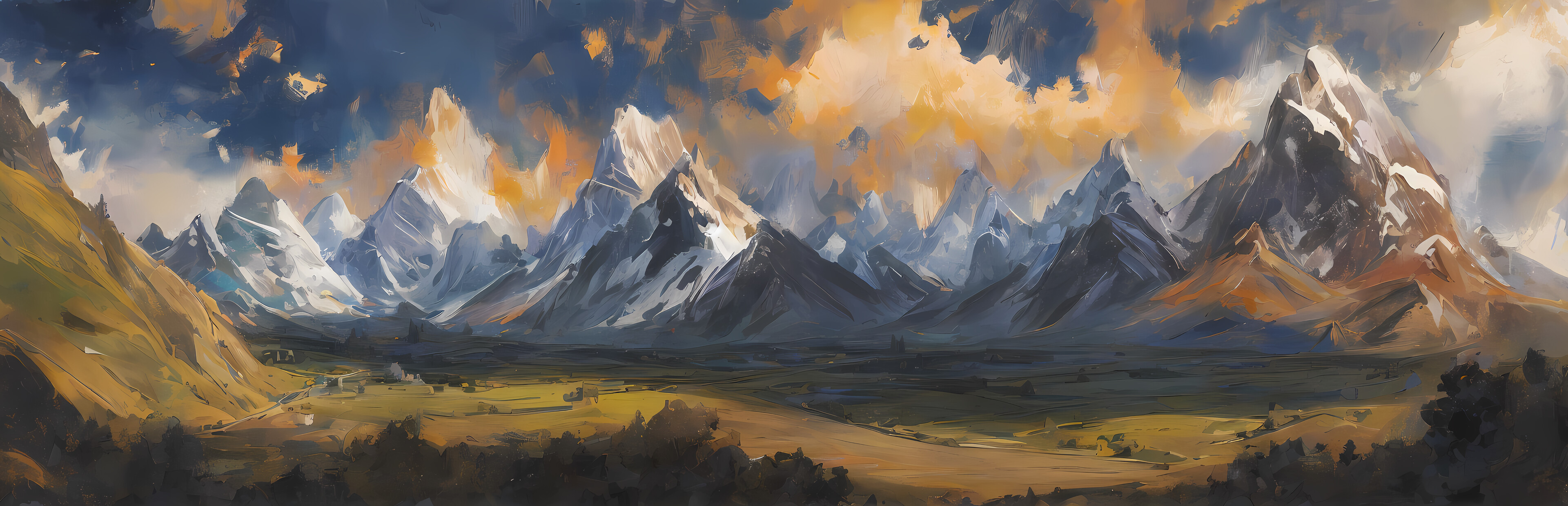
As of now, the world map in Kingso includes around 30 nations, over 200 unique regions, and a wide variety of biomes and environmental elements. The map is constructed from multiple layered tilemaps, with each layer representing distinct aspects such as terrain, vegetation, infrastructure, and more.
While the map itself doesn't simulate climate directly, the world is divided into climatic zones - such as dry regions, humid lowlands, swampy areas, or snowy landscapes. These zones influence the type of flora found in each area. Some trees, for instance, grow only in colder regions, while others require high humidity. As players explore the continent, they will notice natural transitions between these zones, reinforcing the feeling of a vast and diverse world.
Part of the narrative
Despite its fantasy foundation, we strive for realism in the details. Each biome affects not only the visual appearance, but also gameplay - influencing enemy types, characters behavior, available resources, survival conditions, and much more. Traveling across the continent becomes more than a change of scenery - it’s a true act of exploration, with meaningful consequences.
Thank you for reading this article!
Source
Changelog.gg summarizes and formats this update. How we read updates.