
In this update10
Full notes
Full GUN JAM update
Read the full published notes in a cleaner layout. The original post stays linked below.
What changed
- UI and audio
- Performance
- Gameplay
- Maps
- Balance
- Store
GUN JAM changes
Did you know that GUN JAM’s official soundtrack was written specifically for the game? It played a huge part during development! There was a lot of experimentation when it came to writing and recording the music. As we get closer to releasing both game and soundtrack, we thought we’d shine the dev spotlight on how the OST was created.
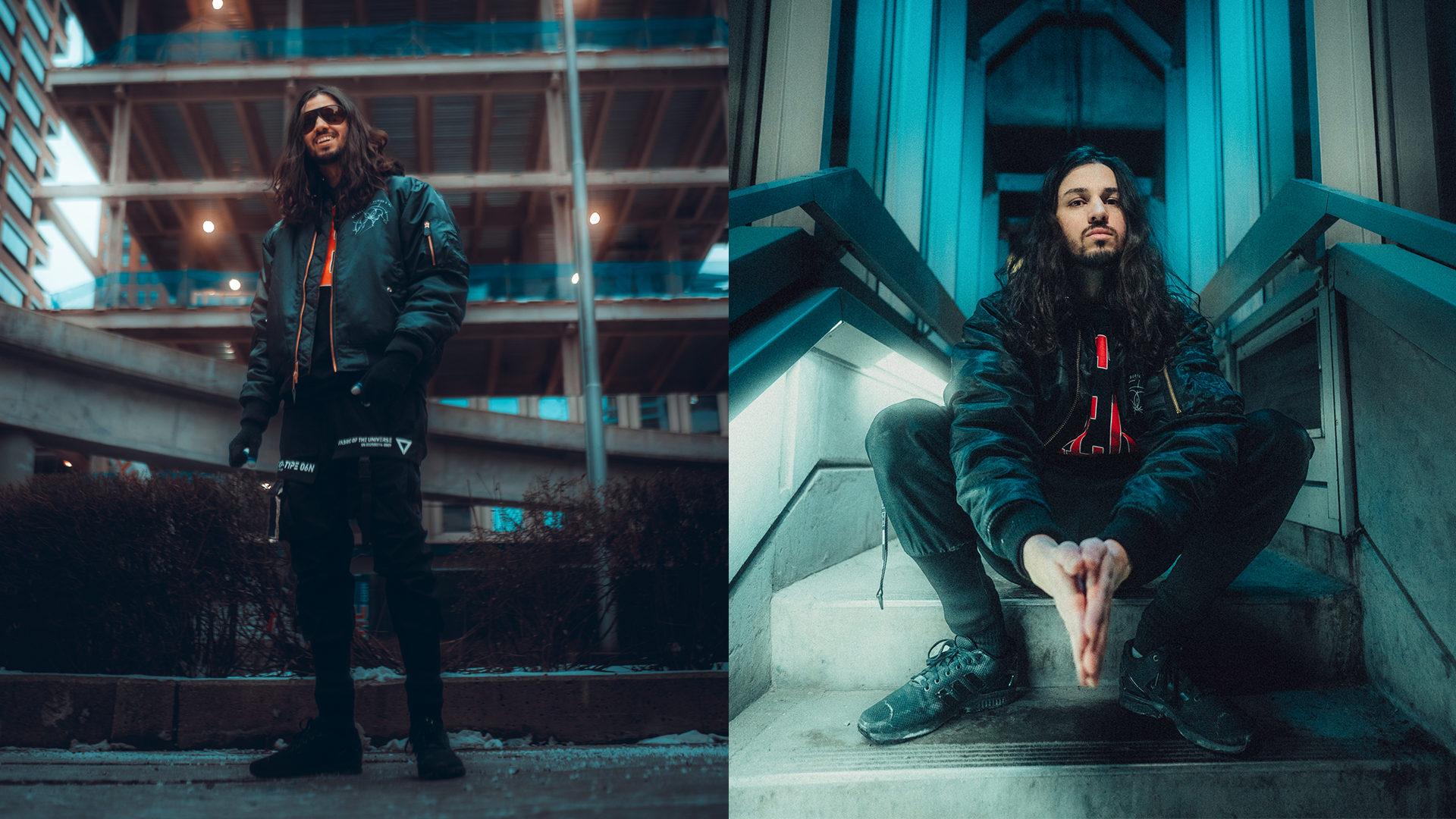
GUN JAM’s composer, James Wrigley.
How did you get started?
Wrigley on unconventional methods: Working on GJ was the opposite of how developers traditionally approach scoring a game. We started with the soundtrack first and worked backwards. As we wanted to push the boundaries of what could be done with the rhythm, I experimented with making the guns shoot melodies by writing short passages, and cutting out the individual notes to be triggered when the player fired. Unfortunately, this didn't work because the gun audio kept getting lost within the competing frequencies!
Wrigley on avoiding stale sounds: I tried having the music generated as you played the game as I wanted it to be melodically interactive. Sadly, this didn't result in a cohesive soundtrack. Then, I tried having a piece start with a consistent rhythm with varying sections and styles. I recreated the piece with 6 different rhythms that the game would switch between. This was overly complicated, and it left us with stale-sounding music that wasn’t exciting.
Wrigley on finding the rhythm: I also tried the metronomic route and just went with a four-to-the-floor kick snare synth-wave style. Again, it left the player simply shooting in time, and it was too linear. I came to the conclusion that we were over-simplifying things that didn't need to be simplified. GUN JAM is a rhythm FPS game. Surely anyone downloading to play it either has a good feel for rhythm and/or is an avid fan of FPS games. I thought, why are we 'dumbing down’ the firing patterns? It was drying up the juice of the gameplay. In the end, I went all-out making the craziest music I could. Through trials of play-testing, I took out the sections that were impossible to shoot to, leaving just the good stuff.
From your experiments, how did you start to build the different tracks?
Wrigley on variables: I had to figure out so many variables. What tempo felt good to shoot? What elements of the soundtrack drove the rhythm - bass, kick, melody, etc.? What felt good to play for hours on end without getting fatigued? I had to work out how the soundtrack could grow in intensity once the player enters a level, starting with literally kicking through the door to getting into the rhythm and shooting everything in sight.
Wrigley’s method of immersion.
Wrigley on immersion: Many pieces started with a PlayStation controller in hand in front of an empty Cubase session tapping rhythms. I had to imagine what it would feel like to blast hordes of enemies or the nastiest boss battles. What kind of fire would they return? How will the player interact with these characters?
How did you decide on the genres?
Wrigley on vibe: The reaction I want from the music and gameplay is, “F*** YEAH!” I chose the 3 most aggressive styles of music I could imagine: EDM, hip-hop, and metal. Within these, you have many sub-genres, and I tried to bring as many of those different flavours into the tracks as possible too.
What other challenges did you face when writing?
Wrigley on song length: The song length! At first, we were aiming for 2-3 minute long pieces. They grew into 5-minute pieces, which escalated into songs that are now over 6-7 minutes long. There is very little repetition, save for the vocal themes. A 7-minute long track with constant variation but repeating rhythmical themes are incredibly challenging to quality control, especially on the exporting stages!
Wrigley on fusion: The tracks evolved to overlap with one another. For example, Metal tracks have heavy amounts of synthesis in them; TrapHop has distorted guitars and neo-classical influence; and EDM has everything I could throw at it! When you reach a point where you physically can't fit any more plugins on a track, you know it's getting a little bit crazy!
Did you face any challenges when it came to recording?
Wrigley on acoustics: On the first couple of tracks, I made a grave mistake in recording the vocalists in my new studio with 0 acoustic treatment. I thought using a fancy Fet47 mic would make the vocals sound crisp. Unfortunately, it picked up the entire room. I might as well have recorded the takes in a bathroom. I thought, “Ah, that's what a swimming pool sounds like!”
Check out Wrigley’s stunning studio set-up!
Wrigley on back to basics: Alice added some incredible vocals, sung in Japanese, that you’ll hear in the track called ‘Encaged’. The funny thing was, she didn't have any recording equipment and we were working together but from different countries meaning we couldn’t record together in the studio. So, I made it work with just their headphone mic. I cleaned the vocal tracks up and removed any background noise and reverb utilizing spectral processing and transient designers. I loved how they turned out so much that I kept those initial takes in the mix!
Wrigley on time pressures: I didn’t have the time to re-record any of the vocals. With too many levels of spectral processing and transient design, I was able to get the vocals right where I wanted them. I ordered a tonne of acoustic panels after that (thank you, GIK Acoustics), and I switched to an SM7B for all of the other sessions.
Wrigley on beat maps: As for creating the beat maps, I loaded the track into Cubase and used a snare to sketch out the firing patterns. I couldn't send the coding team a midi file or anything straightforward, so this was the best solution.
Can you tell us anything about your gear?
Wrigley on headphones: I mix as I master as I produce as I write. It's all part of the same process. Everything is mixed on headphones. I use Sennheiser HD800s headphones with a Grace Design M900 DAC. For reference, I also use Neumann KH80 speakers. Even with the new room treatment, I can't trust my room with 100% accuracy. So, I primarily rely on my headphones. This has the added bonus of allowing me to work anywhere.
Let’s make some noise!
Wrigley on layering up Metal: For the track called ‘Carbon Copy’ I went for hyper-augmented Djent. The song is written in drop E. I used my custom Warmoth baritone 28-inch equipped with an Evertune bridge and Bare Knuckle Impulse pickup along with my Dingwall bass to create this track. All of the leads were created with my Fender 1954 custom shop Stratocaster, which is not typically thought of for Metal. My secret to a track like this? Layering, layering, and even more layering! There are several snares, 4 kick drums, a couple of toms, and many, many synths screaming away.
And finally, can you tell us the names of each track?
Wrigley on releasing the OST: Yes! Here’s the track list for GUN JAM’s official soundtrack. As well as being available to download in a bundle from the Steam store, you’ll also be able to listen to it on Spotify, alongside 150+ other music platforms at launch! There’s over an hour's worth of music in the soundtrack.
Anything else you’d like to tell the community?
Wrigley on extra insight: Everything I’ve already referred to doesn’t even scratch the surface of the amount of work that went into the music alone. I could talk about it forever! If anyone would like to hear more insight into how the music was made or has an interest in composing, reach out to me in the music channel in GUN JAM’s Discord!
One more kit shot for the road.
The entire soundtrack was completed in an intense 6 month period, including the lengthy experimentation phase. As you can tell, writing and composing the music for GUN JAM pushed our composer past the limits of what he thought creatively possible. Do you think he accidentally created new fusion genres in the process?! We’re all incredibly excited about the game release, but we also cannot wait to hear what people think about the official soundtrack.
Until the next beat… As Wrigley said, come and hang out with us on Discord! You can also follow us on Facebook, feast your eyes on our Instagram, tweet about us on Twitter or simply fall down a rabbit hole of behind-the-scenes on our TikTok.
And if you haven’t done so already, please wishlist the game on our Steam store page. We’d really appreciate it!
Jaw Drop Games -
Source
Changelog.gg summarizes and formats this update. How we read updates.