
In this update15
Full notes
Full Gilded Destiny update
Read the full published notes in a cleaner layout. The original post stays linked below.
What changed
- Maps
- Gameplay
- Performance
- Events
- Compatibility
- Balance
Gilded Destiny changes
Steam post image
Salutations industrialists!
I'm Marc, a Producer on Gilded Destiny. In today's dev diary, we will discuss Political Parties, including enacting Policies, leading Political Parties, holding Elections, maximizing Party Attractiveness, forming Coalition governments, adopting Policy Stances, and making compromises to stay in power.
We also have a video version of this Dev Diary, which includes detailed examples of how Political Parties work in the game.
If you haven’t already, please wishlist Gilded Destiny on Steam, subscribe on YouTube. You can additionally join our Discord, or Reddit community to stay up to date.
Without further ado, let's dive in.
Setting the Political Stage
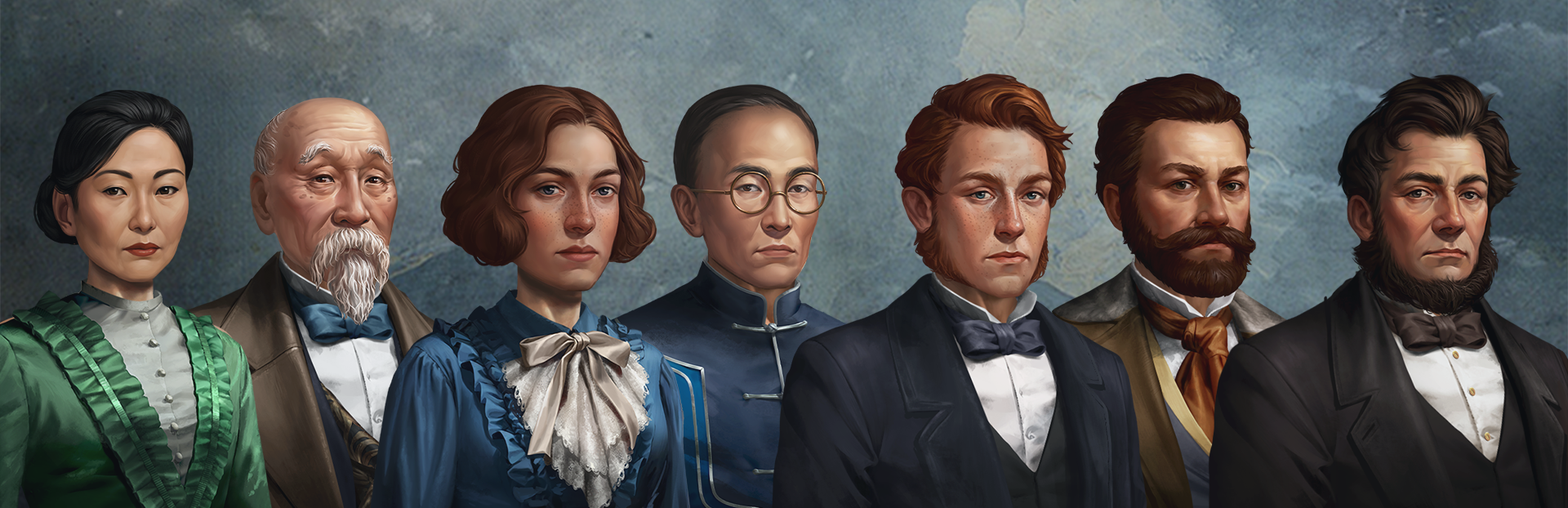
The time period during which Gilded Destiny unfolds is a tumultuous time where the ways of the elite, backroom politics of the old gave way to the dawn of mass participation. Informal factions of wealthy landowners and business magnates evolved into sprawling, ideologically-led parties with mass membership and distinct party platforms.
In Gilded Destiny, Political Parties are not simply an avatar representing a single ideology or political opinion. Parties are dynamic, ever-changing, and appear and disappear over time—representing the schisms and alliances that defined the era. Multiple Parties with the same political ideology might appear in game, each with a slightly different perspective on what that ideology means. For example, free-trade vs. Protectionist conservatives.
The overall design goal with Political Parties is to represent the chaotic, dynamic, and evolutionary nature of politics during this time, where the only constant is change.
Political Primer on POPs and Leaders
In Gilded Destiny, both your Leaders and your POPs have Political Opinions, which represent the historical ideologies you'd expect to see (liberalism, conservatism, socialism, communism, and fascism). As a reminder: POPs are portions of the Population, each with a specific configuration of Culture, Religion, and Profession that is unique to the province in which they're located.
This system, combined with a POP's Political Power (which is derived from your nation's voting policies, and POPs' Professions and Social Classes), determines which Political Parties get into power, and how popular or unpopular Policies themselves are to the people.
How popular or unpopular a Policy is determines how much Authority it would cost to enact. So when it comes to Political Parties, we add a new layer on top of this existing framework.
Summary:
Pops have Political Opinions that incline them to support a Political Party
A POP's Political Power is determined by its Professions, Social Class, and national Voting Policies.
Political Opinion and Political Power determine which Political Parties and which Policies are successful.
The Popularity of Policies determines how much Authority they cost.
Political Parties in Detail
Basics
Each Party has 1) a Party Leader, who is chosen from among the Leaders with the highest Politics skill, and 2) Party Members.
Political Parties have a Political Opinion, like POPs and Leaders. However, instead of a single "conservative" or "liberal" label, a Party in Gilded Destiny can have multiple Political Opinions. This system allows for single-issue parties, big-tent parties (representing opinions across the political spectrum), and centrist coalitions (appealing to liberals and conservatives to oppose more ideologically-led parties).
Summary:
Political Parties consist of Party Leaders and Party Members.
Parties can have multiple Political Opinions—allowing for a single-issue party or a broad coalition.
Party Attractiveness
All Parties have a stat called Party Attractiveness. As POPs themselves can have multiple political opinions, Party Attractiveness determines how much of a POP group would vote for a specific Party. That is, multiple Parties might cater to the same political opinion. For example, support from conservative POPs could be split between two conservative parties—whichever conservative party gets the most support is determined by their Attractiveness.
A wide variety of factors can affect Party Attractiveness. Some are inherent, such as a party's foundation in a specific religion or its representation of a particular culture, job type, or social class. However, Attractiveness can also be driven by dynamic events such as scandals during or after an Election, or the performance of the current governing Party. Furthermore, a poorly run economy or losing a major war would be disastrous for a governing party when the next election comes around.
Summary:
Party Attractiveness determines how much of a POP group would vote for a specific Party
Multiple Parties may appeal to the same POP group.
Party Attractiveness may be shaped by various factors: Religion, Culture, Profession, and Social Class; but also dynamic events such as scandals, performance of the current governing Party, how well the economy is managed, or winning or losing a major war.
Elections
In Gilded Destiny, elections come in two main forms: parliamentary and presidential.
Elections are a set period that covers both the actual voting and a lead-up phase we call the "Election Season." This is your opportunity to influence the outcome through events and strategic choices, primarily affecting the Party Attractiveness of a party.
Party Support is determined by Party Attractiveness and the Political Power of the Pops that support the Party. In effect, this means that a small, highly influential group, like the nobility, can disproportionately dictate the fate of the nation until the voting franchise improves.
In general, the Party that garners the most Party Support will win the Election.
Each party fields a candidate for the election. But, how those candidates are chosen and how the votes are processed depends on the election style you have in your country.
Presidential Elections
In a presidential system, the Presidential Candidate is separate from the Party Leader. This candidate is the Leader with the most Diplomacy skill, representing the charismatic, public-facing nature of presidential politics. As the candidate's Diplomacy skill also skews the votes, a Party can win not just through its Party Attractiveness but also through the personal charisma of its candidate. The winner of the Election becomes the President, who will serve as both the Head of State and Government.
Parliamentary Elections
Unlike presidential elections, parliamentary elections (seen in parliamentary republics and constitutional monarchies) have no separate candidates. The Party Leader runs for the position of Prime Minister or its equivalent. The Party Leader is determined simply by the Leader within the Party membership with the highest Politics skill, which represents their ability to make deals and navigate the political arena. The Politics skill does not skew votes in this case; for parliamentary elections, it's less about the individual and more about the party as a whole.
Coalition Governments
In a Parliamentary Election, if a party cannot secure a majority share (51%) of the votes, it must seek to create a Coalition with other like-minded parties. This is based on a new stat called Party Compatibility, which compares the Policy Stances of each party.
Coalitions can vary wildly in size: a multitude of smaller parties might band together against a larger bloc, or a large party just short of a majority might have to compromise with a smaller one to get into power. In a coalition, the Prime Minister is the Party Leader of the party with the most Party Support within the coalition.
Summary:
Elections take place during the "Election Season," where Political Parties attempt to maximize their Party Attractiveness to gain voters and secure Party Support.
Party Support is determined by Party Attractiveness and the aggregate Political Power of the POPs voting to support the Party.
The Party with the most Political Support will win the Election.
In a Presidential Election, Political Parties select a Presidential Candidate, who is the Leader with the most Diplomatic Skill.
In a Parliamentary Election, the Party Leader will be the candidate running for the Head of Government position. The Party Leader is determined by the Leader with the highest Politics Skill.
A Coalition Government occurs when a Party in a Parliamentary Election does not receive greater than 50% of the vote; thus requiring a compromise with other Parties to attain a majority.
Governing Parties
A governing Party exercises its power primarily through Policies. As we discussed, enacting Policies costs Authority, with the cost becoming cheaper or more expensive depending on the direct support of your Pops and their Political Opinions.
The new Political Parties system adds another layer to this. A governing Party's Policy Stances will apply an additional bonus or malus to the enactment cost of policies. This means that a party coming into power doesn't instantly change a country's laws: it must work through the system to change them over time. The goal is to provide historical nuance, requiring the player to carefully choose which Party, and therefore which of its Policy Stances, should be supported.
To form a coalition government, Parties must compromise on their Policy Stances. If, for instance, the Peelites (who famously supported free trade) and Mainline Conservatives (who supported protectionism) formed a coalition to avert a Liberal victory, their differing stances on trade policy would clash. The Coalition Government would be forced to be neutral on the matter, meaning there would be no additional modifier to affect the enactment cost of that specific policy.
When forming Coalitions, players do not directly make decisions on who they ally with, because this choice rests with the Party. Rather players can cultivate the political landscape in their country to ensure certain parties can or cannot form coalitions. For example, making sure that centrist parties are strong will ensure that they can form coalitions against communists or fascists.
Summary:
Governing Parties exercise Power through Policies, which cost Authority.
Party Stances affect the enactment cost of Policies. Therefore, governing Parties must work through the system to change Policies over time.
Some Policies may have a lower enactment cost due to the governing Party's Policy Stances.
In Coalition Governments, Parties must Compromise on Policy Stances, which may neutralize any enactment cost bonuses on specific policies.
Players must carefully decide upon which Policy Stances they may wish to compromise.
Players must cultivate the political landscape to ensure certain parties can or cannot form coalitions.
Final Thoughts
Political Parties is still a young system, and was not part of the original design of the game. However, we noticed there was a lot of interest in having political parties in our community.
There are still many more possibilities we intend to explore with Political Parties: What happens to the previous cabinet when a new party comes to power? There may be incentives to keep talented members of the opposition in your ministry, or perhaps the risk of their disloyalty is too high, leading a new party to bring in a wholly new set of people to fill the great positions of government.
We can't wait to see the chaotic, dynamic political landscapes you will forge with this new system.
Alpha Update
Completed in September
Create Culture and Religion traits that fulfill a mechanical necessity, e.g., a trait that discourages pops from converting to animism
Postponed until November
Continue balancing and refining the economy
Significant progress has been made, and this will continue into future months, focusing on testing.
Begin work on forests
Postponed
Refine the size and population densities of certain provinces for the sake of balance
Done
Continue creating Portraits for Historical Leaders and Generic Portraits, including African and more European and East Asian portraits.
Done
Complete 2D Navy unit icon
Done
Redesigned some overpopulated provinces
Done
Began preparation work for mid-Qing events (mainly Taiping Rebellion)
Done
Balance research point production and technology costs
Done
Targets for the End of October
Continue balancing and refining the economy, focusing more on testing
Update and refine POP promotion and demotion
Major update to technology, including balancing buffs and adding new techs
Refine and update distribution of cultures, religions, and professions across the world
Refine POP starting attributes (political opinions, literacy, etc) will take into account their profession, culture, religion, and country
Design overarching content goals for each major power for implementation in Nov.
Add Municipal Administration buildings to each province according to its Bureaucratic Workload
Illustration artwork for Provinces
Illustration artwork for Cities
New Building icons
More generic leader heads
Infantry unit and Cavalry unit animations
Edit the overall look of the 3D map
Adding new buildings and units to the 3D map
Assigning terrain types to all provinces
Designing province production buff
Design mid-Qing events and special debuffs for Qing Empire
Redesign Central and South Asian provinces
Navy Ship Icons
Additional Political Party Icon (Radical Liberalism)
Postamble
We hope you've enjoyed this Dev Diary, and as always, if you have any questions or comments, let us know. You can find us on Discord, YouTube, X, Facebook, and Reddit for discussions, updates, and feedback.
Until our paths converge once more, we bid thee farewell!
May your destiny be a gilded one.
Source
Changelog.gg summarizes and formats this update. How we read updates.