Hi everyone! It was a dark and stormy night… No, that’s not it. Deep in the city, a siren wailed… Nah, that won’t cut it either. Well, let’s go for a straight approach.
In this update3
Full notes
Full Finch & Archie update
Read the full published notes in a cleaner layout. The original post stays linked below.
What changed
0 fixes2 additions3 changes0 removals
UI and audio
Gameplay
Balance
Maps
addedTeam IntroductionBut first of all, introductions are in order. We are Dickson, Rhys, Tom, Liz and Harry – or, in short, Octarine Arts, a new indie development studio based in Perth, Australia. We studied game design/development and audio design together, and just before we graduated Screenwest announced the first round of their Digital Games Production Fund. We had done a few projects during our studies (even bringing the whole class together, plus a few students from other disciplines, for our major project – which we managed to put on Steam as well!) We refined a concept from a past project, created a pitch deck for it, and applied – lo and behold, we were successful!
addedEarly DaysNow that we have introduced ourselves, it’s time to introduce our two good friends (soon yours too, we’re sure), Finch and Archie. We wanted something that blended story-driven mystery with light-hearted co-op play, where players of any skill level could jump in and enjoy solving cases together. The idea really came together during a uni project brainstorm between Dickson and Tom — talking about asymmetrical gameplay and different perspectives. We wanted each player’s gameplay experience to feel really different: rather than having, say, just a few different skills, we wanted it to feel like you were playing a different game while contributing to the same story. From there, the dog detective just sort of… stuck. We haven’t looked back.
changedEarly DaysWe realized very soon that we wanted to lean into a strong, stylised noir look—comic book grit meets moody detective drama. There was a point where we debated pushing even further into panel-style storytelling, but we landed on a nice balance: comic book-style cutscenes paired with cel-shaded gameplay. It gave us the noir vibe we were after while keeping things playful and visually distinct. When we had decided on the core mechanics, a setting, a theme, the outline of a story, and the art style, we were ready to leave pre-production and start creating the game itself.
changedEarly DaysAnd that’s when we faced the first reality check of games development: imagining is free, but you have to make that a reality – and do it on a budget, within a specific (and reasonable) timeline. This is our first proper commercial project, and we were very ambitious starting out—multiple episodes, branching stories, the lot. But as we went, we had to rein things in and focus on getting the core experience right. We trimmed the project down to focus on what mattered most, and a lot of our gameplay mechanics evolved through testing and feedback. Those changes came about naturally, and honestly, they’ve made the game better. The vision is still the same—it’s just more refined now. It's been a huge learning curve, but also super rewarding.
changedCurrent DayAnd here we are now: there is a lot to do in front of us, but we have something that feels massive to us – a playable Steam build. After so long working in Unity, actually downloading the game, playing it together, and being able to say “Hey, you can go play this right now” was really emotional. That was the moment it all felt real—not just a uni project or an idea, but an actual game people could experience. We celebrated that one. But it was a short celebration; we have to clean up all the metaphorical confetti very quickly because, again, there is so much to do, and this is just the beginning. But we are at a stage where we can say that the game works, and what we’ve got is fun to play, and at the very least that is a great starting point.
Finch & Archie changes
addedBut first of all, introductions are in order. We are Dickson, Rhys, Tom, Liz and Harry – or, in short, Octarine Arts, a new indie development studio based in Perth, Australia. We studied game design/development and audio design together, and just before we graduated Screenwest announced the first round of their Digital Games Production Fund. We had done a few projects during our studies (even bringing the whole class together, plus a few students from other disciplines, for our major project – which we managed to put on Steam as well!) We refined a concept from a past project, created a pitch deck for it, and applied – lo and behold, we were successful!
addedNow that we have introduced ourselves, it’s time to introduce our two good friends (soon yours too, we’re sure), Finch and Archie. We wanted something that blended story-driven mystery with light-hearted co-op play, where players of any skill level could jump in and enjoy solving cases together. The idea really came together during a uni project brainstorm between Dickson and Tom — talking about asymmetrical gameplay and different perspectives. We wanted each player’s gameplay experience to feel really different: rather than having, say, just a few different skills, we wanted it to feel like you were playing a different game while contributing to the same story. From there, the dog detective just sort of… stuck. We haven’t looked back.
changedWe realized very soon that we wanted to lean into a strong, stylised noir look—comic book grit meets moody detective drama. There was a point where we debated pushing even further into panel-style storytelling, but we landed on a nice balance: comic book-style cutscenes paired with cel-shaded gameplay. It gave us the noir vibe we were after while keeping things playful and visually distinct. When we had decided on the core mechanics, a setting, a theme, the outline of a story, and the art style, we were ready to leave pre-production and start creating the game itself.
changedAnd that’s when we faced the first reality check of games development: imagining is free, but you have to make that a reality – and do it on a budget, within a specific (and reasonable) timeline. This is our first proper commercial project, and we were very ambitious starting out—multiple episodes, branching stories, the lot. But as we went, we had to rein things in and focus on getting the core experience right. We trimmed the project down to focus on what mattered most, and a lot of our gameplay mechanics evolved through testing and feedback. Those changes came about naturally, and honestly, they’ve made the game better. The vision is still the same—it’s just more refined now. It's been a huge learning curve, but also super rewarding.
changedAnd here we are now: there is a lot to do in front of us, but we have something that feels massive to us – a playable Steam build. After so long working in Unity, actually downloading the game, playing it together, and being able to say “Hey, you can go play this right now” was really emotional. That was the moment it all felt real—not just a uni project or an idea, but an actual game people could experience. We celebrated that one. But it was a short celebration; we have to clean up all the metaphorical confetti very quickly because, again, there is so much to do, and this is just the beginning. But we are at a stage where we can say that the game works, and what we’ve got is fun to play, and at the very least that is a great starting point.
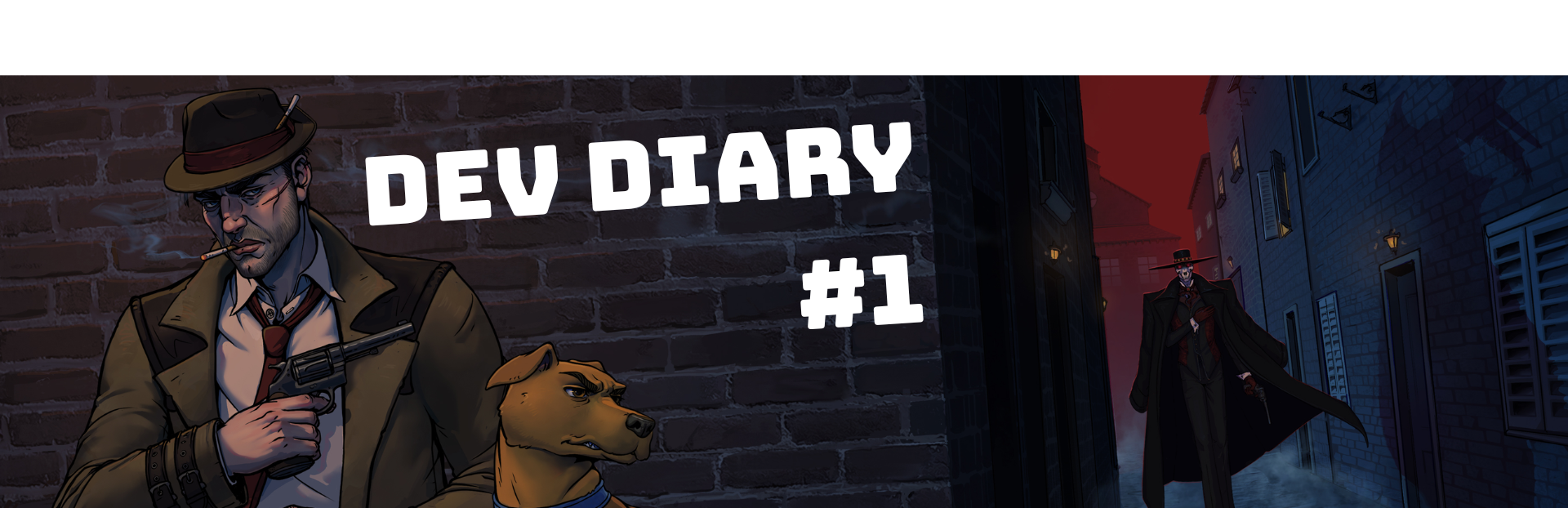
Hi everyone! It was a dark and stormy night… No, that’s not it. Deep in the city, a siren wailed… Nah, that won’t cut it either. Well, let’s go for a straight approach. This is the first entry in the dev diary series of Finch & Archie, an episodic co-op murder mystery where you play, along with a friend, as a hard-boiled cop and his canine buddy. We’ve got a long development road in front of us, and we want to walk this path with you – so in these diaries we’ll share with you what we are working on, our trials and tribulations as indie developers, our inspirations, mistakes, and discoveries… We hope you stay for the ride!
Team Introduction
But first of all, introductions are in order. We are Dickson, Rhys, Tom, Liz and Harry – or, in short, Octarine Arts, a new indie development studio based in Perth, Australia. We studied game design/development and audio design together, and just before we graduated Screenwest announced the first round of their Digital Games Production Fund. We had done a few projects during our studies (even bringing the whole class together, plus a few students from other disciplines, for our major project – which we managed to put on Steam as well!) We refined a concept from a past project, created a pitch deck for it, and applied – lo and behold, we were successful!
We came together thanks to our studies, but it’s thanks to Screenwest and Screenaus that we were able to form a studio and work on something serious. And that’s how Octarine Arts was born. Our name, by the way, will surely ring a bell if you have read any of the (absolutely brilliant) works of Terry Pratchett. Which we hope you have. If you haven’t, you can go now and buy one or two books from the Discworld series. Yeah, we mean now. We’ll wait. Theeeere you go. You got it? Alright, we may continue then.
Early Days
Now that we have introduced ourselves, it’s time to introduce our two good friends (soon yours too, we’re sure), Finch and Archie. We wanted something that blended story-driven mystery with light-hearted co-op play, where players of any skill level could jump in and enjoy solving cases together. The idea really came together during a uni project brainstorm between Dickson and Tom — talking about asymmetrical gameplay and different perspectives. We wanted each player’s gameplay experience to feel really different: rather than having, say, just a few different skills, we wanted it to feel like you were playing a different game while contributing to the same story. From there, the dog detective just sort of… stuck. We haven’t looked back.
Our game is a two-player, 1930s noir murder mystery where you and a friend take on the roles of a classic detective duo—with a twist. One of you is a gruff human detective, and the other is his loyal dog partner. It’s buddy-cop noir, just with more tail wags and trench coats. We drew a lot of inspiration from L.A. Noire, especially for the tone and style, which actually led to our original working title: L.A. Dogoir.
In the end we decided we were a bit too young for dad jokes and settled for Finch & Archie. The fact that the game wasn’t even set in L.A. to begin with didn’t help.
We realized very soon that we wanted to lean into a strong, stylised noir look—comic book grit meets moody detective drama. There was a point where we debated pushing even further into panel-style storytelling, but we landed on a nice balance: comic book-style cutscenes paired with cel-shaded gameplay. It gave us the noir vibe we were after while keeping things playful and visually distinct. When we had decided on the core mechanics, a setting, a theme, the outline of a story, and the art style, we were ready to leave pre-production and start creating the game itself.
And that’s when we faced the first reality check of games development: imagining is free, but you have to make that a reality – and do it on a budget, within a specific (and reasonable) timeline. This is our first proper commercial project, and we were very ambitious starting out—multiple episodes, branching stories, the lot. But as we went, we had to rein things in and focus on getting the core experience right. We trimmed the project down to focus on what mattered most, and a lot of our gameplay mechanics evolved through testing and feedback. Those changes came about naturally, and honestly, they’ve made the game better. The vision is still the same—it’s just more refined now. It's been a huge learning curve, but also super rewarding.
Current Day
And here we are now: there is a lot to do in front of us, but we have something that feels massive to us – a playable Steam build. After so long working in Unity, actually downloading the game, playing it together, and being able to say “Hey, you can go play this right now” was really emotional. That was the moment it all felt real—not just a uni project or an idea, but an actual game people could experience. We celebrated that one. But it was a short celebration; we have to clean up all the metaphorical confetti very quickly because, again, there is so much to do, and this is just the beginning. But we are at a stage where we can say that the game works, and what we’ve got is fun to play, and at the very least that is a great starting point.
So we want to invite you to walk this path with us. There will be a lot of interesting stories, cool art, stupid mistakes, clever solutions, and dog jokes. Make yourself at home, and don’t mind the dogs – they’re just having a quiet drink after a hard night patrolling the streets.