
In this update6
Full notes
Full False Alarm update
Read the full published notes in a cleaner layout. The original post stays linked below.
What changed
- UI and audio
False Alarm changes
Hi everyone,
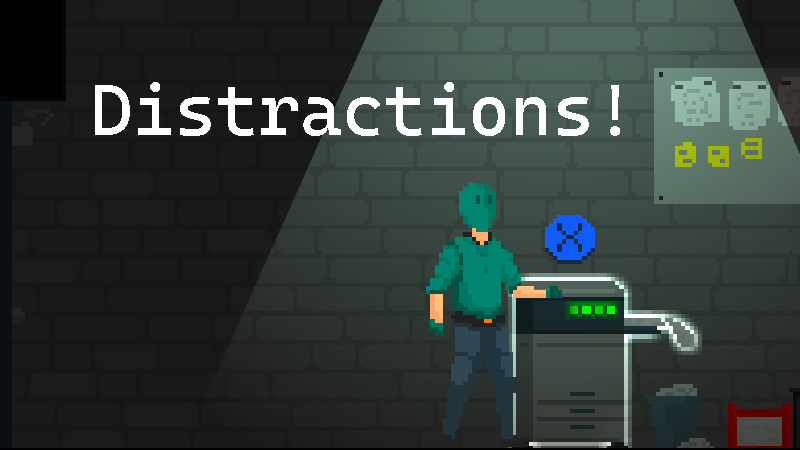
Today I’m breaking down one of the core stealth tools in the game: distracting enemies. The goal is to give you consistent, readable ways to manipulate patrols without the AI feeling random.
The Core Idea
Distractions create a point of interest that can:
pull an enemy off a patrol route,
split a pair of guards,
open a timing window to cross a hallway,
or lure someone into a safer spot for you.
A distraction is designed to be predictable. You should be able to plan around it.
What Counts as a Distraction?
There are a few types of distraction sources:
One-off noise that an enemy will investigate e.g. throwing a coin / knocking on a door
Interactable devices that stay on until someone turns them off e.g. a water cooler spilling water on the floor
Environmental actions that redirect enemy behaviour e.g. brewing delicious coffee might make an enemy stay in a different room
How Enemies React
When an enemy detects a distraction, they move through a simple chain of behavior:
Notice They register a sound/trigger within range.
Investigate They path toward the source to confirm what happened.
Search If they don’t find anything, they’ll do a quick look around. If they find something that they can turn off, they will do that.
Return They resume their normal route/guard position.
This structure keeps their reactions consistent, so you can learn the rules and use them deliberately.
Important Rules
A few guardrails keep distractions from becoming too powerful:
Distance. Being too far away will stop the effect.
Obstruction. If there is a wall between the enemy and the distraction they won't notice it. If there is a door they will, even if the door is closed. If the distraction is a light that has been turned off, they need line-of-sight before they notice something is wrong.
Player Strategy Examples
Here are some intended use cases:
Create a gap in a patrol cycle to slip through.
Pull a guard to the far side of a room to reach an objective.
Break line-of-sight by moving the guard’s attention away from your approach.
Stack distractions (small sound → reposition → bigger sound) to create a longer window.
Source
Changelog.gg summarizes and formats this update. How we read updates.