
In this update3
Full notes
Full Fallen Gods update
Read the full published notes in a cleaner layout. The original post stays linked below.
What changed
- Balance
- Gameplay
- UI and audio
Fallen Gods changes
As we get closer to the finish line, I wanted to do a short post about three of the many books that helped shape Fallen Gods.
I’ve always loved books, so it’s no surprise that my game stories and designs draw heavily from such sources: on Primordia, the books that influenced me most were science fiction like The Road (McCarthy), A Canticle for Leibowitz (Miller), City (Simak), and Cyberiad (Lem), along with my great-aunt’s poem “The Inheritors”; on Strangeland, the influences were more non-fiction and weird tales, like The Man Who Mistook His Wife for Hat (Sacks), The Emperor of All Maladies (Mukherjee), Titus Groan (Peake), and The October Country (Bradbury). But for Fallen Gods, I had to read broadly and deeply to capture the folkloric, mythological, and historical aspects of the setting.
If I were to do a full-on “Appendix N” for Fallen Gods, it would have hundreds of entries—dozens of sagas, the Eddas, Heimskringla, collections of folk and fairy tales, Anglo-Saxon lexicons, the poems of the Exter Book, collections of riddles from northern Europe, numerous histories by Neil Price and others, five different renderings of the Norse myths (for my taste, Kevin Crossley-Holland’s is the best, though there’s something to be said for Gaiman’s), historical novels by the handful (like the incomparable Kristin Lavransdatter, andwho doesn’t like Bernard Cornwell?), well… this could become a long post.
Instead, I wanted to pick out just three works that had very different effects on the game.
Lone Wolf: Flight from the Dark
“You must make haste for you sense it is not safe to linger by the smoking remains of the ruined monastery. The black-winged beasts could return at any moment.”
The first is Lone Wolf: Flight from the Dark by Joe Deaver (illustrated by Gary Chalk). Fair to say that when I first pulled a Lone Wolf gamebook out of a used book box at a school bookfair, it was a life-changing experience. It was the 1980s, and the main “interactive adventures” in my life were the make-believe and freedom roleplay (the “narration game”) that I did with the kids on my block. Computer games, to me, were like Space Quarks or Karateka. Video games were like Contra and Dragon Warrior. There were a couple exceptions— Wasteland and, at a friend’s house, Ultima V —but even those games didn’t feel like stories. I experienced them as landscapes of mechanical rules and awkward automata.
And then there was Lone Wolf —a game where you both inhabited a character (the eponymous Lone Wolf) and created him, with random stats and gear and different special “Kai” skills (“Animal Kinship” or “Mind Over Matter”). Everything about your character felt meaningful, not merely mechanical. And very quickly you went from defining Lone Wolf to leading him on an adventure where every scenario was interesting and every choice was significant. There was no padding, no grind, no junk items, no useless skill. Each trip through the gamebook felt like its own coherent story.
Even before Fallen Gods was Fallen Gods —when it was a space opera called Star Captain —the vision was to marry Lone Wolf ’s sense of a narrative adventure with the variety and exploration of a rogue-like. Without this ur-text, there would be no Fallen Gods, and probably also no Primordia, Strangeland, Infinity, or any of the other games I wrote or designed over the years, since it was that dog-eared gamebook that made me believe you could have an interactive narrative without an active narrator.
The Long Ships
“For man can triumph over man, and weapon over weapon; against the gods we can pit sacrifice, and against witchcraft, contrary magic; but against bad luck no man has anything to oppose.”
The second is The Long Ships by Frans Bengtsson (tr. Michael Meyer). Before he sat down to read what is (in my not-so-humble opinion) the finest adventure novel ever written, Bengston was a poet, a translator, and a scholar—his biography of King Charles XII of Sweden was widely acclaimed. Whatever the merits of his other works, no doubt many, it is The Long Ships to which I owe lasting allegiance, because that was the novel that inspired me to conjure this particular world for Fallen Gods. Our king of the gods, Orm, takes his name from Bengston’s protagonist. And half-stoical, half-ironic tone of our game draws much from the voice of The Long Ship ’s narrator. But most important, the sheer joy I felt when reading The Long Ships was what spurred me to try to tackle this immense project.
The Saga of Burnt Njal
“You will be atoned like any other free man. In blood.”
“By the law alone will our land be built up; and with lawlessness, laid waste.”
The last is Brennu-Njálssaga, generally translated as The Saga of Burnt Njal, a book I’ve written about many times (in both my hobbyist capacity as a game developer and my professional capacity as a lawyer). Once The Long Ships had me hooked, I went first to Heimskringla (Snorri Sturluson’s history of the Norwegian kings, from which Bengtsson borrowed liberally) and then to the Icelandic sagas. These represent one of the great literary flowerings in all of human history: a huge corpus of medieval texts composed in the vernacular, some telling family stories, others the histories of the great, and yet others fantastical tales of berserks, troll-women, wizards, and the walking dead (draugar).
Of all the many sagas of the Icelanders, Njal’s is my favorite: the most perceptive of human nature; the deepest in wisdom; and yet full of thrilling incidents, ranging from gory battles to the first courtroom drama in literature. Its great gifts to Fallen Gods were the vividness of its descriptions and its overall mood of a world teetering on chaos: violence begetting violence, wolves and wolfish men growing ever bolder in the great gloaming of civilization.
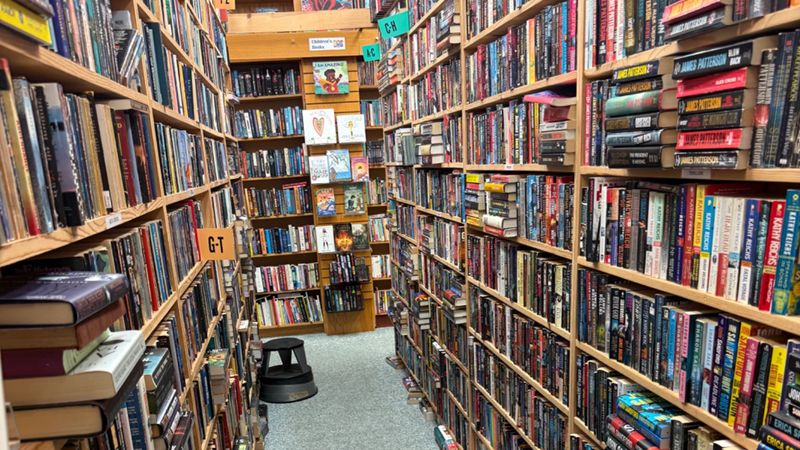
Steam post imageMasterpieces like these three (and others) help fill up what a skald would call my “word hoard”: that repository of glorious pieces that can be fitted together, just so, to make a phrase, a scene, story, a world, and a game. If all this sounds like a game you might be interested, please wishlist and help spread the word!
Source
Changelog.gg summarizes and formats this update. How we read updates.